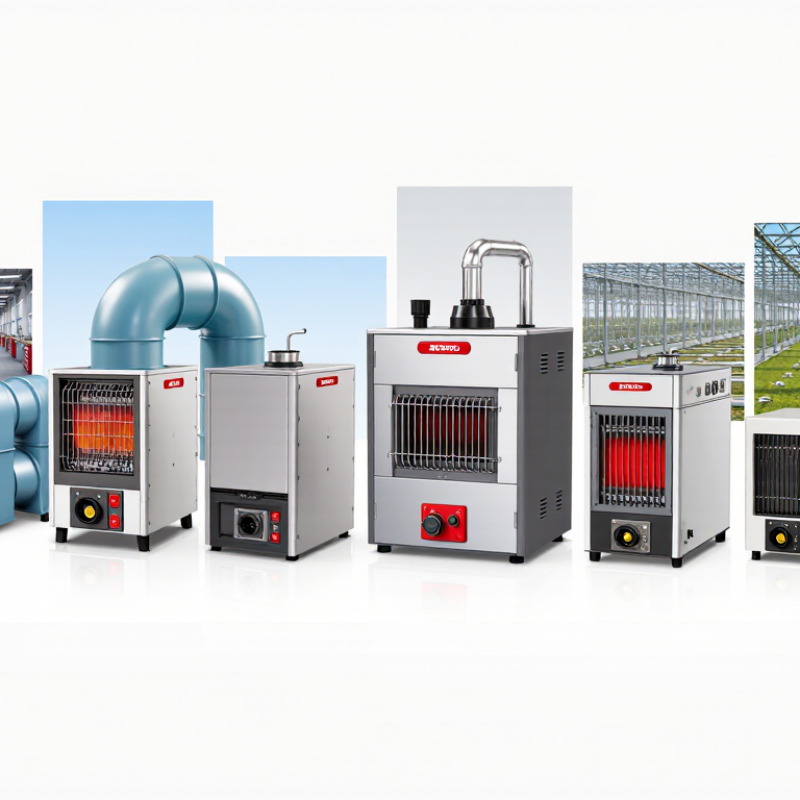
| 1 | Indirect-Fired Forced-Air Heater | A fuel-oil burner heats a sealed combustion chamber; a fan delivers clean, heated air through a heat exchanger. | Construction sites, warehouses, workshops, agricultural buildings, emergency heating, and temporary structures. | Approximately 20–300 kW thermal output for common portable and semi-portable units. | Approximately 80–92%, depending on burner design, heat exchanger, and operating load. | Separate combustion and room air; flue connection; flame failure protection; high-limit thermostat; carbon-monoxide monitoring where required; adequate ventilation. | Clean burner nozzle and electrodes; inspect heat exchanger for cracks; replace fuel filters; check fan belts, electrical controls, seals, and flue condition. | Applicable requirements may include EN 13842, EN 267, NFPA 31, UL 296, local fuel-burning appliance rules, and electrical safety requirements. | Confirm voltage and frequency, fuel specification, emissions limits, noise level, flue diameter, mobility requirements, spare-parts availability, and local certification. |
| 2 | Direct-Fired Forced-Air Heater | The burner flame heats the air directly and the heated combustion products are discharged into the occupied or process area. | Open construction areas, outdoor events, agricultural spaces, and well-ventilated industrial areas. | Approximately 10–200 kW thermal output for common commercial models. | Often above 90% at the point of use because combustion heat is released directly into the space. | Suitable only where combustion gases are acceptable and ventilation is adequate; install flame supervision, overheat protection, fuel shut-off, and carbon-monoxide controls. | Clean burner head and combustion chamber; inspect fuel lines; test flame-control devices; remove dust from air inlets; verify combustion and emissions. | National and regional requirements may include EN 13842, EN 267, NFPA 31, local occupational-health rules, and applicable electrical standards. | Verify that the intended location permits direct-fired operation; check ventilation calculations, emissions, fuel compatibility, controls, noise, and operator training requirements. |
| 3 | Fuel-Oil-Fired Hot-Water Boiler | A burner transfers heat to pressurized or open-loop water, which circulates to radiators, air handlers, or process heat exchangers. | Commercial buildings, residential complexes, hospitals, schools, district heating loops, and industrial process heating. | Approximately 50 kW to several MW, depending on boiler construction and system design. | Approximately 80–95% for conventional boilers; condensing performance depends on return-water temperature and fuel system design. | Low-water cutoff; pressure relief valve; expansion vessel; over-temperature protection; correct chimney design; combustion-air supply; water-treatment controls. | Annual burner tuning; inspect boiler tubes and refractory; test safety valves and low-water protection; remove soot; check pumps, expansion vessels, and water chemistry. | Potentially applicable: EN 303-1, EN 303-2, EN 267, ASME BPVC Section IV, NFPA 31, PED 2014/68/EU where applicable, and local boiler codes. | Check design pressure and temperature, heating capacity, seasonal efficiency, allowable fuel sulfur level, emissions class, water-quality requirements, certification, and service support. |
| 4 | Fuel-Oil-Fired Steam Boiler | A burner heats water in a pressure vessel to produce steam for heating or industrial processes. | Food processing, textile production, laundries, hospitals, chemical plants, and manufacturing operations requiring steam. | Approximately 0.5–30 tonnes of steam per hour for many industrial installations. | Approximately 75–90%, influenced by steam pressure, economizer use, blowdown rate, and flue-gas heat recovery. | Certified pressure vessel; properly sized safety valves; low-water protection; reliable feedwater system; blowdown controls; combustion safeguards; qualified operators. | Inspect tubes and burner; test safety valves and alarms; control water chemistry; remove scale and soot; inspect refractory, feedwater pumps, and steam traps. | ASME BPVC Section I, EN 12953, PED 2014/68/EU where applicable, EN 267, NFPA 31, and national pressure-equipment regulations may apply. | Specify working pressure, steam capacity, fuel properties, feedwater quality, emissions limits, pressure-vessel certification, inspection authority, and installation permits. |
| 5 | Thermal-Oil Heater | A fuel-oil burner heats a closed circuit of high-temperature thermal fluid, which transfers heat to process equipment without boiling under normal operation. | Asphalt plants, chemical processing, food production, wood processing, plastics, and industrial drying systems. | Approximately 100 kW to 10 MW or more for industrial systems. | Approximately 75–92%, depending on fluid temperature, insulation, burner control, and heat recovery. | Expansion tank; high-temperature and low-flow protection; leak detection; thermal-fluid compatibility; fire protection; correct circulation and emergency shutdown systems. | Test thermal-fluid condition; inspect pump seals and expansion tank; clean coils; check burner combustion; inspect insulation and piping for leaks or degradation. | EN 746-2, DIN 4754-1, NFPA 87 where applicable, pressure-equipment rules, and local industrial-fire regulations may be relevant. | Confirm maximum film temperature, fluid type, operating pressure, flow rate, heat-up time, pump arrangement, emissions, thermal-fluid service life, and local installation requirements. |
| 6 | Fuel-Oil-Fired Air-Heater and Duct Furnace | A burner heats air across a heat exchanger, and the heated air is distributed through fixed ductwork or process-air channels. | Factories, paint shops, drying chambers, agricultural buildings, ventilation systems, and process-air applications. | Approximately 100 kW to 5 MW for commercial and industrial systems. | Approximately 80–94%, depending on heat exchanger design, airflow, and flue-gas recovery. | Airflow proving switch; high-temperature limit; flame supervision; duct overheat protection; access panels; combustion-air and exhaust design; compatible duct materials. | Clean heat-transfer surfaces; inspect duct joints and insulation; calibrate thermostats and sensors; service burner components; verify airflow and pressure drop. | EN 746-2, EN 267, NFPA 31, NFPA 90A or 90B where applicable, and local HVAC, fire, and electrical requirements. | Evaluate airflow, static pressure, outlet temperature, duct layout, filtration, corrosion resistance, burner turndown, controls integration, and commissioning requirements. |
| 7 | Fuel-Oil-Fired Radiant Tube Heater | A burner fires inside a metal tube; the tube radiates infrared heat toward floors, equipment, or occupants. | High-bay warehouses, workshops, aircraft hangars, sports facilities, agricultural buildings, and localized industrial heating. | Approximately 20–150 kW per heating zone or system, depending on tube length and burner arrangement. | Approximately 70–90% system efficiency, depending on flue arrangement, reflector design, and operating conditions. | Maintain clearance from combustible materials; provide flue and combustion-air provisions; use flame monitoring; protect against tube overheating; follow mounting-height requirements. | Clean reflector surfaces; inspect tube alignment and corrosion; service burner and ignition components; check flue joints, suspension points, and safety controls. | EN 419-1, EN 419-2, EN 267, local gas-and-oil appliance rules where applicable, and building or fire codes. | Check mounting height, heating pattern, tube length, fuel viscosity, ceiling structure, exhaust routing, zoning controls, noise, and availability of replacement emitters and controls. |
| 8 | Oil-Fired Immersion Heater | A burner heats a submerged combustion tube or heat-transfer surface inside a tank, vat, or process vessel. | Industrial tanks, metal-treatment lines, asphalt and bitumen tanks, chemical processing, and bulk-material heating. | Approximately 50 kW to 2 MW, based on tank volume, target temperature, and heat-up time. | Approximately 70–90%, depending on tank insulation, heat-transfer surface, burner setup, and operating temperature. | Prevent burner operation when liquid level is too low; use high-temperature cut-outs; protect against tank overpressure; verify material compatibility and provide emergency shutdown. | Inspect immersion tube for corrosion and deposits; clean burner; test level and temperature sensors; inspect seals, refractory, tank insulation, and combustion controls. | Applicable requirements can include EN 746-2, EN 267, NFPA 31, pressure-equipment rules where applicable, and process-specific fire regulations. | Specify tank geometry, liquid properties, viscosity, corrosiveness, required heat-up time, maximum surface temperature, level-control method, emissions, and access for maintenance. |
| 9 | Packaged Oil-Fired Process Heater | An integrated burner, combustion chamber, heat exchanger, fan or pump, controls, and safety devices are supplied as a pre-engineered package. | Drying ovens, curing lines, coating systems, food-process equipment, and modular manufacturing installations. | Approximately 100 kW to 10 MW, depending on the process and heat-transfer medium. | Approximately 75–95%, depending on process temperature, heat recovery, burner modulation, and insulation quality. | Interlocked start-up sequence; flame failure protection; emergency stop; over-temperature protection; airflow or flow proving; explosion-relief and purge provisions where required. | Follow documented preventive-maintenance intervals; inspect sensors, relays, burner, heat exchanger, insulation, seals, exhaust, and programmable controls. | EN 746-2, EN 267, IEC 60204-1 for machinery electrical equipment where applicable, NFPA 86 for ovens and furnaces where applicable, and local emissions rules. | Assess process temperature uniformity, control accuracy, turndown ratio, heat-up profile, communication protocols, factory acceptance testing, documentation, and integration with existing equipment. |
| 10 | Waste-Oil or Multi-Fuel Heater | A specially designed burner atomizes and combusts used lubricating oil, approved waste oil, or multiple liquid fuels in a combustion chamber. | Vehicle workshops, maintenance depots, agricultural facilities, and industrial sites permitted to use approved waste-derived fuel. | Approximately 20–150 kW for common workshop and small-industrial units; larger systems require site-specific engineering. | Approximately 60–85%, highly dependent on fuel quality, preheating, filtration, burner adjustment, and combustion-chamber design. | Use only legally permitted fuel; provide filtration and storage controls; install secondary containment; manage emissions; use carbon-monoxide monitoring; never mix incompatible liquids. | Drain water and sediment; clean burner and combustion chamber frequently; replace filters; inspect ash and deposits; test emissions and safety interlocks; maintain storage tanks. | Requirements vary significantly by country and may include waste-fuel regulations, local air permits, NFPA 31, EN 267 where applicable, and hazardous-waste handling rules. | Verify legal fuel eligibility, permit obligations, emissions limits, fuel analysis, filtration requirements, storage rules, insurance acceptance, warranty conditions, and local service capability. |