

News

Miro: A New Standard in Responsible Innovation

Miro: A New Standard in Responsible Innovation The Miro monitor arm is setting new benchmarks in sustainability. It offers a high-performance solution without compromising on environmental responsibility. Designed with careful material selection, local sourcing, and longevity in mind, Miro’s responsible approach to design and unique manoeuvrability set it apart from the competition. Sustainable Choices Miro is crafted from energy-efficient materials with a lower carbon impact....

Read more
HSE Advisor

Role Purpose Support in the development, implementation and maintenance of the company’s Health, Safety & Environmental policies, processes, operational procedures, and standards.  Ensuring best practice and championing a continually improving HSE culture within the business. Key Responsibilities Liaise with and provide support to all areas of the business to eliminate, mitigate or reduce identified HSE exposures. Partner with the production management team and team leaders,...

Read more
CMD Ltd LAUNCHES 48-HOUR TURNAROUND ON BETATRAK® RAPID ORDERING SERVICE

CMD Ltd, the specialist in power distribution systems, workstation power and monitor arms, has launched a rapid ordering service for its Betatrak® underfloor powertrack distribution systems and accessories, with a commitment to delivering within 48-hours of an approved purchase order*. The service enables customers to order up to 50 lengths of Standard or Clean Earth (C/E) low noise Betatrak, along with up to 25 feed...

Read more
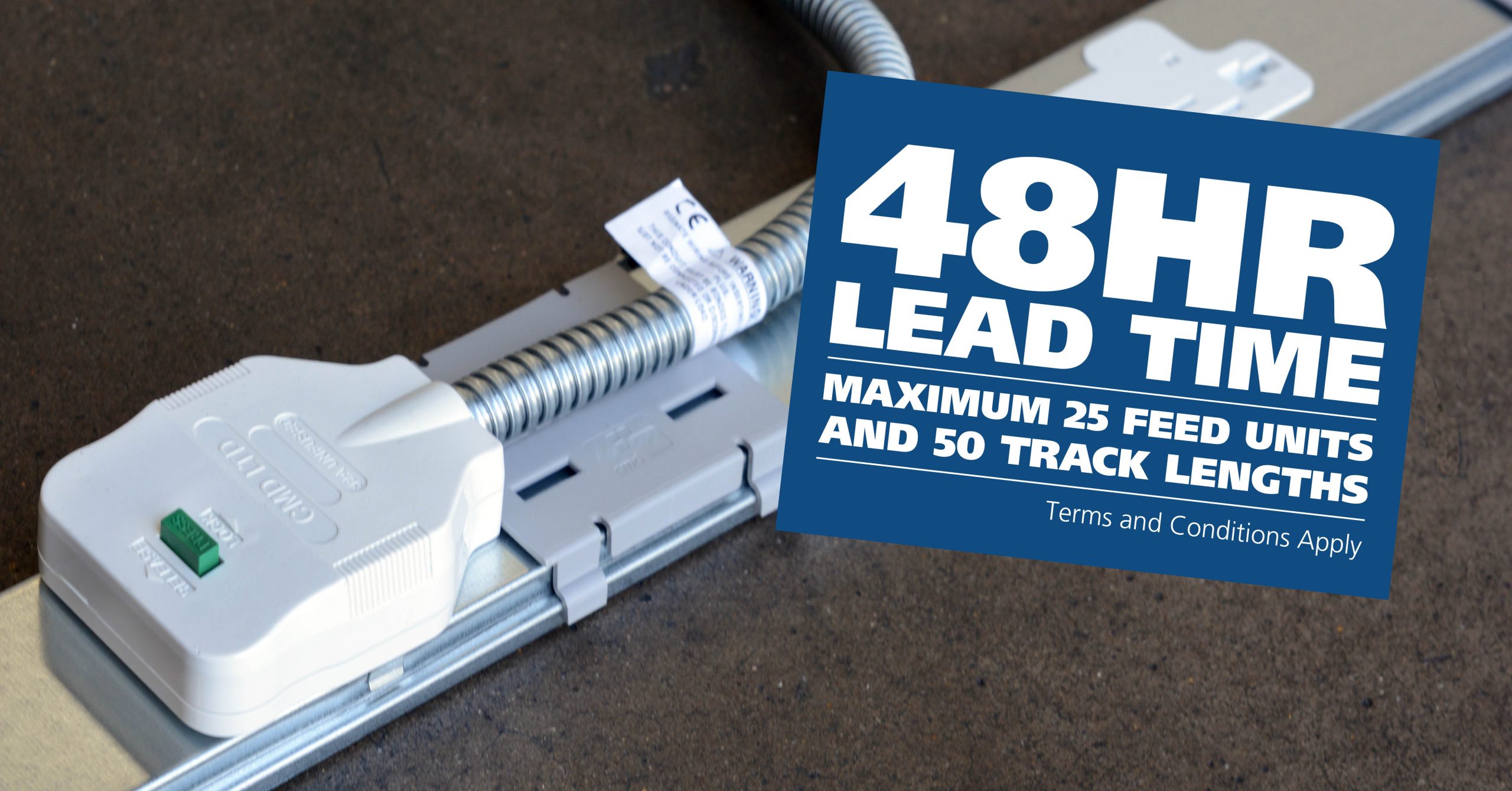
CMD INVESTS £1/4 MILLION IN NEW MACHINE AS PART OF FACTORY UPGRADE

We have invested in a new £1/4m TRUMPF CNC metal punch as part of an asset renewal strategy for our UK manufacturing capability. The new machine will be used in the production of a wide variety of our power distribution systems and workstation power products at our Rotherham factory. Suitable for handling sheet metal between 0.9mm and 3.0mm thick, the new machine will replace one...

Read more

CMD CATALOGUE PROVIDES TECHNICAL POWER DISTRIBUTION GUIDE

CMD Ltd has released a new catalogue, providing an easy to follow technical guide to our power distribution systems and plug and play desk modules. Detailing CMD’s full range of UK-manufactured power distribution systems and plug and play desk modules, the catalogue will be a helpful source of information to M&E engineers and contractors alike to understand how our power distribution systems connect together and...

Read more
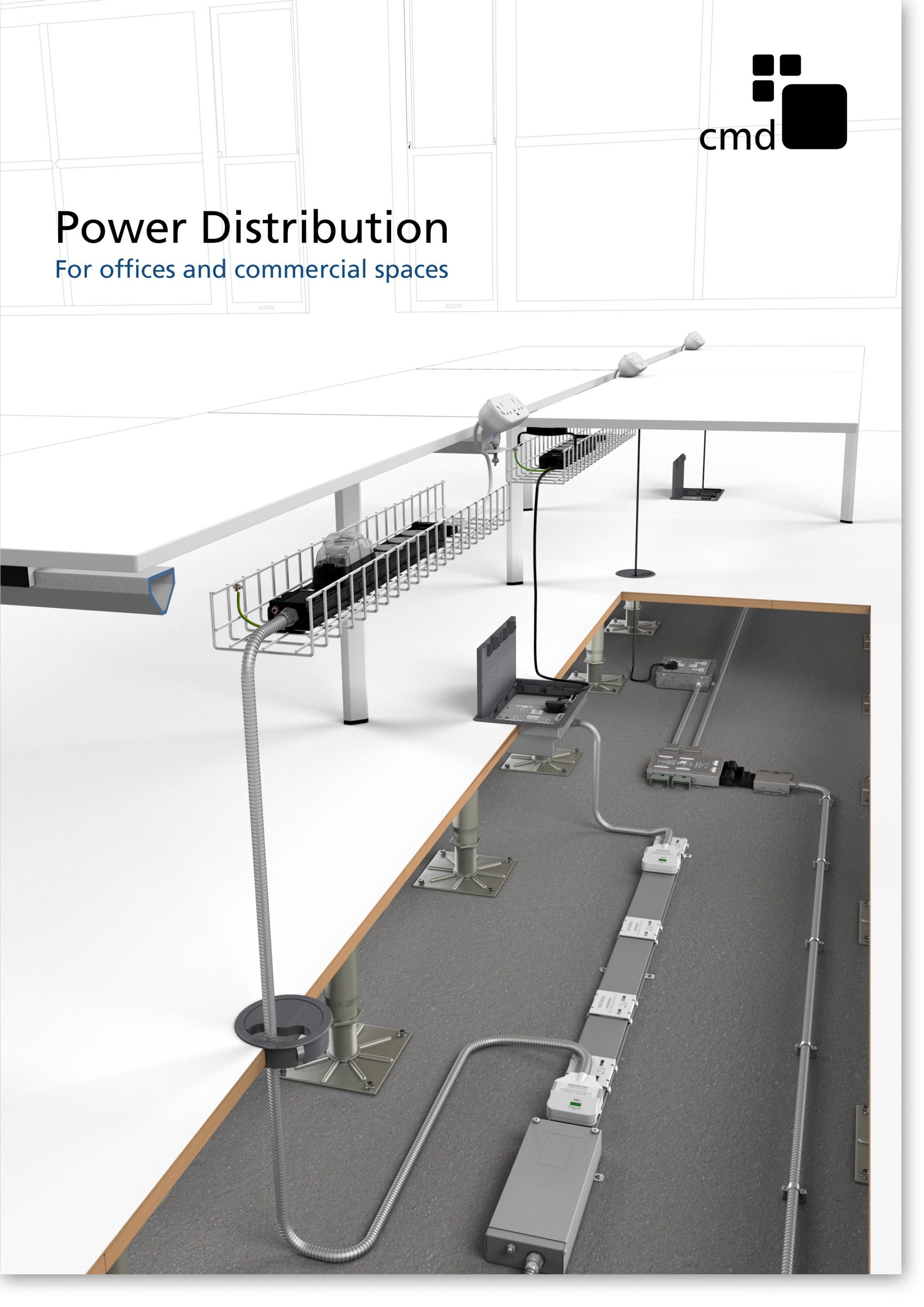
Power Distribution Catalogue
CMD Ltd PLAYS ESSENTIAL ROLE IN ELECTRICAL FIT OUT AT LONDON’S PRESTIGIOUS OFFICE DEVELOPMENT

CMD Ltd, specialist in workplace connectivity and ergonomic solutions, has provided a flexible and high-quality power distribution network for The Ray, a prestigious office development in London’s Farringdon. Well-known for being the former site of The Guardian newspaper, The Ray now stands as an 83,000ft² office development characterised by a modernised warehouse aesthetic, with level two now occupied by a global social media company. The...

Read more

The Ray
CMD plugs in to european opportunity with Schuko Capsule unit launch

CMD Ltd, the specialist in power and connectivity solutions for commercial environments, has launched a Schuko version of its popular fixed format Capsule workstation power module for export to mainland Europe and beyond. A popular on desk power module comprising two sockets and dual USB (type A and C) chargers, CMD’s Capsule unit is already widely specified in the UK as an off-the-shelf workstation power...

Read more
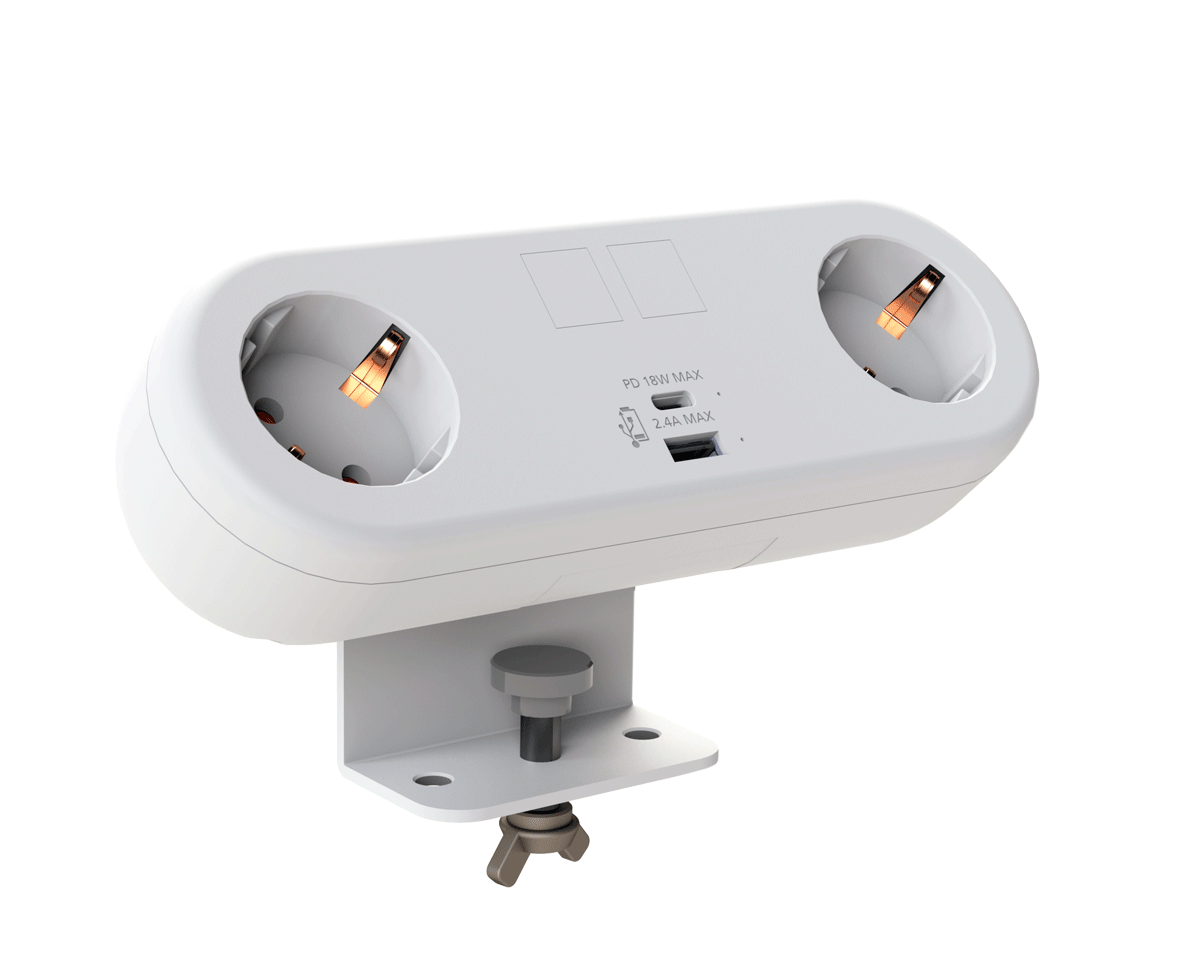
CMD White Schuko Capsule Desk Power Module
CMD LTD EXTENDS MONITOR ARM RANGE WITH THE LAUNCH OF REACH PLUS

CMD Ltd, the specialist in ergonomic and connectivity solutions for commercial interiors, has completed its Reach monitor arm range with the launch of the Reach Plus. Available in single or dual screen options, the Reach Plus has been designed to provide an ideal solution for both single and dual screen workstation configurations, or can be used with next generation of large format curved screens. Suitable...

Read more

CMD Ltd DEMONSTRATES THE ART OF POWER DISTRIBUTION AT THE UNIVERSITY OF WARWICK

CMD Ltd, the specialist in workplace connectivity and ergonomic solutions, has provided Betatrak busbar power distribution and a range of electrical accessories for two major capital investment projects at the University of Warwick. Designed by Fielden Clegg Bradley Studios, the £33 million Faculty of Arts building is a showpiece development comprising four interconnected structures set around a central atrium, which will enable inter-disciplinary collaboration across...

Read more

University of Warwick
CMD BRINGS HARMONY TO COVENTRY UNIVERSITY RESEARCH FACILITIES

CMD Ltd, the specialist in power distribution solutions and workstation power and ergonomics, has provided under desk and on desk power modules for the refurbishment of three Coventry University research buildings. Located on Coventry University Technology Park, a business park designed to encourage collaboration between the university and knowledge-based businesses, the three buildings are being repurposed as office accommodation for university research teams. The refurbishment...

Read more


Coventry University

Top 10 Power Switchgear Manufacturers for Global Buyers

Choosing a switchgear supplier is a practical decision with long-term consequences. A substation cabinet must handle load changes, protect connected equipment, and remain serviceable in real operating conditions. Buyers also compare voltage range, tested performance, customization, delivery capacity, and after-sales support. A polished brochure is not enough. Ask for technical documentation and clear answers about maintenance.

Power systems engineer John D. McDonald has written extensively about modernizing the grid and integrating intelligent technologies. A fair paraphrase of his work’s central lesson is: “Reliable power depends on sound engineering and informed decisions.” This is a paraphrase, not a direct quotation. It reflects why Switchgear Power buyers should assess both product specifications and the manufacturer’s ability to support equipment throughout its service life.

This overview examines ten manufacturers serving global buyers. It considers product breadth, application experience, quality processes, and international support, while recognizing that availability varies by market. A large name does not guarantee the best fit. Neither does a low quote. Buyers should compare evidence, not promises: test reports, service arrangements, spare-parts access, and references for similar installations. Details matter. Some comparisons may remain imperfect because public information differs between companies. Use the list as a starting point, then verify each supplier against your project’s voltage, site conditions, and operating needs.

Top 10 Power Switchgear Manufacturers for Global Buyers

Understanding Power Switchgear and Its Role in Electrical Systems

Power switchgear is the group of devices that controls, protects, and isolates electrical circuits. It may include circuit breakers, disconnect switches, protective relays, and measurement equipment. Together, these components help manage power from a utility connection or generator to the loads that need it.

When a fault occurs, such as a short circuit, a circuit breaker can interrupt the current before heat damages cables or equipment. Relays monitor electrical conditions and signal when protection is needed. Switchgear also allows technicians to isolate part of a system for inspection or maintenance. In a factory, that might mean shutting off one motor feeder while other production lines remain powered. Ratings matter: voltage, current, fault levels, installation conditions, and coordination with upstream protection all affect equipment selection. A design can look sound on paper and still need careful review against real operating conditions.

Tips: Check the rated voltage and short-circuit withstand capacity against the site’s requirements. Confirm enclosure protection, room clearance, and access for maintenance. Ask how protective settings will be tested and documented. Small details are easy to overlook, and specifications alone do not guarantee a trouble-free installation.

Top 10 Power Switchgear Manufacturers for Global Buyers - Understanding Power Switchgear and Its Role in Electrical Systems

Use this checklist to compare suppliers. It describes evaluation criteria rather than ranking or identifying specific manufacturers; product suitability depends on the project design and applicable local requirements.

No. Buyer evaluation area What to compare Why it matters in a power system
1 Voltage and application range Rated voltage, rated current, frequency, and intended use in low-, medium-, or high-voltage networks. Switchgear must match the network and equipment ratings for safe operation.
2 Short-circuit performance Rated short-time withstand current, peak withstand current, and circuit-breaker breaking capacity. These ratings help determine whether equipment can withstand and interrupt fault currents in the installation.
3 Applicable standards Standards and conformity documentation relevant to the product type and destination market, such as applicable IEC or IEEE/ANSI requirements. Requirements vary by equipment and jurisdiction; project specifications and local rules govern acceptance.
4 Insulation and enclosure design Air, gas, or solid insulation; enclosure protection rating; indoor or outdoor suitability; and environmental limits. The design affects installation footprint, environmental protection, and maintenance requirements.
5 Safety and interlocking Mechanical and electrical interlocks, earthing arrangements, access controls, and documented operating procedures. Appropriate safeguards help reduce the risk of unsafe switching and access to energized parts.
6 Protection and control Protection relay options, metering, control schemes, auxiliary supplies, and communication interfaces. Protection and control functions support fault detection, isolation, monitoring, and coordination with the wider system.
7 System integration Single-line diagram compatibility, cable and busbar interfaces, space requirements, and integration with existing equipment. Correct interfaces and coordinated design help avoid installation conflicts and operational limitations.
8 Testing and documentation Routine and type-test evidence as applicable, drawings, ratings, manuals, and inspection records. Complete records support engineering review, commissioning, operation, and maintenance.
9 Service and spare parts Local technical support, commissioning assistance, spare-parts availability, and stated service arrangements. Support needs can affect maintenance planning and equipment availability over its service life.
10 Lifecycle and project fit Delivery schedule, installation and maintenance requirements, operating environment, and total project cost. A suitable selection balances technical compliance, maintainability, project constraints, and lifecycle needs.

Note: Confirm equipment ratings, standards, certifications, and project suitability against the specification and the requirements of the installation location.

Criteria for Evaluating Global Power Switchgear Manufacturers

Evaluating global power switchgear manufacturers requires more than comparing product prices. Start with the intended application: rated voltage, operating current, fault level, installation environment, and expected service life. Ask for technical datasheets and test documentation that match the exact equipment configuration, not merely a similar product family. Check whether the manufacturer can explain temperature-rise limits, insulation performance, enclosure protection, and maintenance intervals in clear terms. Details matter.

Also assess engineering support, production consistency, and delivery capacity. Request evidence of quality controls, inspection procedures, and relevant certifications, then confirm their scope and issuing bodies independently. For international projects, review documentation quality, spare-parts availability, and the ability to support commissioning across time zones. A polished brochure is not proof of dependable service. Speak with customers operating comparable equipment, where possible, and ask about response times and long-term reliability. No supplier is flawless; unclear answers deserve a second look.

Tips: Use the same specification checklist for every candidate. Compare the total lifecycle cost, including installation, routine maintenance, and likely replacement parts. Keep written records of assumptions and exceptions. A small mismatch in a rating or interface can become an expensive site problem.

Profiles of Ten Leading Power Switchgear Manufacturers

Profiles of ten leading power switchgear manufacturers should help buyers compare engineering capability, not just product catalogs. Each profile can examine voltage range, insulation technology, rated short-circuit capacity, and testing evidence. These details matter when equipment must fit a compact substation or withstand frequent switching. A useful profile also checks regional service coverage, spare-parts access, and documented delivery performance. Small gaps here can become costly delays.

The market context is changing. The International Energy Agency’s 2023 report, Electricity Grids and Secure Energy Transitions, says annual grid investment must rise to more than US$600 billion by 2030 to meet climate and energy goals. That expansion increases demand for reliable switchgear and qualified suppliers. Profiles should therefore distinguish established high-voltage expertise from strengths in medium-voltage distribution, digital monitoring, or modular installations. Buyers can compare environmental declarations, maintenance intervals, and support for aging assets. Numbers need context. A larger rating alone does not prove a better fit. Project teams should verify test certificates and request references for installations with similar loads, climates, and operating cycles. These checks make a ten-company comparison more useful than a ranking based on visibility alone.

Comparing Product Ranges, Standards, and Global Service Capabilities

Top 10 Power Switchgear Manufacturers for Global Buyers

A useful top-ten comparison should examine product range, standards, and service depth. Product portfolios may include low-voltage panels, medium-voltage switchgear, motor-control centers, and protection relays. Buyers should match voltage ratings, short-circuit capacity, enclosure protection, and indoor or outdoor installation needs. A broad catalog means little if critical components remain unavailable. Ask for recent test reports, wiring diagrams, and inspection records.

Standards matter. Look for verified compliance with IEC, ANSI, UL, or regional requirements. Certification should match the exact assembly, not only individual parts. Factory acceptance testing can reveal loose connections, incorrect labeling, or weak interlocking. These details affect maintenance and operator safety. Service capability also deserves careful review. Check local technicians, spare-parts access, remote troubleshooting, training, and response times across time zones. Global coverage sounds impressive. The details decide.

Tips: Request a sample quality dossier before ordering. Compare warranty terms, delivery records, and technical support contacts. Confirm who handles commissioning at your site. Also, ask how design changes are controlled after approval. Some suppliers respond quickly during sales, then slowly after delivery. That risk is easy to overlook. A scoring sheet helps, but it cannot replace a factory audit or reference check. Even experienced buyers may overvalue price and underestimate documentation quality. Build extra time into the schedule for approvals, customs, and site testing.

Matching Manufacturers to Buyer Needs and Project Requirements

Selecting a power switchgear manufacturer should begin with project conditions, not popularity rankings. A utility substation needs different capabilities than a hospital, factory, or high-rise building. Define voltage levels, short-circuit ratings, enclosure requirements, installation space, and environmental exposure before comparing suppliers. Fit matters more.

Experienced buyers should examine test certificates, quality systems, and production traceability. Ask how the manufacturer manages factory acceptance testing, design changes, and replacement parts. A reliable supplier can explain protection coordination, arc-flash mitigation, insulation performance, and maintenance intervals in practical language. Vague answers deserve closer review.

Project schedules also influence the best choice. Check engineering support, delivery capacity, local service coverage, and commissioning experience in similar climates. A supplier with excellent equipment may still struggle when drawings arrive late or technicians lack site familiarity. Request sample inspection records, wiring diagrams, and references for comparable installations. The site decides.

Cost comparisons should include transport, installation, testing, training, energy losses, and long-term service. The lowest quotation can become expensive after repeated delays or difficult maintenance. However, buyers should not assume higher prices guarantee better performance. I have seen technically impressive proposals fail because the supplier underestimated cable entry space and spare-part availability. That mistake is preventable.

Use a weighted evaluation matrix, and let electrical engineers, procurement staff, and site operators review it together. Their priorities will differ. Record every assumption, including ambient temperature, fault duration, future capacity, and regulatory requirements. A careful match connects manufacturer capability with real operating demands, rather than relying on a polished catalogue.