
News

Miro: A New Standard in Responsible Innovation

Miro: A New Standard in Responsible Innovation The Miro monitor arm is setting new benchmarks in sustainability. It offers a high-performance solution without compromising on environmental responsibility. Designed with careful material selection, local sourcing, and longevity in mind, Miro’s responsible approach to design and unique manoeuvrability set it apart from the competition. Sustainable Choices Miro is crafted from energy-efficient materials with a lower carbon impact....

Read more
HSE Advisor

Role Purpose Support in the development, implementation and maintenance of the company’s Health, Safety & Environmental policies, processes, operational procedures, and standards.  Ensuring best practice and championing a continually improving HSE culture within the business. Key Responsibilities Liaise with and provide support to all areas of the business to eliminate, mitigate or reduce identified HSE exposures. Partner with the production management team and team leaders,...

Read more
CMD Ltd LAUNCHES 48-HOUR TURNAROUND ON BETATRAK® RAPID ORDERING SERVICE

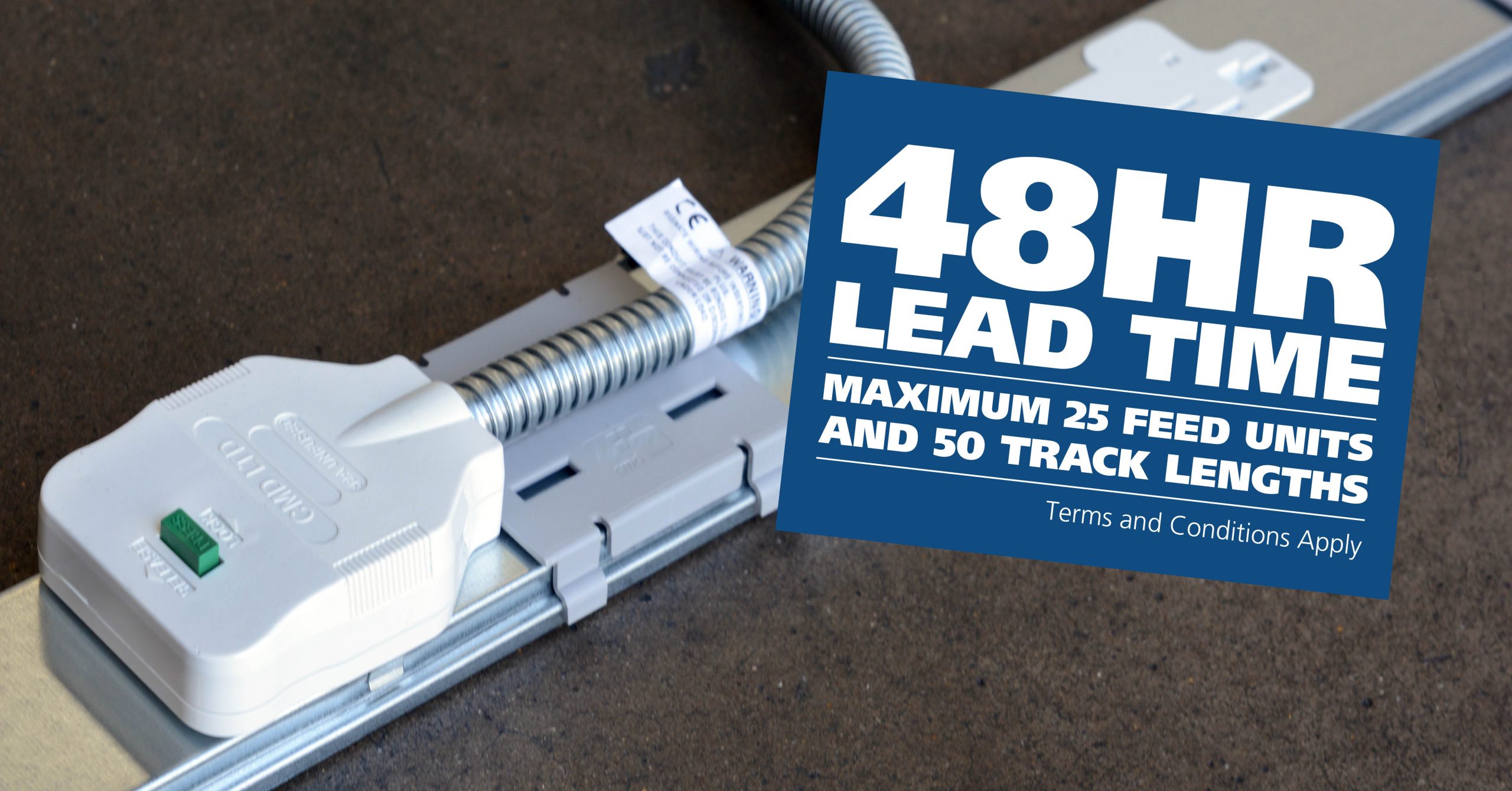
CMD Ltd, the specialist in power distribution systems, workstation power and monitor arms, has launched a rapid ordering service for its Betatrak® underfloor powertrack distribution systems and accessories, with a commitment to delivering within 48-hours of an approved purchase order*. The service enables customers to order up to 50 lengths of Standard or Clean Earth (C/E) low noise Betatrak, along with up to 25 feed...

Read more
CMD INVESTS £1/4 MILLION IN NEW MACHINE AS PART OF FACTORY UPGRADE

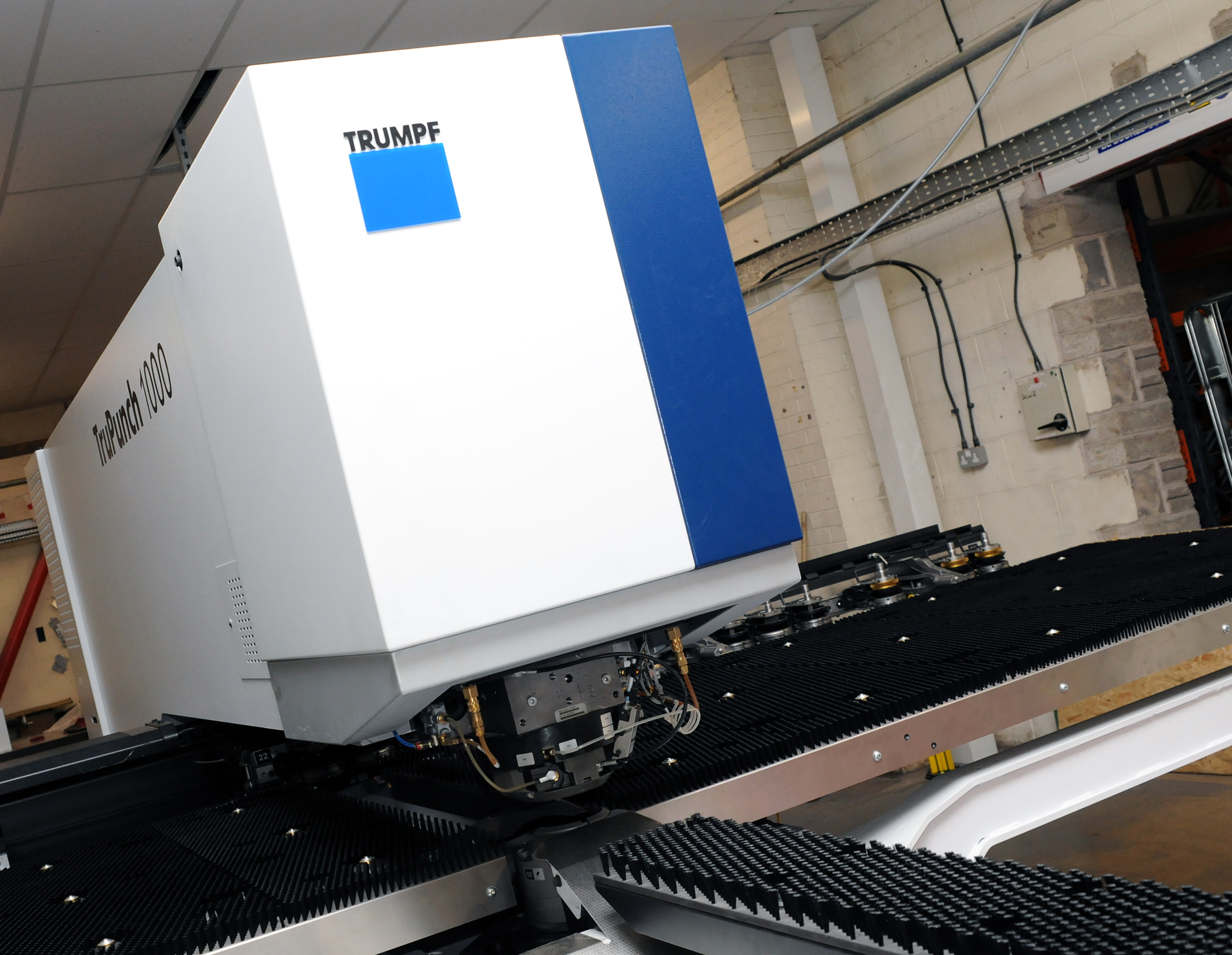
We have invested in a new £1/4m TRUMPF CNC metal punch as part of an asset renewal strategy for our UK manufacturing capability. The new machine will be used in the production of a wide variety of our power distribution systems and workstation power products at our Rotherham factory. Suitable for handling sheet metal between 0.9mm and 3.0mm thick, the new machine will replace one...

Read more
CMD CATALOGUE PROVIDES TECHNICAL POWER DISTRIBUTION GUIDE

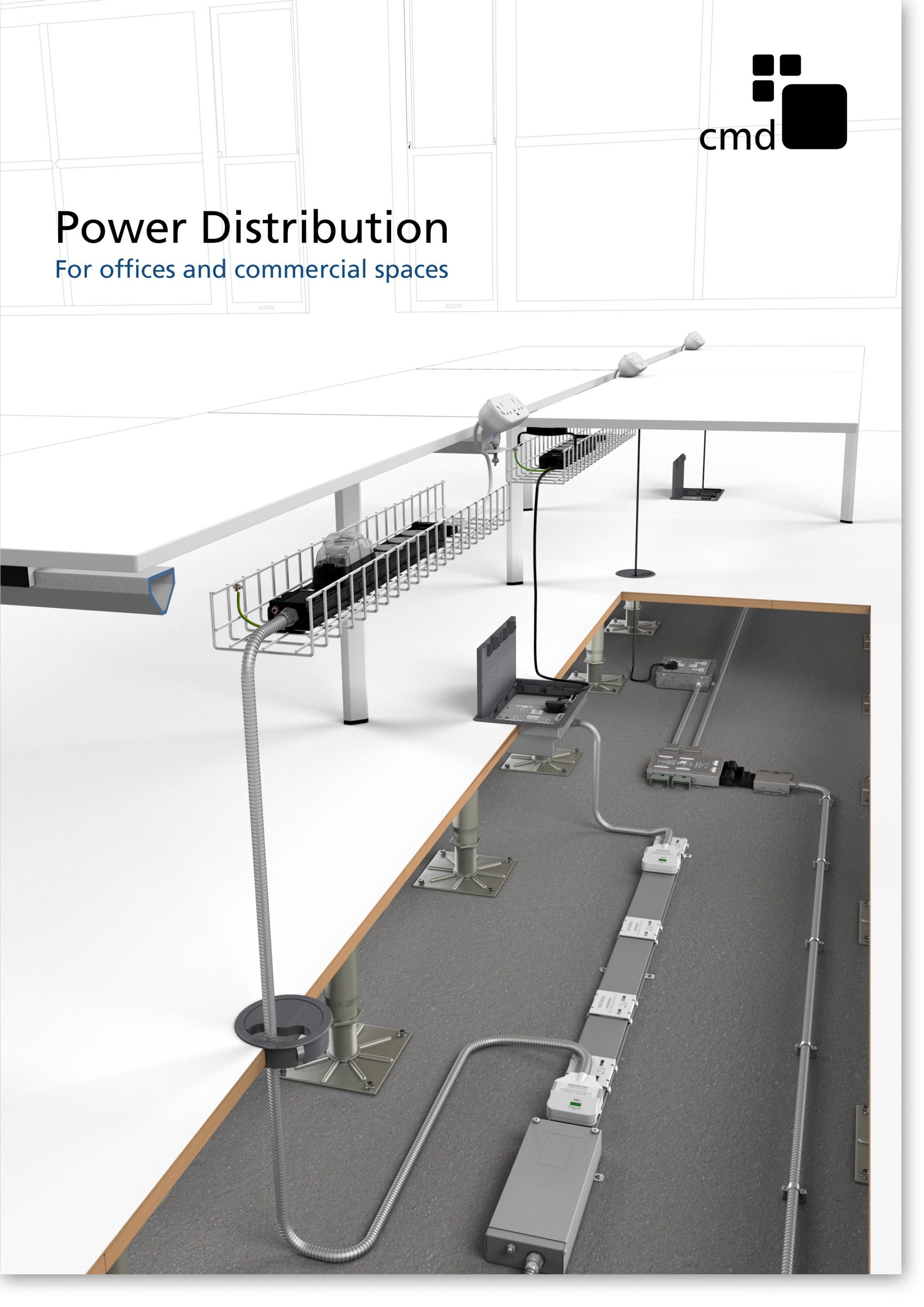
CMD Ltd has released a new catalogue, providing an easy to follow technical guide to our power distribution systems and plug and play desk modules. Detailing CMD’s full range of UK-manufactured power distribution systems and plug and play desk modules, the catalogue will be a helpful source of information to M&E engineers and contractors alike to understand how our power distribution systems connect together and...

Read more
Power Distribution Catalogue
CMD Ltd PLAYS ESSENTIAL ROLE IN ELECTRICAL FIT OUT AT LONDON’S PRESTIGIOUS OFFICE DEVELOPMENT

CMD Ltd, specialist in workplace connectivity and ergonomic solutions, has provided a flexible and high-quality power distribution network for The Ray, a prestigious office development in London’s Farringdon. Well-known for being the former site of The Guardian newspaper, The Ray now stands as an 83,000ft² office development characterised by a modernised warehouse aesthetic, with level two now occupied by a global social media company. The...

Read more

The Ray
CMD plugs in to european opportunity with Schuko Capsule unit launch

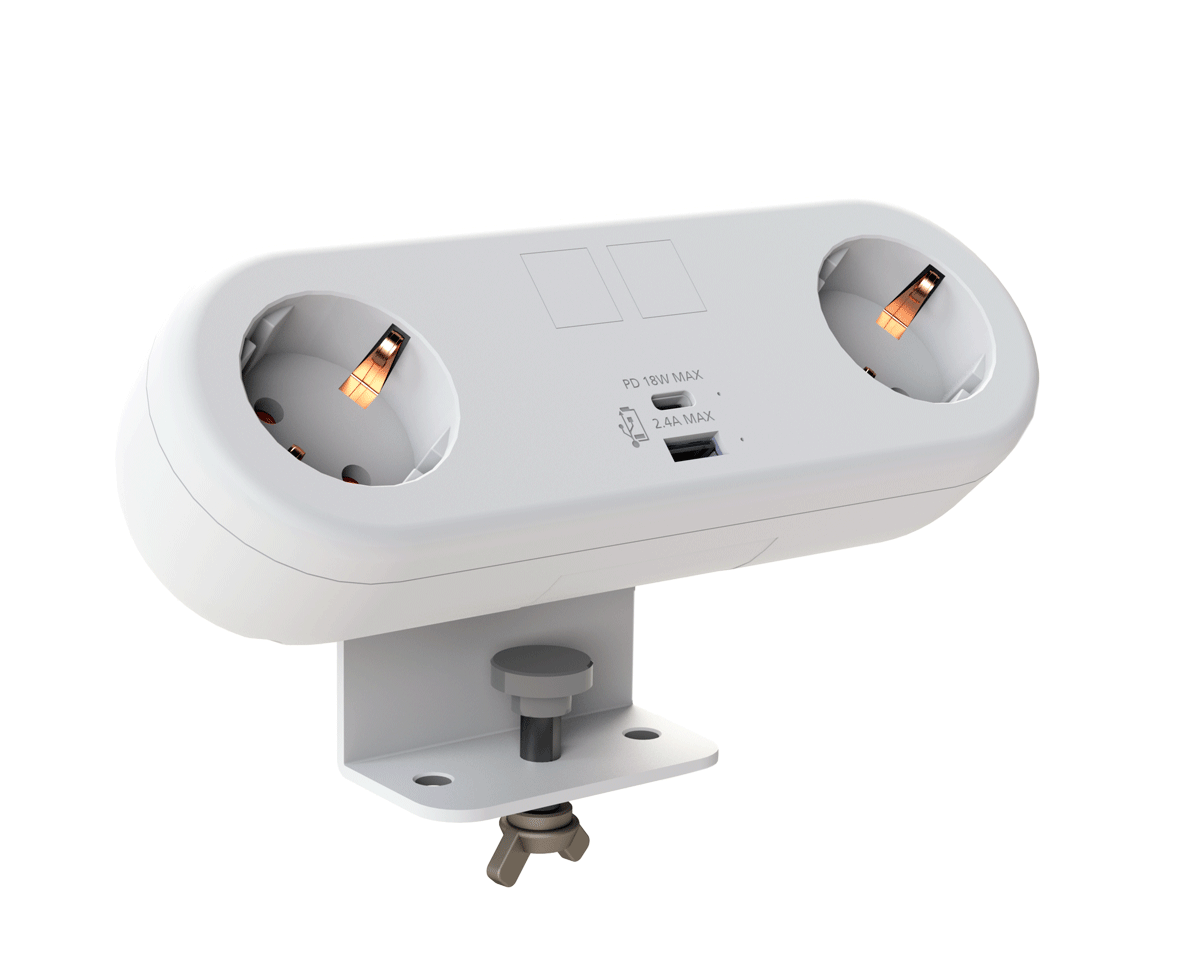
CMD Ltd, the specialist in power and connectivity solutions for commercial environments, has launched a Schuko version of its popular fixed format Capsule workstation power module for export to mainland Europe and beyond. A popular on desk power module comprising two sockets and dual USB (type A and C) chargers, CMD’s Capsule unit is already widely specified in the UK as an off-the-shelf workstation power...

Read more
CMD White Schuko Capsule Desk Power Module
CMD LTD EXTENDS MONITOR ARM RANGE WITH THE LAUNCH OF REACH PLUS

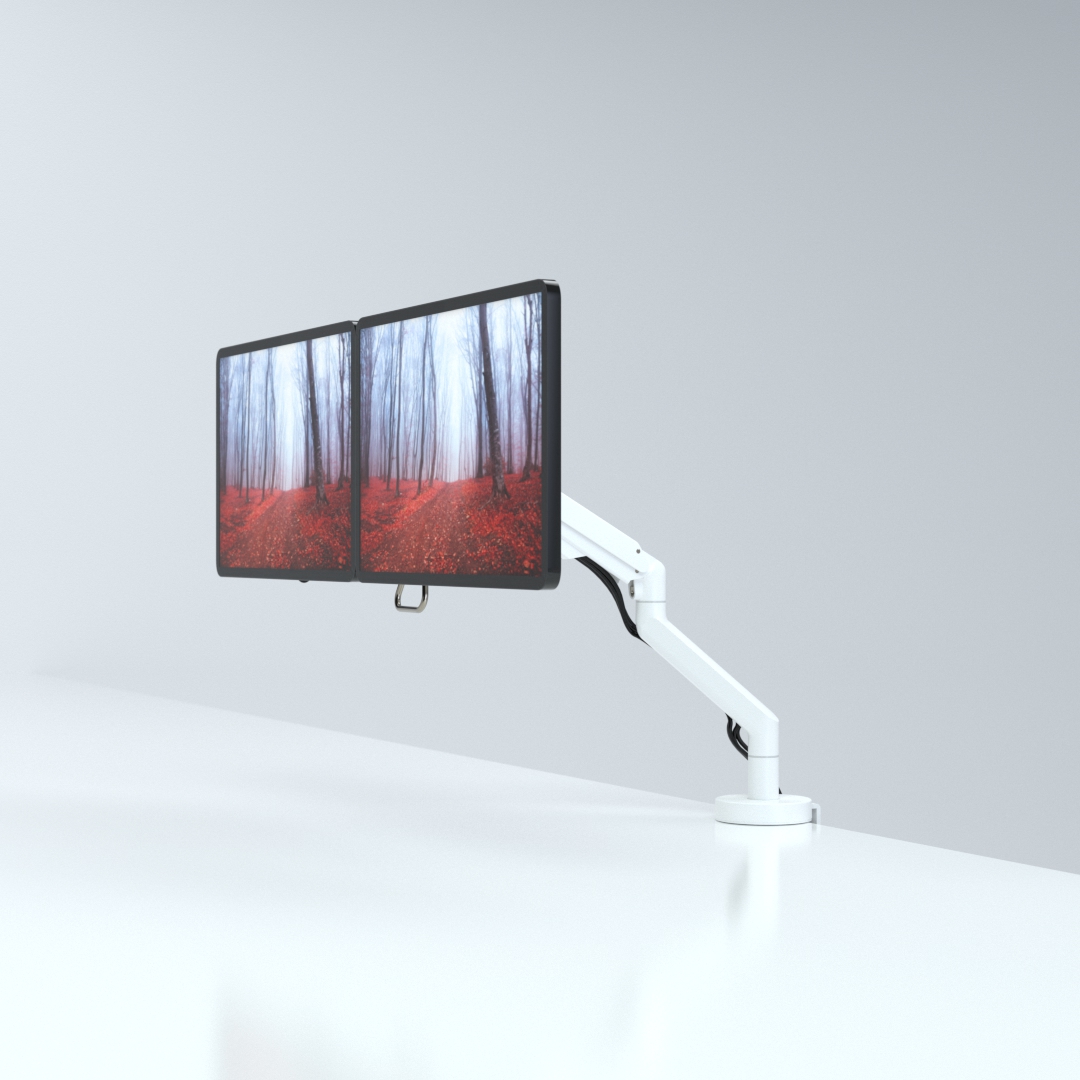
CMD Ltd, the specialist in ergonomic and connectivity solutions for commercial interiors, has completed its Reach monitor arm range with the launch of the Reach Plus. Available in single or dual screen options, the Reach Plus has been designed to provide an ideal solution for both single and dual screen workstation configurations, or can be used with next generation of large format curved screens. Suitable...

Read more
CMD Ltd DEMONSTRATES THE ART OF POWER DISTRIBUTION AT THE UNIVERSITY OF WARWICK

CMD Ltd, the specialist in workplace connectivity and ergonomic solutions, has provided Betatrak busbar power distribution and a range of electrical accessories for two major capital investment projects at the University of Warwick. Designed by Fielden Clegg Bradley Studios, the £33 million Faculty of Arts building is a showpiece development comprising four interconnected structures set around a central atrium, which will enable inter-disciplinary collaboration across...

Read more

University of Warwick
CMD BRINGS HARMONY TO COVENTRY UNIVERSITY RESEARCH FACILITIES

CMD Ltd, the specialist in power distribution solutions and workstation power and ergonomics, has provided under desk and on desk power modules for the refurbishment of three Coventry University research buildings. Located on Coventry University Technology Park, a business park designed to encourage collaboration between the university and knowledge-based businesses, the three buildings are being repurposed as office accommodation for university research teams. The refurbishment...

Read more

Coventry University

What is a Power Charger and How Does It Work?

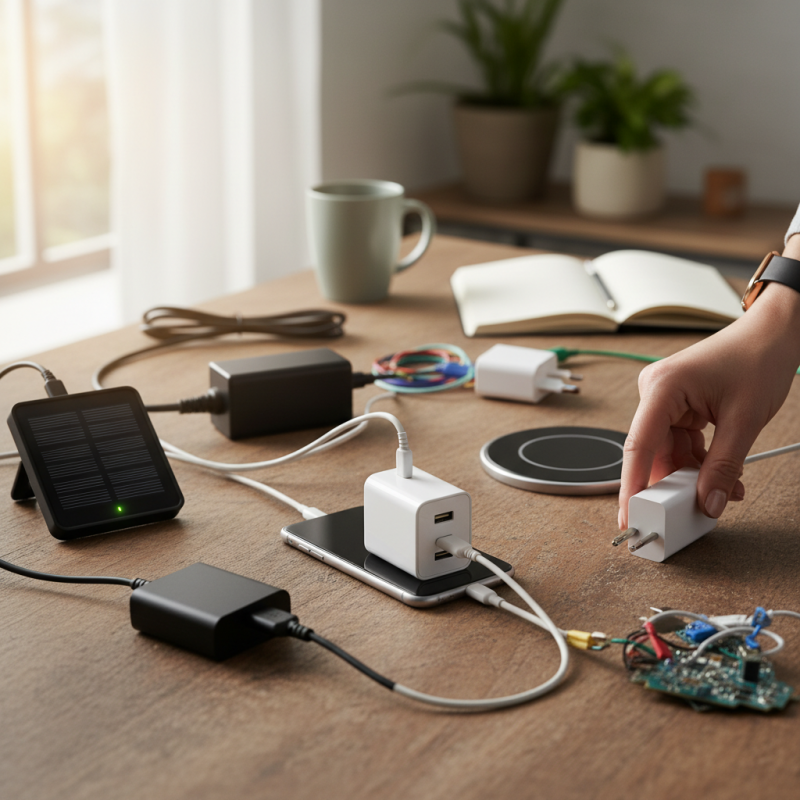
A power charger is an essential device in today’s tech-driven world. It provides the energy needed for smartphones, laptops, and other gadgets. According to Dr. Emily Chen, an expert in power systems, "A reliable power charger is key to our daily connectivity." This underscores the role of chargers in our lives.

Power chargers come in various types. Each type serves different needs. For example, fast chargers deliver high energy quickly. On the other hand, solar chargers rely on sunlight. These variations can meet unique consumer demands. However, with such options, confusion often arises. Some consumers might not choose the best charger for their devices.

We face environmental concerns too. Overusing chargers can contribute to electronic waste. Many chargers are discarded even when still functional. This raises important questions about sustainability in the power charger industry. Are we making wise choices? Power chargers should not be mere conveniences but also responsible tools. Thus, reflecting on our device usage is crucial for a better future.

What is a Power Charger and How Does It Work?

What is a Power Charger? Definition and Purpose

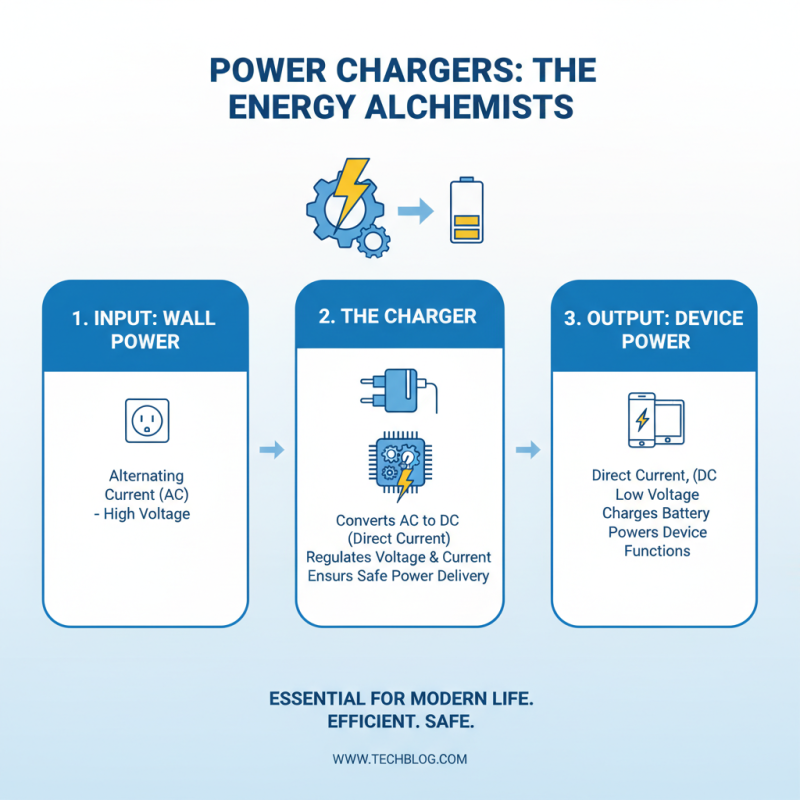
A power charger is a device designed to replenish the energy in batteries. It serves a fundamental purpose: to ensure that electronic devices remain operational. These chargers come in various shapes and sizes, catering to different gadgets like smartphones, tablets, and laptops. They convert electrical energy from a wall outlet into a form suitable for charging batteries.

When you connect a device to a power charger, the charging process begins. Current flows from the charger to the device, allowing it to draw energy. However, not all chargers work the same way. Some may charge quickly, while others take longer. This inconsistency can be bothersome when you're in a hurry. It's crucial to understand these differences to select the right charger for your needs.

Power chargers can be confusing. Many users assume all chargers are equal, which isn't the case. Some devices require specific charging protocols. Using the wrong charger might not only be inefficient but could also risk damaging the device. Awareness of your device's specifications is essential.

Types of Power Chargers: Wall, Car, and Wireless Variants

Power chargers come in various types, including wall, car, and wireless variants. Each type serves a different purpose based on user needs and environments. Wall chargers are often the most common. They plug directly into a power outlet. They are typically efficient and provide fast charging. However, they can be bulky and less convenient for travelers.

Car chargers are a useful alternative. They connect to your vehicle's power outlet, allowing you to charge devices on the go. This is handy during long drives. Yet, they may not charge as quickly as wall chargers. Users often find themselves planning charging times to maximize efficiency. Wireless chargers offer a futuristic option. They eliminate cords and cables. You simply place your device on the pad. While convenient, they can be slower and less energy-efficient. Users may also forget their device isn’t charging until it's too late.

Each type of charger has its strengths and weaknesses. Some may need to consider their charging habits. Selecting the right charger means balancing convenience and efficiency. Making the best choice can improve how you manage your devices daily. The world of power chargers is evolving, and users must keep up.

How Power Chargers Convert Electrical Energy: The Science Behind It

What is a Power Charger and How Does It Work?

Power chargers are vital for our electronic devices. They convert electrical energy into the form required by gadgets. Understanding this process helps us appreciate their function.

When you connect a device to a power charger, the charger starts working instantly. It takes high voltage electricity from the outlet and reduces it to a safe level. This alteration ensures your device does not get damaged. The charger often uses a transformer and capacitors for this conversion. The transformer changes the voltage, while capacitors smooth out the current.

This process is not always perfect. Sometimes, chargers can overheat or malfunction. Issues like surge protection are necessary but not foolproof. The efficiency of energy conversion can also vary, causing energy loss. Such inefficiencies remind us that technology, while advanced, still has room for improvement. Each connection tells a story of energy movement and transformation. Using power chargers means putting our trust in an ongoing journey of science and technology.

Key Specifications of Power Chargers: Wattage, Voltage, and Compatibility

A power charger is essential for modern devices. It supplies electricity to various gadgets. Understanding key specifications is vital. Wattage indicates how quickly a charger can power a device. Higher wattage means faster charging. For example, a 20W charger can recharge a smartphone more quickly than a 5W charger.

Voltage is another important factor. It determines the electrical force that pushes current through. Devices require specific voltage levels. Using the wrong voltage can cause issues. Compatibility is crucial too. A charger must match the device's power needs. Not all chargers work with every gadget. Mismatched chargers lead to slow charging or potential damage.

When selecting a charger, consider these details. Using a charger with the correct wattage and voltage ensures optimal performance. However, it's easy to overlook these specifications. Many users simply grab any charger available. This can lead to frustration and wasted time. Users should reflect on their charging habits. Choosing the right charger enhances the device's lifespan.

Safety Standards for Power Chargers: UL and CE Certifications Explained

Power chargers are essential in our daily tech-driven lives, but safety should always come first. Understanding certifications like UL and CE can help you choose the right products. UL (Underwriters Laboratories) ensures that chargers meet high safety standards. A UL certification indicates that the product has been tested for safety hazards. On the other hand, CE (Conformité Européenne) certification means the charger complies with EU safety regulations. Without these certifications, you might risk using a poorly designed charger.

Choosing a charger isn’t just about price. Look for chargers with these certifications. They not only protect your devices but also your safety. Tips: Always check the label before buying. If you see either UL or CE, it's a good sign. However, don’t solely rely on labels. Sometimes, brands may misuse or misprint certifications. Read reviews or do background checks on manufacturers.

Keep in mind that not all chargers look alike. Some may seem safe, yet lack proper certification. This could lead to overheating or even electrical fires. Tips: Use chargers that came with your devices. They are often designed to work best. Mixing and matching can cause problems you didn’t foresee. Reflect on your charging habits to ensure you prioritize safety.

What is a Power Charger and How Does It Work? - Safety Standards for Power Chargers: UL and CE Certifications Explained

Feature Description Safety Standard Certification Body
Charging Speed Typically ranges from 5W to 100W depending on device compatibility. UL 60950-1 Underwriters Laboratories
Input Voltage Commonly supports 100-240V AC input. CE Marking European Conformity
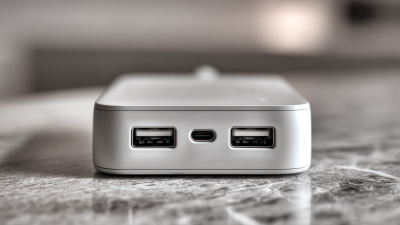
Output Ports USB-A, USB-C, and sometimes AC outlets. IEC 62368-1 International Electrotechnical Commission
Overcurrent Protection Prevents damage from excessive current flow. RoHS Restriction of Hazardous Substances
Temperature Regulation Built-in mechanisms to avoid overheating during charging. ISO 9001 International Organization for Standardization