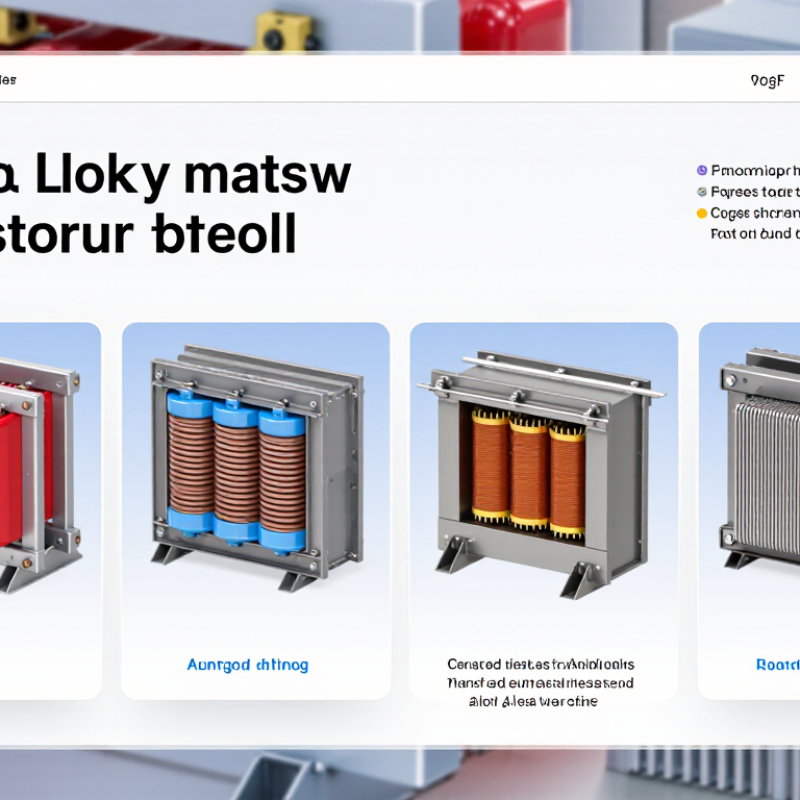
| VPI Dry-Type Transformer | Copper or aluminium windings are insulated with resin varnish and treated through vacuum pressure impregnation. The resin penetrates the insulation system but does not normally form a thick cast-resin block around the complete winding. | Laminated electrical-steel core with separately wound, resin-impregnated coils. The open winding structure allows air circulation around the conductors. | Natural air cooling, generally designated AN. Forced-air fans may be added for higher short-time or continuous loading, generally designated AF. | Commonly from approximately 100 kVA to several MVA, depending on the design, voltage class, enclosure and cooling arrangement. | - Impregnated rather than fully encapsulated windings.
- Usually lighter and more accessible for inspection than cast-resin designs.
- Coil surfaces and ventilation channels remain comparatively exposed.
| - Good thermal performance and repairability.
- Often lower initial cost than cast-resin construction.
- Suitable for many indoor industrial and commercial installations.
| Commercial buildings, industrial plants, motor-control systems, utilities, data facilities and indoor substations with controlled environmental conditions. | Requires protection from excessive moisture, conductive dust, corrosive contaminants and severe outdoor exposure unless an appropriate enclosure and environmental treatment are provided. |
| Cast-Resin Transformer | The medium-voltage windings are encapsulated in cured epoxy resin, while low-voltage windings are commonly resin-insulated or resin-treated according to the design. | Laminated core with rigid resin-encapsulated coils. The encapsulation provides mechanical support and a continuous protective surface around the high-voltage winding. | Natural air cooling, AN, is standard. Forced-air cooling, AF, can increase the rated output or support temporary overload operation. | Commonly from approximately 100 kVA to 20 MVA, with larger ratings available for specialized applications. | - High-voltage coils are solidly encapsulated in epoxy resin.
- Resin forms a rigid barrier against moisture and many contaminants.
- Windings are generally more compact and mechanically robust.
| - Good resistance to humidity, dust and many industrial contaminants.
- Low fire risk compared with oil-filled transformers.
- Strong short-circuit withstand capability when correctly designed.
| Hospitals, tunnels, airports, high-rise buildings, renewable-energy plants, marine facilities, metro systems and industrial substations. | Resin temperature limits, thermal expansion, site altitude, ventilation and partial-discharge performance should be evaluated. Repair of severely damaged encapsulated coils can be difficult. |
| Open-Wound Dry-Type Transformer | Windings use enamelled conductors, paper, polyester film, varnish or combinations of solid insulation materials. Coils are commonly varnish-treated rather than fully resin-encapsulated. | Laminated core and exposed or semi-exposed coils mounted on insulated supports. The structure is simple and provides direct access for air circulation and inspection. | Natural air cooling, AN, is typical. Fan-assisted cooling can be used when required by the thermal design. | Frequently used from small distribution ratings up to approximately 5 MVA, although the available range varies by manufacturer and voltage class. | - No solid epoxy block surrounding the complete high-voltage coil.
- Greater dependence on the installation environment and enclosure.
- Coil supports, clearances and ventilation paths are visibly accessible.
| - Simple construction and generally straightforward maintenance.
- Efficient heat dissipation under clean, dry conditions.
- Can be economical for protected indoor installations.
| Clean electrical rooms, OEM equipment, controlled industrial spaces and indoor distribution systems. | Not the preferred choice for locations with high humidity, salt spray, conductive dust or chemical vapors unless the enclosure and insulation system are specifically engineered for those conditions. |
| Air-Core Dry-Type Transformer | Windings are insulated with solid electrical insulation, but there is no ferromagnetic core. Coil insulation and physical spacing provide the required dielectric strength. | Cylindrical, helical or disc windings are supported mechanically without a laminated iron core. The absence of a magnetic core gives the transformer very low core-loss behavior. | Natural air cooling or forced-air cooling, depending on the current, frequency and thermal design. | Commonly used for specialized low-voltage, high-frequency or current-limiting duties; capacity is highly application-specific rather than standardized. | - No iron or steel magnetic circuit.
- Higher leakage reactance can be intentionally designed into the winding geometry.
- Physical size and electromagnetic clearances may be significant.
| - No core saturation under normal magnetic operation.
- Useful for high-frequency, harmonic-filtering and current-limiting applications.
- Suitable where controlled leakage impedance is required.
| Power-electronic equipment, high-frequency systems, current-limiting reactors, arc-furnace auxiliaries and specialized laboratory or industrial equipment. | It is not normally a direct replacement for a conventional iron-core distribution transformer. Acoustic noise, electromagnetic fields, leakage reactance and physical clearances require careful review. |
| Three-Phase Dry-Type Distribution Transformer | May use VPI, open-wound or cast-resin insulation. Three high-voltage and three low-voltage phase windings are arranged around a common three-limb magnetic core. | Three-limb laminated core with three phase coil assemblies. Connections may be delta, wye or another specified vector group, with optional neutral terminals. | Usually AN; AF fans may be installed when additional capacity or load flexibility is required. | Commonly from approximately 30 kVA to 10 MVA for distribution duties, subject to voltage, cooling and applicable standards. | - Three phases share one magnetic core assembly.
- Phase displacement and vector group are integral to the design.
- May include taps, temperature sensors, enclosure and neutral grounding provisions.
| - Efficient solution for balanced three-phase loads.
- Compact compared with three separate single-phase units at equivalent service ratings.
- Suitable for medium- and low-voltage distribution systems.
| Factories, commercial buildings, renewable-energy collection systems, institutional facilities and utility distribution substations. | Confirm primary and secondary voltage, frequency, vector group, tap range, impedance, neutral arrangement, fault level and local installation requirements. |
| Single-Phase Dry-Type Transformer | Windings may be VPI-treated, varnish-treated or resin-encapsulated. The insulation system is selected according to voltage class, capacity and environmental requirements. | Usually built on a two-limb laminated core with one primary and one secondary winding assembly, or as a modular unit for multi-unit banks. | Natural air cooling is standard for many ratings; forced air can be provided for selected higher-capacity designs. | Commonly from a few hundred VA to approximately 1 MVA, with larger special-purpose units available. | - One phase is magnetically and electrically independent.
- Can be installed as an individual transformer or combined into a three-phase bank.
- Often offers flexible connection and replacement options.
| - Useful for single-phase loads and localized voltage conversion.
- Easy to distribute across separate load centers.
- A failed unit may be replaced without removing an entire three-phase assembly.
| Lighting systems, control power, residential and commercial distribution, railway auxiliaries and special-purpose equipment. | When used in a bank, phase balance, impedance matching, grounding method and individual unit protection must be coordinated across all phases. |
| Rectifier or Converter Dry-Type Transformer | Heavy-duty insulation systems are used for windings exposed to harmonic currents, voltage distortion and frequent thermal cycling. VPI and cast-resin constructions are both used. | May include multiple secondary windings, phase-shifting arrangements, extended creepage distances and reinforced mechanical support for high short-circuit forces. | AN or AF, selected according to harmonic losses, duty cycle and load profile. Temperature monitoring is commonly integrated. | Commonly from several hundred kVA to many MVA, depending on the converter topology and industrial process. | - Multiple or phase-shifted secondary windings may be provided.
- Designed for non-sinusoidal current and additional eddy-current losses.
- May require special impedance and short-circuit withstand characteristics.
| - Suitable for high-power electronic conversion systems.
- Can reduce harmonic effects through phase-shifting arrangements.
- Eliminates liquid insulation and its associated containment requirements.
| Variable-speed drives, electrolysis, traction systems, battery charging, industrial rectifiers and large power-electronic installations. | Specify the converter pulse number, harmonic spectrum, duty cycle, DC load profile, short-circuit forces, impedance and required phase shift before selecting the transformer. |
| Special-Enclosure Dry-Type Transformer | The internal winding system may be VPI, open-wound or cast-resin. The enclosure adds environmental and mechanical protection but does not replace the internal insulation system. | Standard core-and-coil assembly installed in a ventilated metal enclosure. Enclosures may be indoor, outdoor, dust-protected, corrosion-resistant or acoustically treated. | Natural or forced air through designed louvers, filters and ventilation paths. Airflow must be maintained without compromising the enclosure rating. | Available across a broad range, commonly from approximately 15 kVA to several MVA. | - Protective enclosure is a major part of the installation structure.
- Ventilation openings, filters, cable entries and access doors affect thermal performance.
- May include space heaters, thermostats, noise barriers or corrosion protection.
| - Improved protection from accidental contact and environmental contamination.
- Can be adapted for outdoor or harsh industrial locations.
- Provides a controlled interface for cables and auxiliary equipment.
| Outdoor substations, wastewater plants, coastal facilities, mining sites, process industries and locations with restricted access. | Verify the enclosure protection level, corrosion category, ventilation clearance, ambient temperature, altitude, noise limits and maintenance access. |