

News

Miro: A New Standard in Responsible Innovation

Miro: A New Standard in Responsible Innovation The Miro monitor arm is setting new benchmarks in sustainability. It offers a high-performance solution without compromising on environmental responsibility. Designed with careful material selection, local sourcing, and longevity in mind, Miro’s responsible approach to design and unique manoeuvrability set it apart from the competition. Sustainable Choices Miro is crafted from energy-efficient materials with a lower carbon impact....

Read more
HSE Advisor

Role Purpose Support in the development, implementation and maintenance of the company’s Health, Safety & Environmental policies, processes, operational procedures, and standards.  Ensuring best practice and championing a continually improving HSE culture within the business. Key Responsibilities Liaise with and provide support to all areas of the business to eliminate, mitigate or reduce identified HSE exposures. Partner with the production management team and team leaders,...

Read more
CMD Ltd LAUNCHES 48-HOUR TURNAROUND ON BETATRAK® RAPID ORDERING SERVICE

CMD Ltd, the specialist in power distribution systems, workstation power and monitor arms, has launched a rapid ordering service for its Betatrak® underfloor powertrack distribution systems and accessories, with a commitment to delivering within 48-hours of an approved purchase order*. The service enables customers to order up to 50 lengths of Standard or Clean Earth (C/E) low noise Betatrak, along with up to 25 feed...

Read more

CMD INVESTS £1/4 MILLION IN NEW MACHINE AS PART OF FACTORY UPGRADE

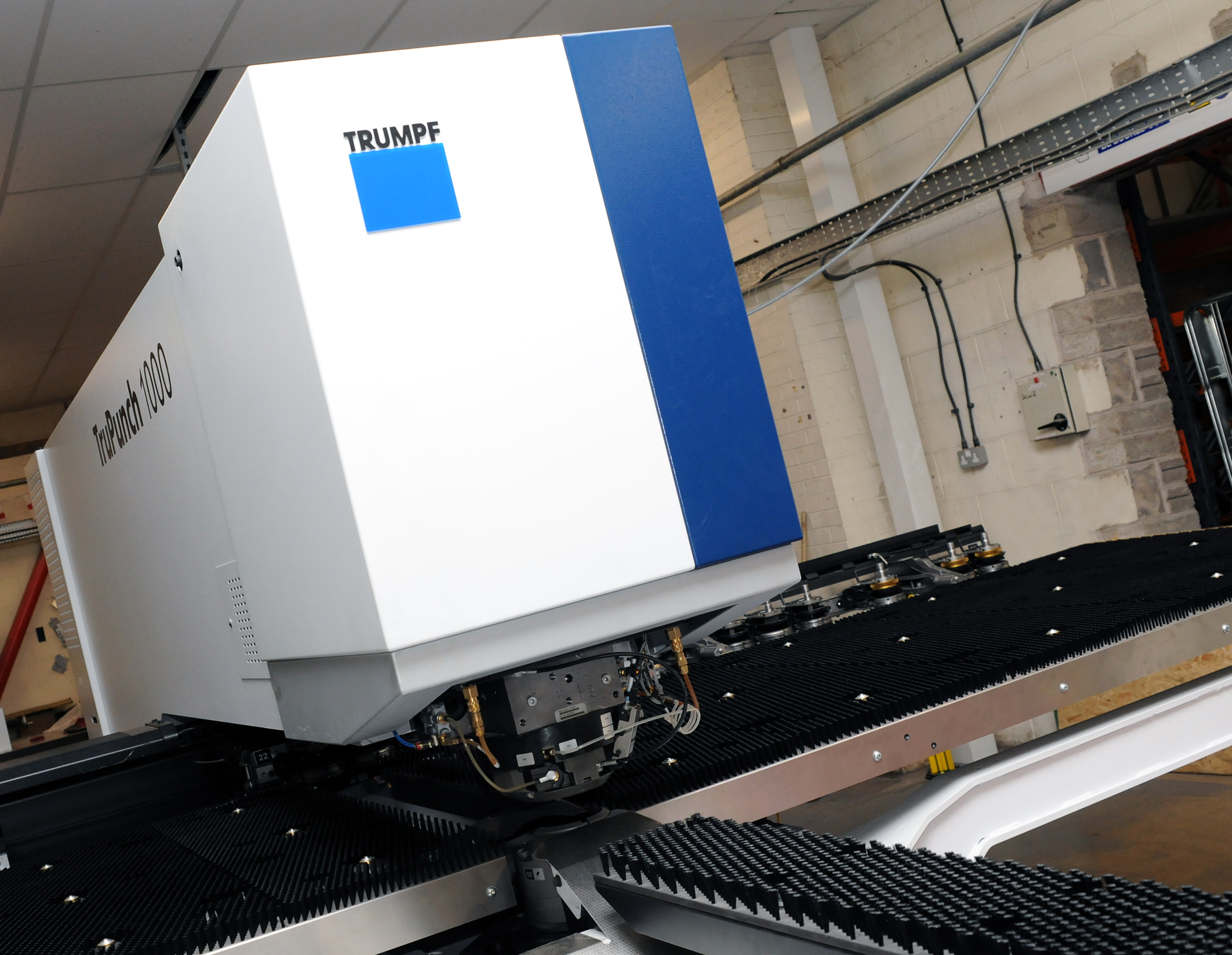
We have invested in a new £1/4m TRUMPF CNC metal punch as part of an asset renewal strategy for our UK manufacturing capability. The new machine will be used in the production of a wide variety of our power distribution systems and workstation power products at our Rotherham factory. Suitable for handling sheet metal between 0.9mm and 3.0mm thick, the new machine will replace one...

Read more
CMD CATALOGUE PROVIDES TECHNICAL POWER DISTRIBUTION GUIDE

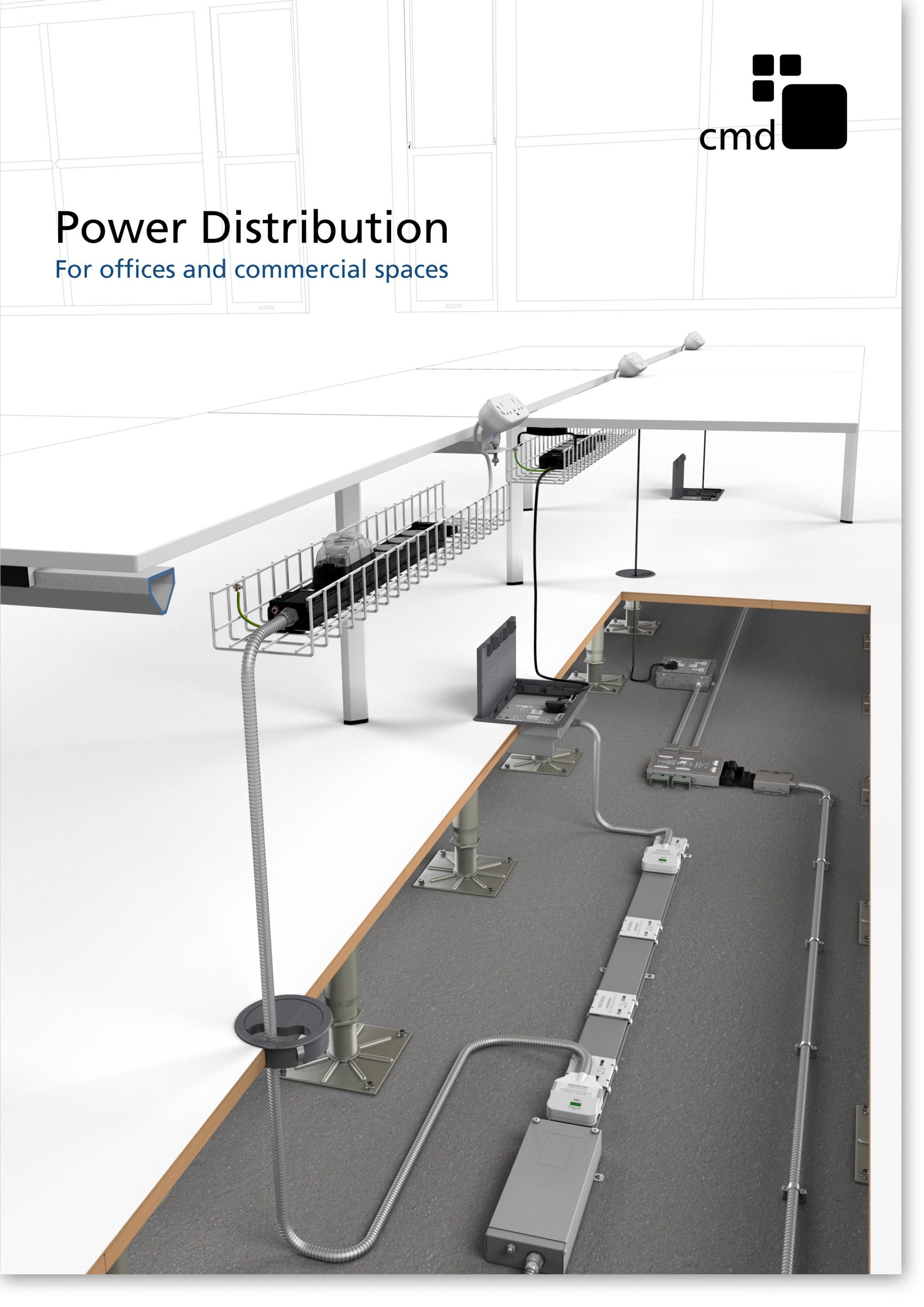
CMD Ltd has released a new catalogue, providing an easy to follow technical guide to our power distribution systems and plug and play desk modules. Detailing CMD’s full range of UK-manufactured power distribution systems and plug and play desk modules, the catalogue will be a helpful source of information to M&E engineers and contractors alike to understand how our power distribution systems connect together and...

Read more
Power Distribution Catalogue
CMD Ltd PLAYS ESSENTIAL ROLE IN ELECTRICAL FIT OUT AT LONDON’S PRESTIGIOUS OFFICE DEVELOPMENT

CMD Ltd, specialist in workplace connectivity and ergonomic solutions, has provided a flexible and high-quality power distribution network for The Ray, a prestigious office development in London’s Farringdon. Well-known for being the former site of The Guardian newspaper, The Ray now stands as an 83,000ft² office development characterised by a modernised warehouse aesthetic, with level two now occupied by a global social media company. The...

Read more

The Ray
CMD plugs in to european opportunity with Schuko Capsule unit launch

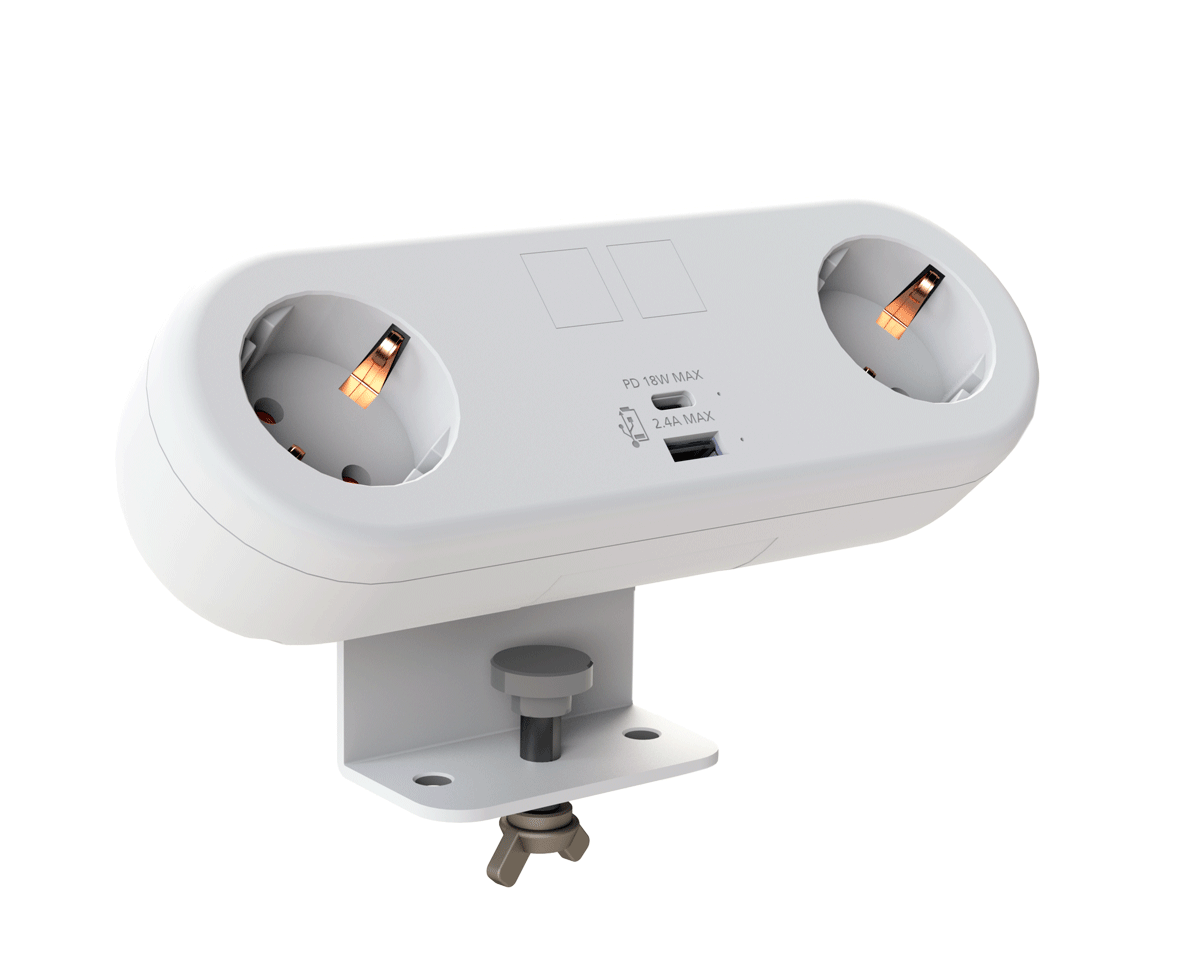
CMD Ltd, the specialist in power and connectivity solutions for commercial environments, has launched a Schuko version of its popular fixed format Capsule workstation power module for export to mainland Europe and beyond. A popular on desk power module comprising two sockets and dual USB (type A and C) chargers, CMD’s Capsule unit is already widely specified in the UK as an off-the-shelf workstation power...

Read more
CMD White Schuko Capsule Desk Power Module
CMD LTD EXTENDS MONITOR ARM RANGE WITH THE LAUNCH OF REACH PLUS

CMD Ltd, the specialist in ergonomic and connectivity solutions for commercial interiors, has completed its Reach monitor arm range with the launch of the Reach Plus. Available in single or dual screen options, the Reach Plus has been designed to provide an ideal solution for both single and dual screen workstation configurations, or can be used with next generation of large format curved screens. Suitable...

Read more

CMD Ltd DEMONSTRATES THE ART OF POWER DISTRIBUTION AT THE UNIVERSITY OF WARWICK

CMD Ltd, the specialist in workplace connectivity and ergonomic solutions, has provided Betatrak busbar power distribution and a range of electrical accessories for two major capital investment projects at the University of Warwick. Designed by Fielden Clegg Bradley Studios, the £33 million Faculty of Arts building is a showpiece development comprising four interconnected structures set around a central atrium, which will enable inter-disciplinary collaboration across...

Read more

University of Warwick
CMD BRINGS HARMONY TO COVENTRY UNIVERSITY RESEARCH FACILITIES

CMD Ltd, the specialist in power distribution solutions and workstation power and ergonomics, has provided under desk and on desk power modules for the refurbishment of three Coventry University research buildings. Located on Coventry University Technology Park, a business park designed to encourage collaboration between the university and knowledge-based businesses, the three buildings are being repurposed as office accommodation for university research teams. The refurbishment...

Read more


Coventry University

How to Choose a Vacuum Transfer Pump for Your Needs?

Choosing a Vacuum Transfer Pump is rarely a simple matter of comparing motor power or purchase price. The pump must match the material, container, pressure range, transfer distance, and working environment. A unit that performs well with clean water may struggle with viscous oils, solvents, powders, or liquids containing suspended particles. Small differences matter. Hose diameter, seal design, and vapor resistance can change the result.

John F. O’Hanlon, a respected vacuum-technology author, offers a practical reminder: “The choice of a vacuum pump is determined by the process, not by the pump alone.” This principle should guide every selection. A reliable evaluation begins with the actual application. Measure the required flow rate. Define the target vacuum level. Check chemical compatibility. Consider whether the pump will run continuously or only for short cycles.

Real equipment is less predictable than a catalog suggests. Temperature changes. Operators make mistakes. Materials behave differently after storage. These details deserve attention. Sometimes, the cheapest pump becomes expensive through frequent seal replacement, slow transfer, or unexpected downtime. That lesson is easy to overlook.

This guide explains how to choose a Vacuum Transfer Pump with practical criteria and technical judgment. It compares pump types, explains key specifications, and highlights common selection errors. You will also find questions worth asking suppliers before purchasing. The final decision should not depend on one impressive number. It should reflect the complete process, from the first connection to long-term maintenance.

How to Choose a Vacuum Transfer Pump for Your Needs?

Define the Transfer Task and Vacuum Requirements

Choosing a vacuum transfer pump starts with the material, not the pump catalog. Define exactly what must move, how far, and how quickly. Is the fluid thin like water, or thick like syrup? Does it contain particles, dissolved gas, or moisture? Record temperature and viscosity at the actual operating point. A pump that works well in a workshop may struggle beside a warm process line. I have seen teams specify “high vacuum” when their real need was steady liquid flow. That mistake increased cost without improving the transfer.

Write down the required inlet pressure, outlet pressure, flow rate, and transfer time. Then identify whether the pump must lift liquid, evacuate a vessel, or perform both tasks. Vacuum level alone is not enough. The system may leak through a loose fitting, clogged filter, or flexible hose that collapses under suction. Check hose diameter, line length, elevation, and the liquid’s vapor pressure. These details determine the pump’s practical capacity. Leave operating margin, but do not choose the largest unit automatically. Oversizing can cause unstable control, excess energy use, and difficult priming. A simple test with a calibrated gauge and measured flow often reveals more than a brochure. It may also expose an assumption worth revisiting. Before selection, confirm seal compatibility, cleaning needs, noise limits, and safe temperature ranges. Document every measurement, including uncertainty. Reliable decisions come from real conditions, not ideal figures.

Match Pump Type to Fluid Properties and Operating Conditions

How to Choose a Vacuum Transfer Pump for Your Needs?

Match the pump type to the fluid before comparing flow rates. Water-like liquids may suit a diaphragm or centrifugal design. Thick syrup, oil, or resin needs a positive-displacement pump with controlled shear. Check viscosity at the actual transfer temperature, not at room temperature. A cold drum can turn a simple job into a slow, overheated operation.

Vapor pressure matters. If the fluid flashes near the inlet, the pump may lose prime or cavitate. Solids require a wider passage, suitable elastomers, and a realistic particle-size limit. Corrosive chemicals demand compatible wetted materials. Dry-running risk also changes the choice; a diaphragm pump may tolerate brief interruptions better than some rotary designs. Field commissioning frequently exposes overlooked details, especially suction-line length and clogged strainers. Small errors matter.

Operating conditions complete the selection. Record required vacuum, discharge pressure, flow range, duty cycle, temperature, altitude, and available power. For pneumatic equipment, the U.S. Department of Energy’s 2016 compressed-air sourcebook reports that compressed air can consume about 10% of industrial electricity, while leaks may waste 20–30% of output. That makes air consumption a real operating cost, not a minor specification. The U.S. DOE’s pumping-system guidance also links oversized pumps with throttling losses. A neat selection spreadsheet can still mislead. Test the fluid, measure actual demand, and leave room for startup conditions.

How to Choose a Vacuum Transfer Pump for Your Needs?

Typical viscosity capability by pump type. Match the pump to fluid viscosity, solids content, shear sensitivity, required flow, and vacuum conditions.

Viscosity ranges are typical screening values in cP; actual limits depend on pump design, temperature, materials, pressure, and operating speed.

Compare Flow Rate, Vacuum Level, and Transfer Distance

How to Choose a Vacuum Transfer Pump for Your Needs?

Flow rate should be your first practical checkpoint. A pump rated at 40 litres per minute may deliver far less through narrow tubing. The U.S. Department of Energy reports that pumping systems can consume nearly 20% of industrial electricity. Oversizing can therefore increase energy waste and reduce control. Measure the liquid volume, transfer time, hose diameter, and fittings before selecting capacity. A simple bucket test often reveals uncomfortable surprises.

The U.S. Department of Energy reports that pumping systems can consume nearly 20% of industrial electricity.

Vacuum level matters when the fluid contains trapped air or has high viscosity. Absolute pressure is more useful than a vague “maximum vacuum” claim. ISO 21360-1 provides standard methods for measuring vacuum-pump performance, including ultimate pressure and pumping speed. Use the lowest vacuum level that starts the transfer reliably. Excessive vacuum may cause foaming, hose collapse, or product damage. I have seen calculations look perfect until a warm, flexible hose changed the result.

Transfer distance is the detail many specifications hide. Vertical lift, horizontal piping, bends, filters, and liquid temperature all reduce real performance. Select a pump using its performance curve, not its free-air rating. The Hydraulic Institute’s pump guidance emphasizes evaluating duty conditions rather than relying on one headline value. Leave reasonable margin, but not an extreme one. Too much margin is often expensive confidence. Test the complete setup under operating conditions, then record flow rate, vacuum level, and transfer time for future adjustments.

Check Materials, Compatibility, Safety, and Maintenance Needs

Choosing a vacuum transfer pump starts with the material, not the catalog number. List the liquid’s viscosity, temperature, vapor pressure, solids, and chemical concentration. A solvent may soften an elastomer that looks suitable on paper. A thick fluid may also overload the motor and slow transfer. Request compatibility data for every wetted part, including seals, hoses, valves, and coatings. Test a small sample when the fluid changes. Real fluids are rarely perfect.

Check system compatibility next. Confirm the pump’s vacuum range, flow rate, inlet size, lift height, and duty cycle. Vapor-heavy liquids can cause cavitation or unstable suction. The U.S. Department of Energy’s Pumping System Assessment Tool emphasizes matching pump capacity to actual demand, because oversized equipment often wastes energy through throttling and repeated cycling. That warning deserves attention. Bigger is not automatically better.

Safety and maintenance should be visible in daily operation. Provide grounding where static electricity may accumulate, secure hoses, and install guards around moving parts. OSHA’s noise standard uses 85 dBA over eight hours as a hearing-conservation threshold, so measure noise near the operator, not only at the pump. Follow ISO 12100 principles for hazard identification and risk reduction. Inspect seals, filters, oil, vibration, and unusual heat on a fixed schedule. The Hydraulic Institute recommends life-cycle thinking for pump decisions, including energy, service, and replacement costs. Keep records. Missed maintenance is common, and small leaks often become expensive failures.

Evaluate Installation Costs, Energy Use, and Long-Term Reliability

Choosing a vacuum transfer pump starts with the installation, not the catalogue pressure.

The U.S. Department of Energy reports that pumping systems can represent 25% to 50% of electricity use in some industrial facilities.

That range is wide, but it shows why energy deserves early attention. Check the required flow, vacuum level, pipe length, fluid temperature, and operating hours. A smaller pump may reduce purchase costs, yet it can run continuously at its limit. A variable-speed drive can reduce wasted energy when demand changes. Do not assume it will always pay back quickly.

Installation costs include more than the pump. Allow for piping, electrical work, supports, controls, filtration, commissioning, and operator training. The Hydraulic Institute recommends evaluating pumps through life-cycle cost, including energy, maintenance, downtime, and disposal. In practice, I also leave a contingency for awkward access and unexpected pipe changes. A spreadsheet can miss those details.

Reliability needs measurable checks. Use vibration readings, seal inspection, temperature trends, and documented service intervals. ISO 20816 provides guidance for evaluating machine vibration, although site conditions still matter. The International Energy Agency has reported that motor-driven systems consume more than half of global electricity use. That makes efficiency a reliability issue too, because heat and overload shorten component life. I would rather accept a slightly higher installation cost than discover six months later that the pump was badly matched. Even experienced teams get this wrong.