

News

Miro: A New Standard in Responsible Innovation

Miro: A New Standard in Responsible Innovation The Miro monitor arm is setting new benchmarks in sustainability. It offers a high-performance solution without compromising on environmental responsibility. Designed with careful material selection, local sourcing, and longevity in mind, Miro’s responsible approach to design and unique manoeuvrability set it apart from the competition. Sustainable Choices Miro is crafted from energy-efficient materials with a lower carbon impact....

Read more
HSE Advisor

Role Purpose Support in the development, implementation and maintenance of the company’s Health, Safety & Environmental policies, processes, operational procedures, and standards.  Ensuring best practice and championing a continually improving HSE culture within the business. Key Responsibilities Liaise with and provide support to all areas of the business to eliminate, mitigate or reduce identified HSE exposures. Partner with the production management team and team leaders,...

Read more
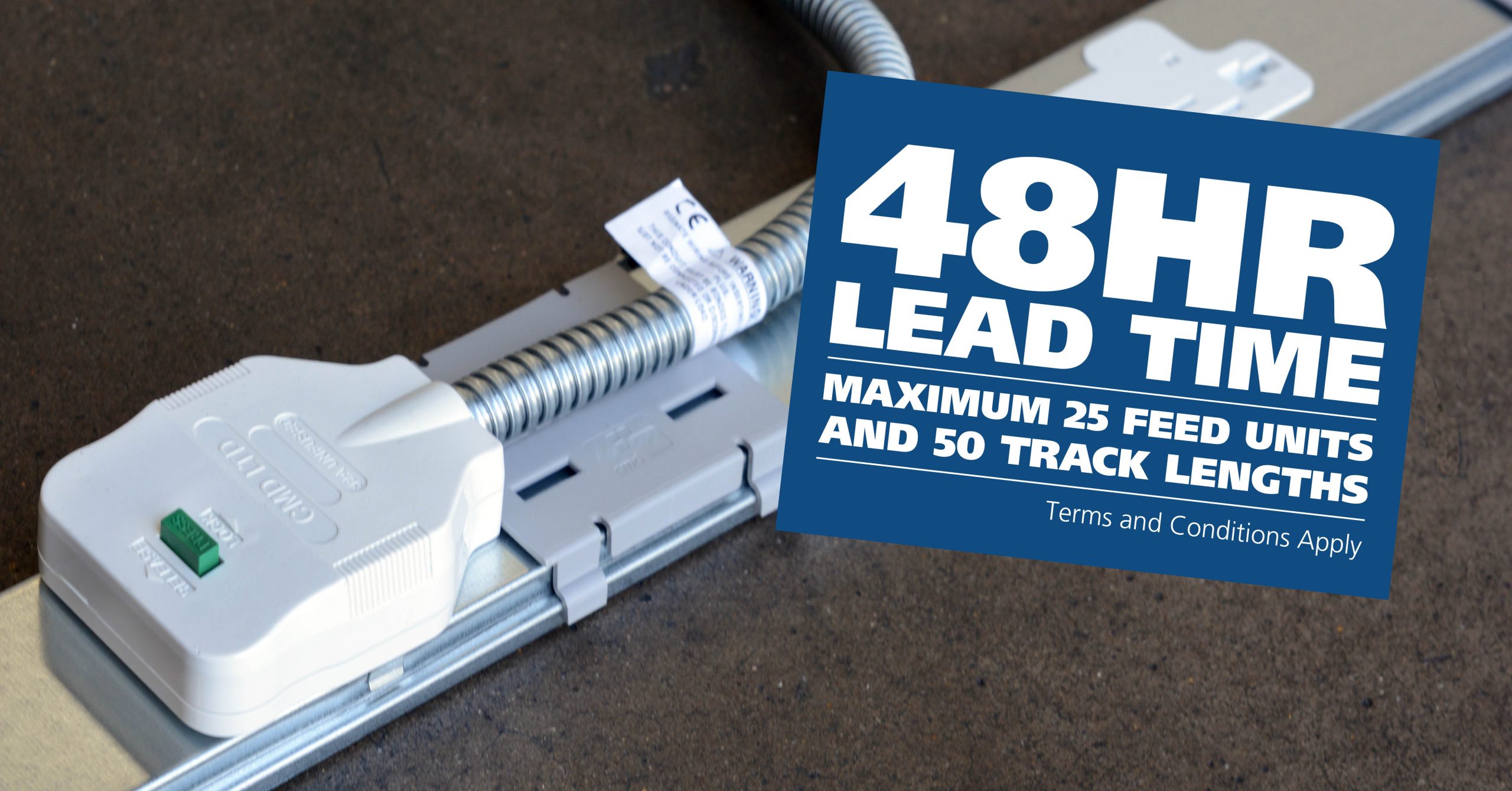
CMD Ltd LAUNCHES 48-HOUR TURNAROUND ON BETATRAK® RAPID ORDERING SERVICE

CMD Ltd, the specialist in power distribution systems, workstation power and monitor arms, has launched a rapid ordering service for its Betatrak® underfloor powertrack distribution systems and accessories, with a commitment to delivering within 48-hours of an approved purchase order*. The service enables customers to order up to 50 lengths of Standard or Clean Earth (C/E) low noise Betatrak, along with up to 25 feed...

Read more
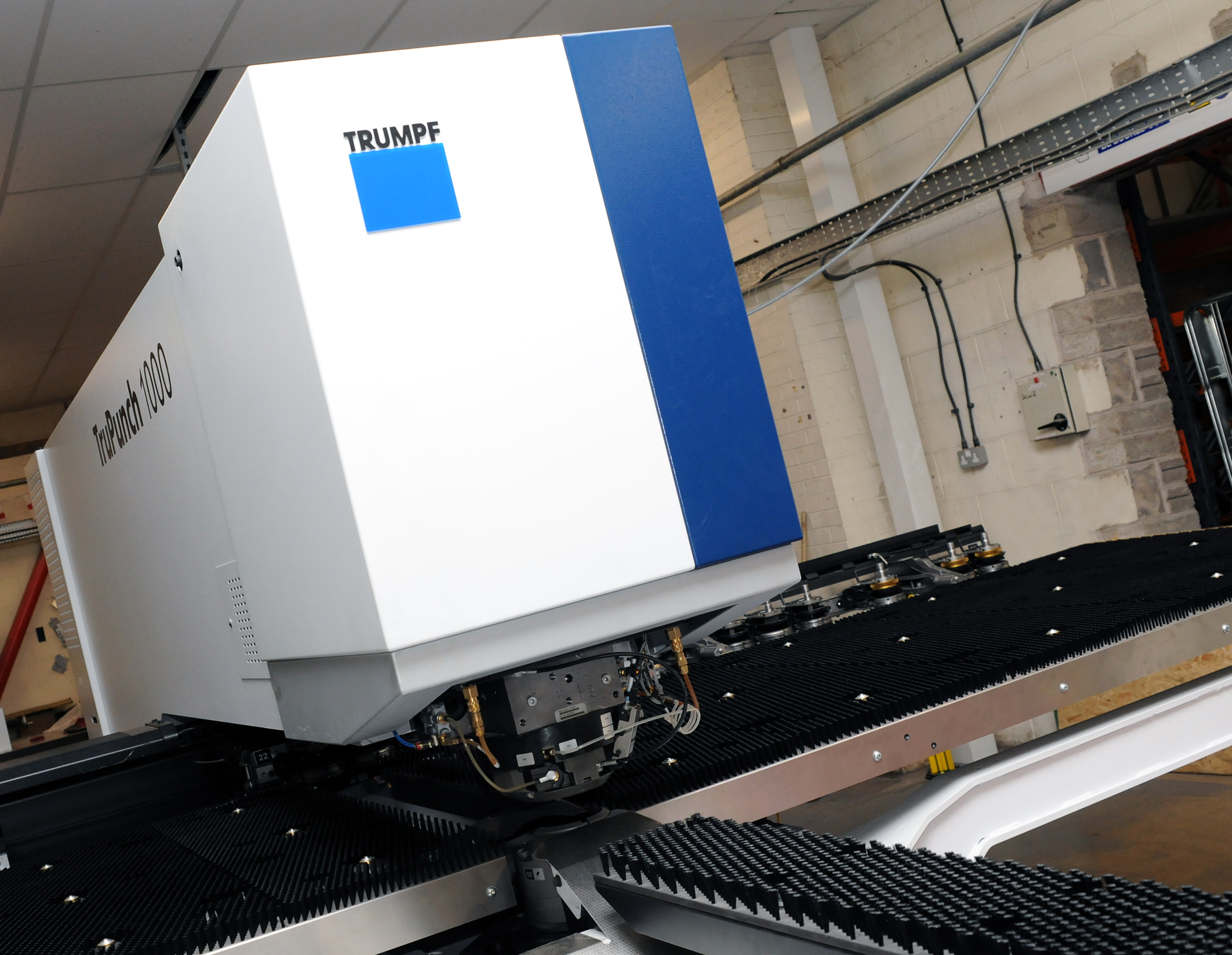
CMD INVESTS £1/4 MILLION IN NEW MACHINE AS PART OF FACTORY UPGRADE

We have invested in a new £1/4m TRUMPF CNC metal punch as part of an asset renewal strategy for our UK manufacturing capability. The new machine will be used in the production of a wide variety of our power distribution systems and workstation power products at our Rotherham factory. Suitable for handling sheet metal between 0.9mm and 3.0mm thick, the new machine will replace one...

Read more
CMD CATALOGUE PROVIDES TECHNICAL POWER DISTRIBUTION GUIDE

CMD Ltd has released a new catalogue, providing an easy to follow technical guide to our power distribution systems and plug and play desk modules. Detailing CMD’s full range of UK-manufactured power distribution systems and plug and play desk modules, the catalogue will be a helpful source of information to M&E engineers and contractors alike to understand how our power distribution systems connect together and...

Read more
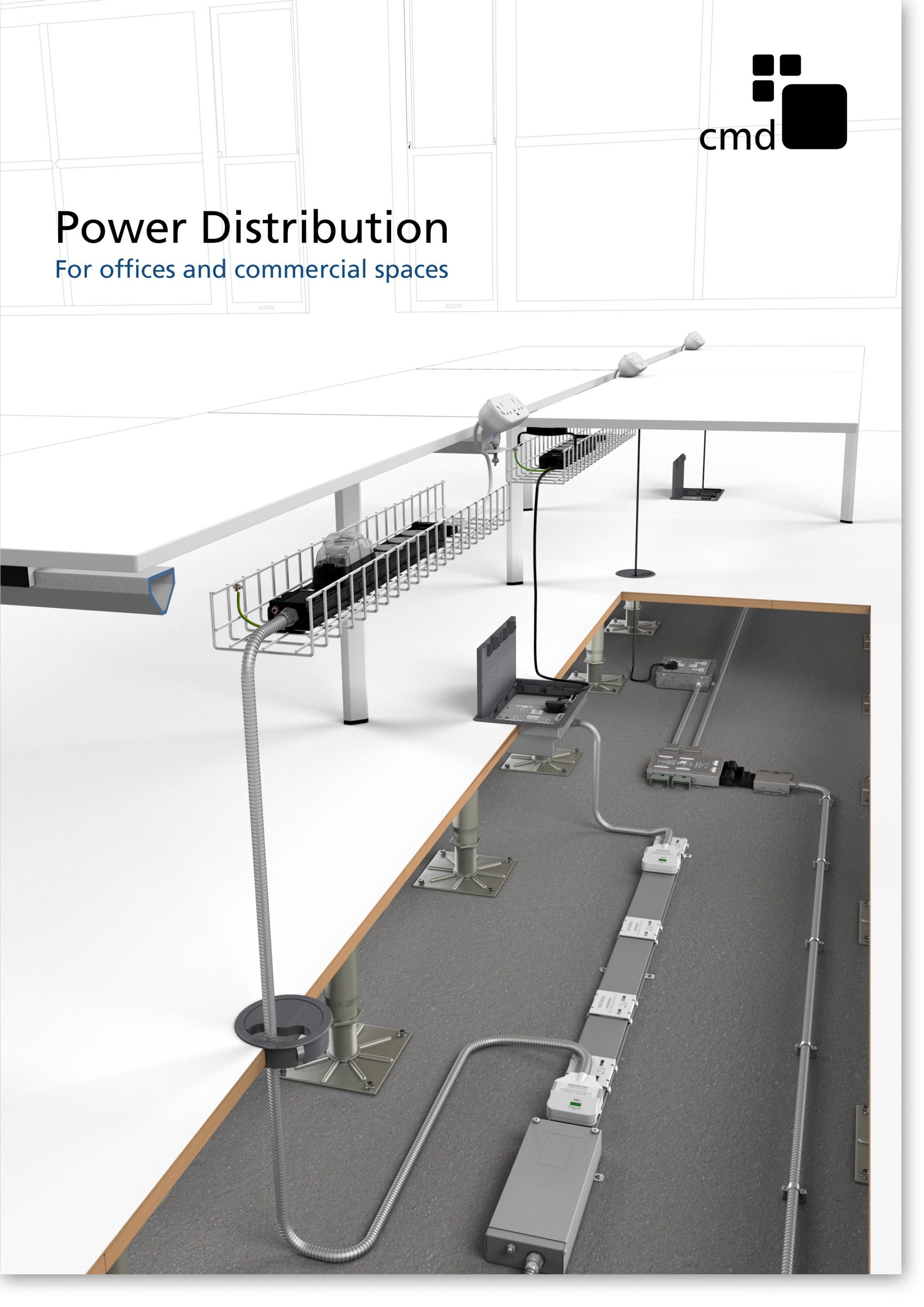
Power Distribution Catalogue
CMD Ltd PLAYS ESSENTIAL ROLE IN ELECTRICAL FIT OUT AT LONDON’S PRESTIGIOUS OFFICE DEVELOPMENT

CMD Ltd, specialist in workplace connectivity and ergonomic solutions, has provided a flexible and high-quality power distribution network for The Ray, a prestigious office development in London’s Farringdon. Well-known for being the former site of The Guardian newspaper, The Ray now stands as an 83,000ft² office development characterised by a modernised warehouse aesthetic, with level two now occupied by a global social media company. The...

Read more

The Ray
CMD plugs in to european opportunity with Schuko Capsule unit launch

CMD Ltd, the specialist in power and connectivity solutions for commercial environments, has launched a Schuko version of its popular fixed format Capsule workstation power module for export to mainland Europe and beyond. A popular on desk power module comprising two sockets and dual USB (type A and C) chargers, CMD’s Capsule unit is already widely specified in the UK as an off-the-shelf workstation power...

Read more
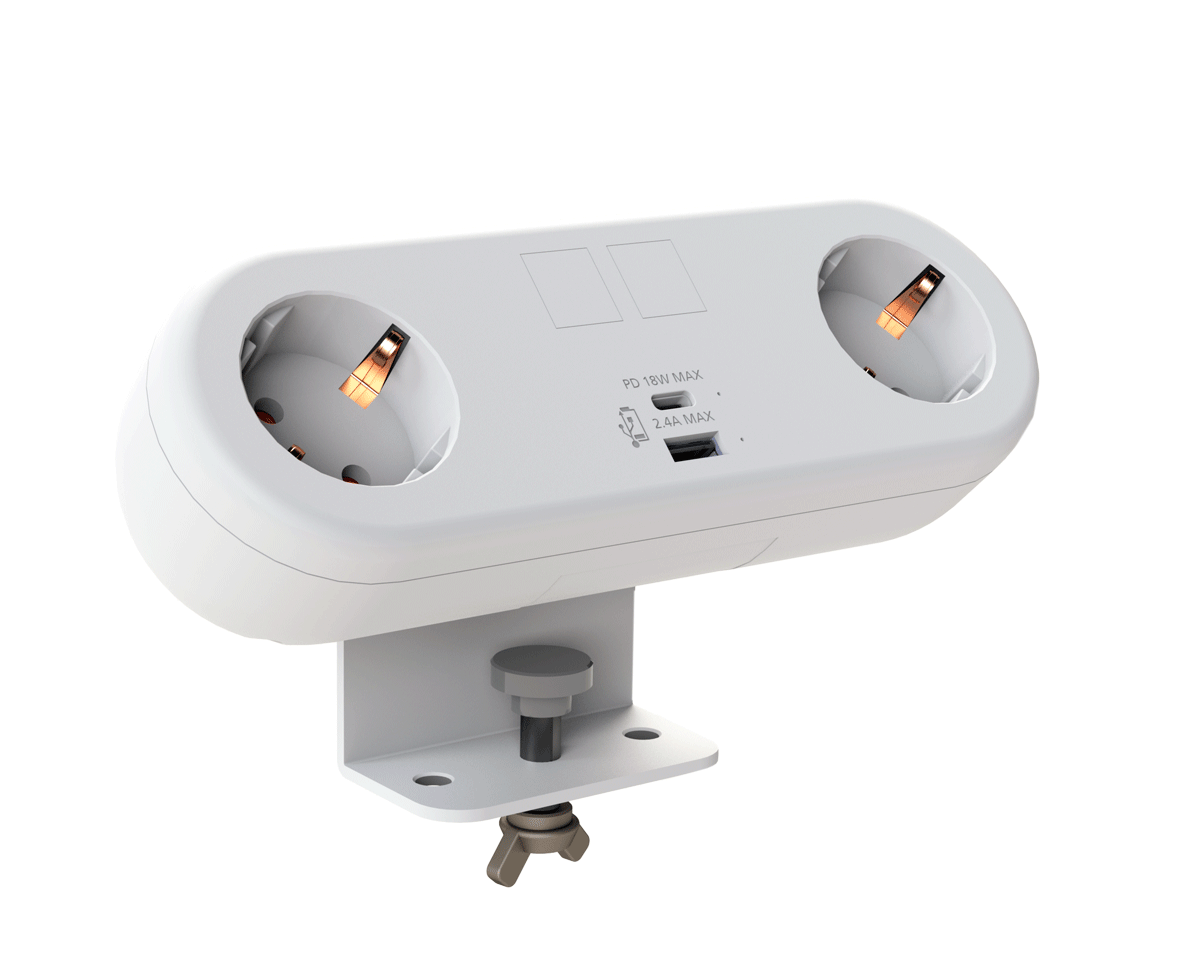
CMD White Schuko Capsule Desk Power Module
CMD LTD EXTENDS MONITOR ARM RANGE WITH THE LAUNCH OF REACH PLUS

CMD Ltd, the specialist in ergonomic and connectivity solutions for commercial interiors, has completed its Reach monitor arm range with the launch of the Reach Plus. Available in single or dual screen options, the Reach Plus has been designed to provide an ideal solution for both single and dual screen workstation configurations, or can be used with next generation of large format curved screens. Suitable...

Read more

CMD Ltd DEMONSTRATES THE ART OF POWER DISTRIBUTION AT THE UNIVERSITY OF WARWICK

CMD Ltd, the specialist in workplace connectivity and ergonomic solutions, has provided Betatrak busbar power distribution and a range of electrical accessories for two major capital investment projects at the University of Warwick. Designed by Fielden Clegg Bradley Studios, the £33 million Faculty of Arts building is a showpiece development comprising four interconnected structures set around a central atrium, which will enable inter-disciplinary collaboration across...

Read more

University of Warwick
CMD BRINGS HARMONY TO COVENTRY UNIVERSITY RESEARCH FACILITIES

CMD Ltd, the specialist in power distribution solutions and workstation power and ergonomics, has provided under desk and on desk power modules for the refurbishment of three Coventry University research buildings. Located on Coventry University Technology Park, a business park designed to encourage collaboration between the university and knowledge-based businesses, the three buildings are being repurposed as office accommodation for university research teams. The refurbishment...

Read more


Coventry University

How to Choose an Air Circuit Breaker in 2026?

Choosing an Air Circuit Breaker in 2026 requires more than matching a rated current to a nameplate. It demands a clear view of the entire electrical system. Load type, fault level, voltage, frequency, enclosure conditions, and future expansion all influence the decision. A breaker that fits today may become restrictive after one production line is added.

Dr. John D. McDonald, an IEEE Fellow and power-system protection specialist, offers a useful principle: “Protection must be designed as a coordinated system, not as isolated equipment.” That perspective should guide every Air Circuit Breaker evaluation. Check the short-circuit rating, including Icu and Ics under IEC 60947-2. Review the trip unit’s long-time, short-time, instantaneous, and ground-fault settings. Confirm that selectivity works with upstream and downstream devices. A high interrupting rating alone does not guarantee dependable protection.

The installation environment matters too. Dust, heat, humidity, vibration, and limited ventilation can change performance. In a factory cabinet, even a small airflow problem may raise internal temperature. In a data center, unnecessary tripping can interrupt critical services. Maintenance access also deserves attention. A technically strong breaker becomes a poor choice if testing, spare parts, or trained support are unavailable.

There is no perfect selection.

Engineers sometimes overfocus on initial price. That is a mistake worth admitting. A lower-cost model may create higher downtime, replacement, and inspection costs later. This guide examines the practical criteria for selecting an Air Circuit Breaker in 2026, while recognizing that real projects often involve incomplete data, changing loads, and uncomfortable compromises.

How to Choose an Air Circuit Breaker in 2026?

What an Air Circuit Breaker Is and Where It Is Used

How to Choose an Air Circuit Breaker in 2026?

An air circuit breaker, or ACB, is a low-voltage protection device that uses air to extinguish an electrical arc. It normally protects high-current circuits, often from 630 amperes to several thousand amperes. Unlike a smaller molded-case breaker, an ACB usually includes adjustable electronic protection, visible isolation, and a draw-out mechanism.

It is commonly installed in main distribution boards, generator panels, transformer outputs, industrial plants, hospitals, data centers, and large commercial buildings. In these locations, one fault can interrupt an entire facility. The ACB can detect overloads, short circuits, and sometimes earth faults. Its trip unit may also support communication and event recording. Useful details during maintenance.

When choosing one in 2026, check the system voltage, continuous current, short-circuit rating, number of poles, and protection settings. Confirm coordination with upstream and downstream devices. A breaker that fits the current rating may still perform poorly during a fault. I have seen specifications focus heavily on capacity while ignoring heat, humidity, dust, and available maintenance space. That assumption is too neat. A draw-out ACB needs enough clearance for inspection and safe replacement. Engineers should verify the installation conditions, applicable standards, and actual fault study before approval. Safety depends on the whole system, not the breaker alone.

How to Match Voltage, Current, and Breaking Capacity

How to Choose an Air Circuit Breaker in 2026?

Selecting an air circuit breaker starts with the electrical system’s voltage. Check the highest possible operating voltage, not only the nominal value. The breaker’s rated voltage must equal or exceed that figure. Frequency matters too, especially in mixed industrial systems. I have seen projects use a suitable current rating but overlook altitude and ambient temperature. That mistake can reduce safe performance.

Tips: Confirm the system voltage, frequency, and number of poles. Calculate continuous load current from real operating conditions. Leave practical margin, but avoid excessive oversizing. A breaker that is too large may protect cables poorly. Short circuit current is critical. Obtain the prospective fault current at the installation point, then choose a breaking capacity above it. Check both Icu and Ics, because service performance can differ after a fault.

Review the breaker’s frame size, trip-unit range, and neutral protection. Motor starting, transformers, and capacitor banks may create temporary surges. Their effects should not be confused with fault current. Coordination with upstream and downstream devices also matters. Selective protection can keep one feeder operating while another trips. In practice, calculations may change after cable length, transformer impedance, or future loads are confirmed. Recheck them. A final review by a qualified electrical professional adds reliability, especially in high-current installations.

How to Select the Right Trip Unit and Protection Functions

How to Choose an Air Circuit Breaker in 2026?

How to Select the Right Trip Unit and Protection Functions

Choosing a trip unit starts with the electrical study, not the breaker catalogue. Confirm continuous load, motor starting current, available fault current, and conductor limits. The interrupting rating must exceed the calculated short-circuit current at the installation point. IEC 60947-2 remains a key reference for low-voltage circuit-breaker performance and verification.

For large feeders, an LSIG trip unit can provide long-time, short-time, instantaneous, and ground-fault protection. Long-time protection should follow the conductor ampacity and expected thermal load. Short-time delay can preserve selectivity between upstream and downstream devices. Instantaneous protection clears severe faults quickly, but excessive settings may reduce coordination. Ground-fault protection needs careful attention in four-wire systems, especially where neutral currents and sensitive equipment are involved. Zone-selective interlocking may improve coordination, but it requires compatible wiring and testing.

The IEA Electricity 2024 report expects global electricity demand to grow by about 3.4% annually from 2024 to 2026. More demand means less room for poorly reviewed settings. Uptime Institute’s 2024 outage analysis reported that 54% of serious outages cost more than 100,000 dollars. That figure is sobering. Digital communications, event records, and maintenance-mode functions can support faster diagnosis, but they cannot replace commissioning tests. A common mistake is selecting every available function. More protection is not always better; incorrect coordination can create nuisance trips or delayed fault clearing. Review assumptions after installation. Field conditions often disagree with the spreadsheet.

How to Compare ACB Designs, Features, and Installation Methods

How to Choose an Air Circuit Breaker in 2026?

Comparing ACB designs starts with the system, not the catalogue. IEA’s Electricity 2025 report forecasts global electricity demand to grow by 3.3% annually from 2025 to 2027. That pressure makes selectivity, uptime, and safe maintenance more important.

A fixed ACB suits compact switchboards with stable loads. A draw-out design supports faster inspection and replacement. It also needs more cabinet space. That trade-off is easy to underestimate.

Check the rated current, short-circuit breaking capacity, service voltage, and trip-unit accuracy. IEC 60947-2 remains a key reference for low-voltage circuit-breaker performance and testing.

Electronic trip units can provide adjustable long-time, short-time, instantaneous, and earth-fault protection. Communication functions help record current, alarms, and trip events. Useful data, if technicians actually review it. Otherwise, advanced features become expensive decoration.

Installation method deserves equal attention. Confirm busbar alignment, cable bending radius, ventilation, and access for secondary wiring. A field inspection should measure available fault current, not assume it from old drawings.

NFPA 70E guidance also supports documented safe-work practices around energized equipment. In practice, many specifications focus on interrupting capacity but overlook coordination studies. That is a weakness.

Leave space for testing, clear labeling, and future load growth. ACB selection is partly technical judgment, and partly admitting what the site data still fails to prove.

How to Verify Safety, Maintenance, and Future Expansion Needs

How to Choose an Air Circuit Breaker in 2026?

Safety verification should begin with the installation, not the catalogue. Check the system voltage, continuous current, short-circuit level, and coordination study before selecting an air circuit breaker. IEC 60947-2 provides the key testing framework for low-voltage circuit breakers, including rated short-circuit performance and operating endurance. Request current test certificates, trip-unit settings, and temperature-rise data. Do not guess.

During site inspections, I look for loose control wiring, blocked arc vents, dust around terminals, and weak spring-charging mechanisms. Small details matter. NFPA 70B emphasizes documented electrical maintenance and condition-based inspection practices. Record contact resistance, insulation results, trip times, and the date of each intervention. The Uptime Institute’s 2024 Annual Outage Analysis reported that 54% of serious outages exceeded 100,000 dollars in total impact. A neglected breaker can become an expensive failure point.

Future expansion needs equal attention. Leave physical space for additional feeders, confirm the busbar rating, and verify that the protection system can accept higher fault current. Ask whether the breaker supports accessible communication, remote status, and adjustable protection settings. These features may reduce future rewiring, but they also require cybersecurity and maintenance planning. I have seen projects overestimate spare capacity. Recheck the load forecast after major equipment changes. A perfect forecast is impossible. Build flexibility into the panel, while keeping every protection setting documented and reviewable.