

News

Miro: A New Standard in Responsible Innovation

Miro: A New Standard in Responsible Innovation The Miro monitor arm is setting new benchmarks in sustainability. It offers a high-performance solution without compromising on environmental responsibility. Designed with careful material selection, local sourcing, and longevity in mind, Miro’s responsible approach to design and unique manoeuvrability set it apart from the competition. Sustainable Choices Miro is crafted from energy-efficient materials with a lower carbon impact....

Read more
HSE Advisor

Role Purpose Support in the development, implementation and maintenance of the company’s Health, Safety & Environmental policies, processes, operational procedures, and standards.  Ensuring best practice and championing a continually improving HSE culture within the business. Key Responsibilities Liaise with and provide support to all areas of the business to eliminate, mitigate or reduce identified HSE exposures. Partner with the production management team and team leaders,...

Read more
CMD Ltd LAUNCHES 48-HOUR TURNAROUND ON BETATRAK® RAPID ORDERING SERVICE

CMD Ltd, the specialist in power distribution systems, workstation power and monitor arms, has launched a rapid ordering service for its Betatrak® underfloor powertrack distribution systems and accessories, with a commitment to delivering within 48-hours of an approved purchase order*. The service enables customers to order up to 50 lengths of Standard or Clean Earth (C/E) low noise Betatrak, along with up to 25 feed...

Read more

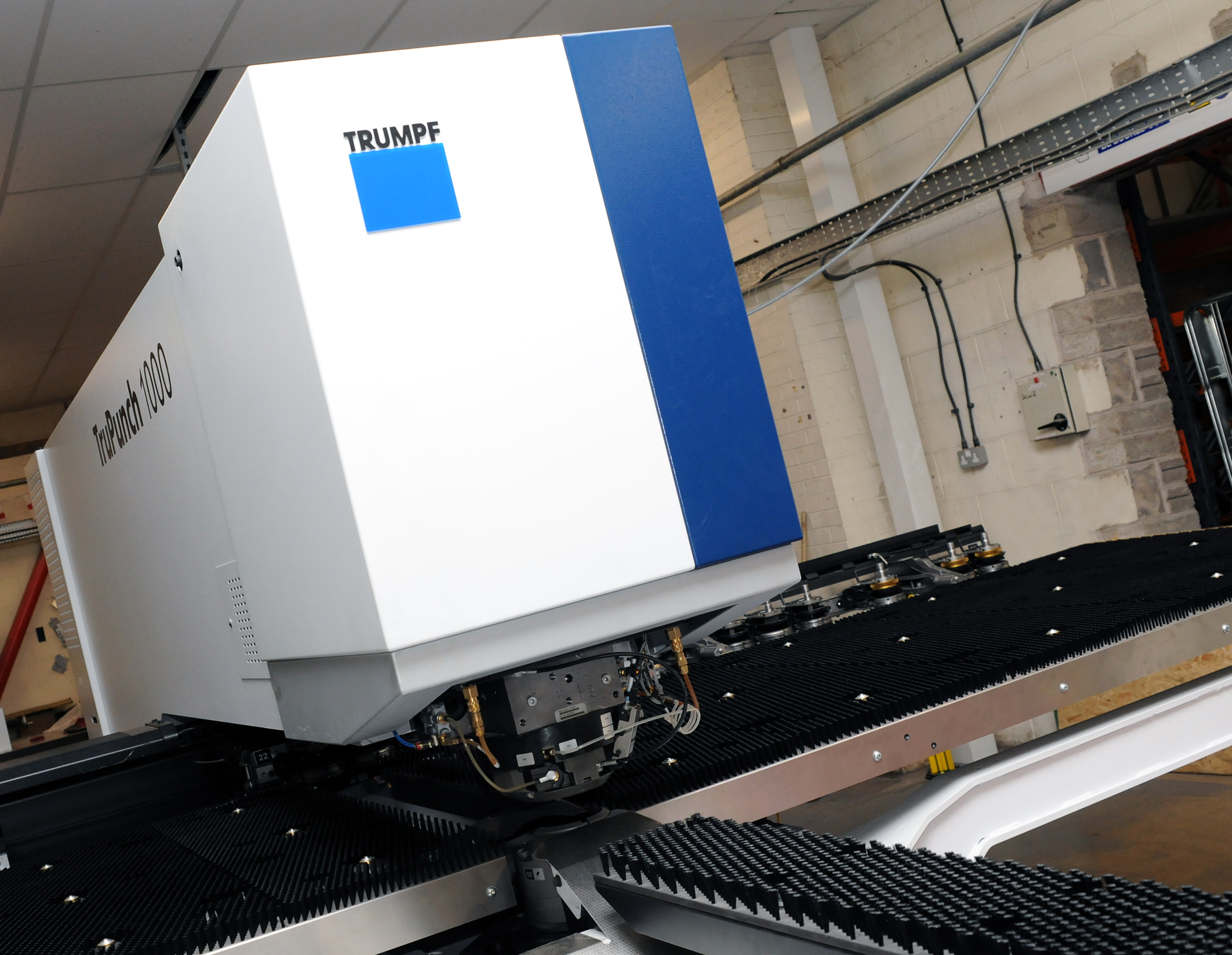
CMD INVESTS £1/4 MILLION IN NEW MACHINE AS PART OF FACTORY UPGRADE

We have invested in a new £1/4m TRUMPF CNC metal punch as part of an asset renewal strategy for our UK manufacturing capability. The new machine will be used in the production of a wide variety of our power distribution systems and workstation power products at our Rotherham factory. Suitable for handling sheet metal between 0.9mm and 3.0mm thick, the new machine will replace one...

Read more
CMD CATALOGUE PROVIDES TECHNICAL POWER DISTRIBUTION GUIDE

CMD Ltd has released a new catalogue, providing an easy to follow technical guide to our power distribution systems and plug and play desk modules. Detailing CMD’s full range of UK-manufactured power distribution systems and plug and play desk modules, the catalogue will be a helpful source of information to M&E engineers and contractors alike to understand how our power distribution systems connect together and...

Read more

Power Distribution Catalogue
CMD Ltd PLAYS ESSENTIAL ROLE IN ELECTRICAL FIT OUT AT LONDON’S PRESTIGIOUS OFFICE DEVELOPMENT

CMD Ltd, specialist in workplace connectivity and ergonomic solutions, has provided a flexible and high-quality power distribution network for The Ray, a prestigious office development in London’s Farringdon. Well-known for being the former site of The Guardian newspaper, The Ray now stands as an 83,000ft² office development characterised by a modernised warehouse aesthetic, with level two now occupied by a global social media company. The...

Read more

The Ray
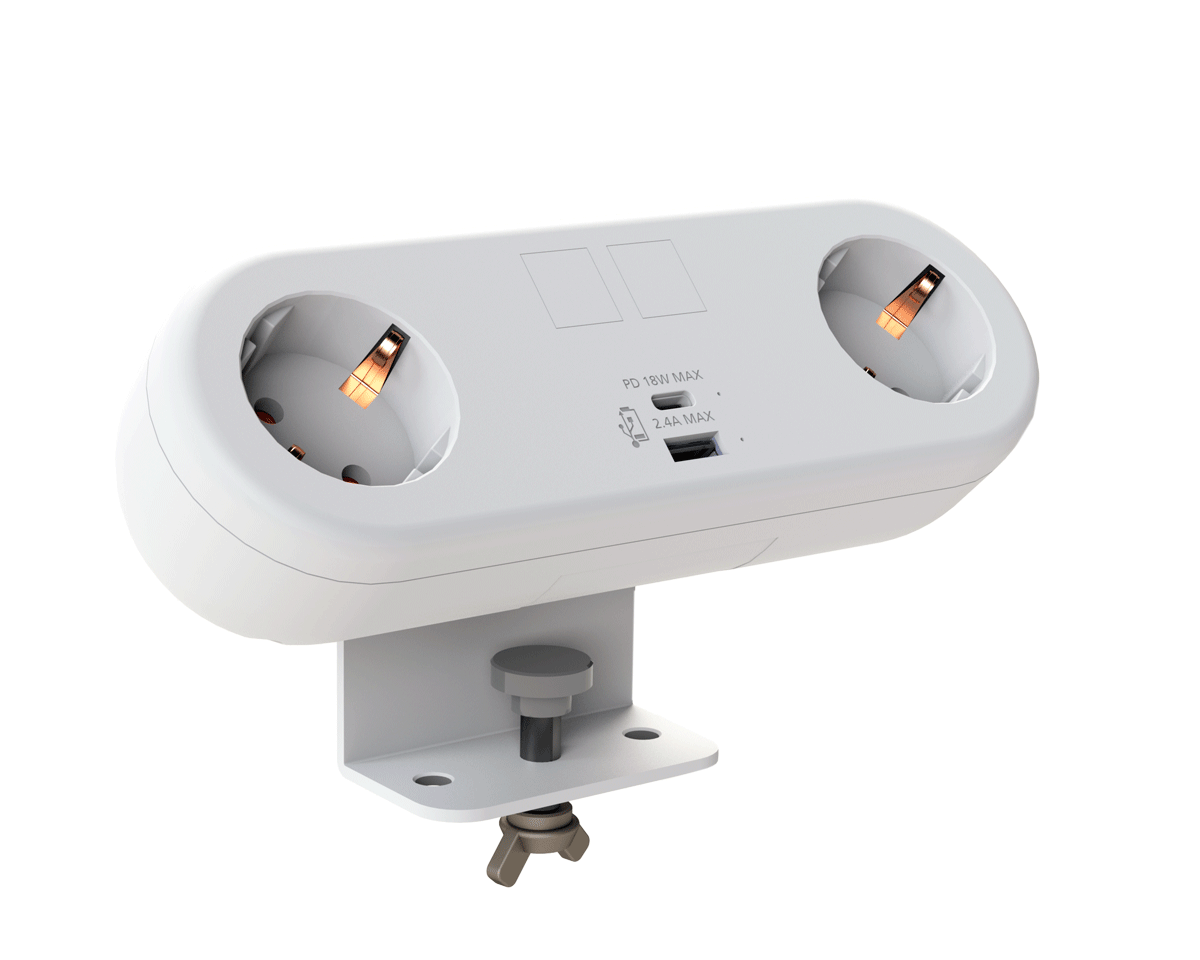
CMD plugs in to european opportunity with Schuko Capsule unit launch

CMD Ltd, the specialist in power and connectivity solutions for commercial environments, has launched a Schuko version of its popular fixed format Capsule workstation power module for export to mainland Europe and beyond. A popular on desk power module comprising two sockets and dual USB (type A and C) chargers, CMD’s Capsule unit is already widely specified in the UK as an off-the-shelf workstation power...

Read more
CMD White Schuko Capsule Desk Power Module
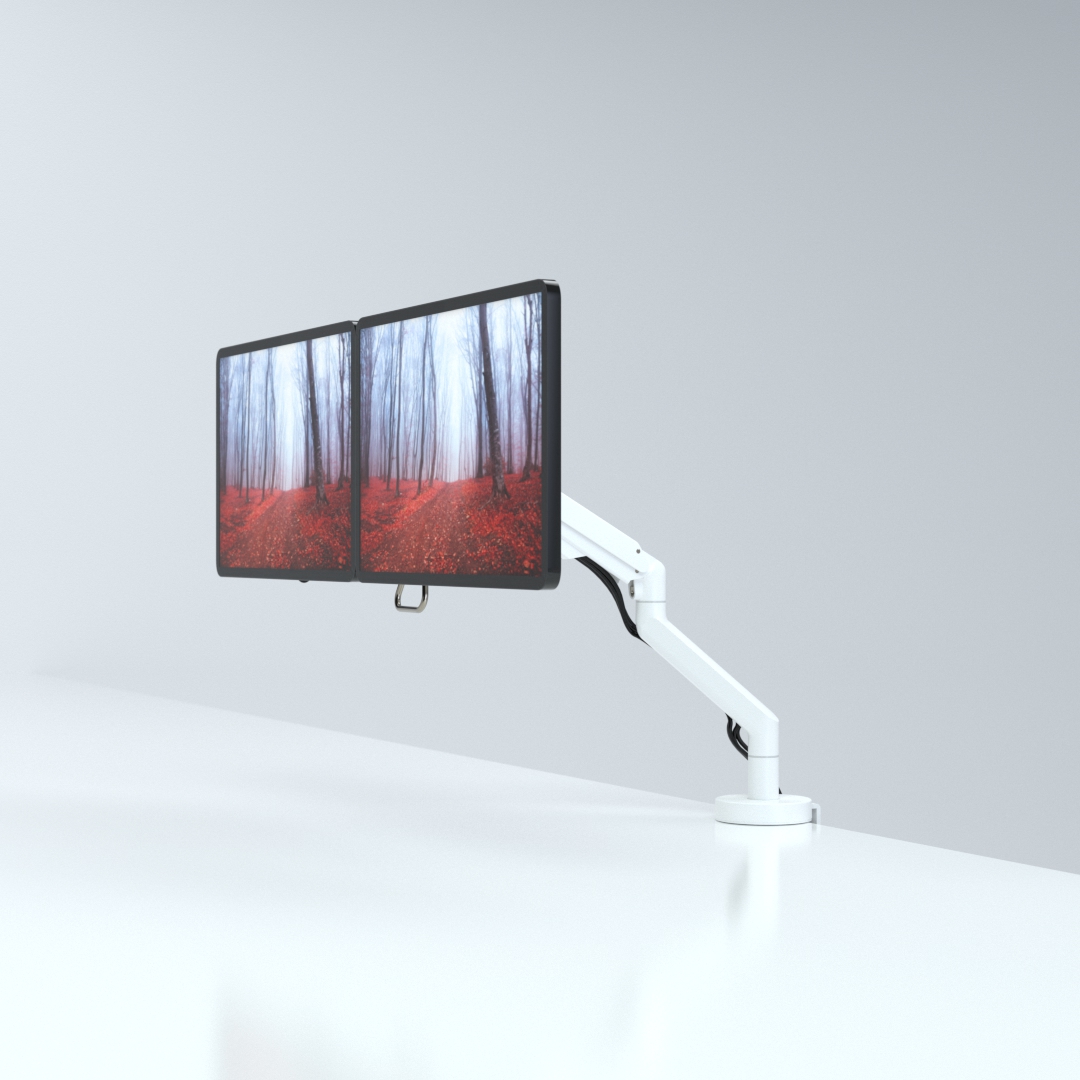
CMD LTD EXTENDS MONITOR ARM RANGE WITH THE LAUNCH OF REACH PLUS

CMD Ltd, the specialist in ergonomic and connectivity solutions for commercial interiors, has completed its Reach monitor arm range with the launch of the Reach Plus. Available in single or dual screen options, the Reach Plus has been designed to provide an ideal solution for both single and dual screen workstation configurations, or can be used with next generation of large format curved screens. Suitable...

Read more
CMD Ltd DEMONSTRATES THE ART OF POWER DISTRIBUTION AT THE UNIVERSITY OF WARWICK

CMD Ltd, the specialist in workplace connectivity and ergonomic solutions, has provided Betatrak busbar power distribution and a range of electrical accessories for two major capital investment projects at the University of Warwick. Designed by Fielden Clegg Bradley Studios, the £33 million Faculty of Arts building is a showpiece development comprising four interconnected structures set around a central atrium, which will enable inter-disciplinary collaboration across...

Read more

University of Warwick
CMD BRINGS HARMONY TO COVENTRY UNIVERSITY RESEARCH FACILITIES

CMD Ltd, the specialist in power distribution solutions and workstation power and ergonomics, has provided under desk and on desk power modules for the refurbishment of three Coventry University research buildings. Located on Coventry University Technology Park, a business park designed to encourage collaboration between the university and knowledge-based businesses, the three buildings are being repurposed as office accommodation for university research teams. The refurbishment...

Read more

Coventry University

Eco-Friendly RFID PET Cards for Sustainable Business Solutions?

As sustainability becomes a priority for many businesses, the importance of Eco-Friendly RFID PET Cards has surfaced. These cards, made from recycled materials, help reduce environmental impact. Experts in the industry advocate for their widespread adoption. For instance, Maria Johnson, a leading figure in sustainable technology, states, "Eco-Friendly RFID PET Cards are a significant step toward a greener future."

Businesses are increasingly seeking solutions that combine efficiency with ecological responsibility. The versatility of Eco-Friendly RFID PET Cards makes them ideal for various applications. They can be used in retail, access control, and event management. However, the transition to these sustainable options is not without challenges. Companies must balance costs, production capacities, and supply chain logistics.

While Eco-Friendly RFID PET Cards present a practical solution, not all options in the market meet the necessary standards. As the industry evolves, ongoing evaluation is crucial. Companies must ensure that they are not just adopting green practices superficially but are genuinely committed to sustainability. The future hinges on responsible choices in technology and materials used in everyday business operations.

Eco-Friendly RFID PET Cards for Sustainable Business Solutions?

Eco-Friendly RFID PET Cards: An Overview of Benefits

Eco-friendly RFID PET cards are gaining traction as a sustainable choice for modern businesses. Made from recycled materials, they offer an efficient way to manage identification, access, and transactions while minimizing environmental impact. Reports indicate that the production of traditional PVC cards contributes significantly to plastic waste. In fact, it's estimated that over 1.5 billion PVC cards are produced globally each year. Transitioning to PET can significantly reduce this figure.

Besides their lower ecological footprint, PET cards often come with enhanced durability. This means fewer replacements and lower long-term costs for companies. Studies show that businesses utilizing eco-friendly materials can improve their brand reputation significantly. An impactful 75% of consumers prefer to engage with brands committed to environmental stewardship. Yet, companies must navigate the challenges of transitioning to newer materials. Ensuring performance and affordability remains critical. The balance between sustainability and cost-effectiveness requires careful consideration and may be a stumbling block for some.

Sustainability-focused businesses will likely benefit from investing in eco-friendly RFID options. Such choices reflect a company's values, appealing to an increasingly environmentally conscious consumer base. However, it’s crucial to research and understand the varying quality and performance levels of these materials. Some may not meet the immediate performance standards set by traditional options, necessitating a trial period.

The Production Process of Eco-Friendly RFID PET Cards

The production process of eco-friendly RFID PET cards begins with selecting sustainable materials. Many manufacturers utilize recycled PET, which reduces plastic waste. This choice contributes to a lower carbon footprint and supports environmental goals. Using a closed-loop system in production further minimizes waste.

The card printing involves eco-friendly inks that are less harmful to the environment. Designs are often printed using water-based inks. These inks are more biodegradable compared to traditional chemical-based inks. The manufacturing process is carefully monitored to ensure minimal waste and energy consumption. Despite these efforts, challenges remain.

One of the biggest obstacles is achieving the desired durability. Some eco-friendly materials may not match the longevity of traditional options. This leads to questions about their effectiveness in high-use situations. Continuous improvement is necessary to align durability with sustainability. Striking a balance between performance and environmental responsibility is complex but essential.

Eco-Friendly RFID PET Cards Production Process

Step Description Materials Used Environmental Impact Sustainability Benefits
1 Collection of Recycled PET Recycled PET waste Reduces plastic waste Conserves resources
2 Cleaning and Processing Water, detergents Minimizes harmful emissions Reduction in pollution
3 Extrusion of PET Recycled PET pellets Energy-efficient process Lower carbon footprint
4 Card Printing Eco-friendly inks Non-toxic materials Safe for the environment
5 Quality Control Quality assurance tools Reduces faulty products Minimizes waste generation
6 Distribution Recycled packaging Eco-friendly delivery methods Supports circular economy

Applications of RFID PET Cards in Sustainable Business Practices

Eco-friendly RFID PET cards offer innovative solutions for sustainable business practices. Made from recycled materials, these cards can significantly reduce environmental impact. According to a report by Smithers Pira, packaging made from recycled materials can lead to up to a 50% decrease in carbon emissions during production. This aligns well with global sustainability goals.

The applications of RFID PET cards are expanding rapidly across various sectors. In retail, businesses utilize these cards for inventory management, reducing waste through better tracking. The National Association of Retail Merchants reports that RFID can decrease inventory inaccuracies by over 25%. Moreover, using RFID in logistics streamlines operations, leading to enhanced efficiency and reduced carbon footprints. Implementing such technologies may initially seem costly, but the long-term savings and reduced environmental impact can outweigh these concerns.

Moreover, there are challenges in transitioning to RFID PET cards. Not all businesses have access to the technology or training needed for effective use. Additionally, consumers may be unaware of the benefits these materials offer, leading to hesitation in adoption. There's much to learn as the industry evolves. Further research and investment are needed to address these barriers and fully realize the potential of eco-friendly RFID PET cards.

Comparative Analysis: Traditional Cards vs. Eco-Friendly Options

In today’s environmentally conscious landscape, businesses face a choice between traditional cards and eco-friendly alternatives. Traditional RFID cards often rely on PVC, a material that poses environmental risks. The production and disposal of PVC contribute to pollution and waste. In contrast, eco-friendly RFID PET cards offer a sustainable solution. They are recyclable and less harmful, appealing to consumers who prioritize sustainability.

Choosing eco-friendly options can reflect a company's commitment to environmental values. PET cards typically have a lower carbon footprint than their PVC counterparts. Businesses adopting these cards can enhance their brand image. However, there’s less familiarity with their performance. Some companies worry about durability and security features. Research shows that many eco-friendly cards perform similarly to traditional ones.

Tips: Consider the lifecycle of your card. Research suppliers who focus on sustainable practices. Test different eco-friendly materials to see what works best for your needs. Balancing sustainability with functionality is essential. As more businesses seek to go green, the demand for eco-friendly cards will likely continue to rise.

Future Trends in Eco-Friendly RFID Technology for Businesses

Eco-friendly RFID technology is becoming increasingly important for businesses aiming for sustainability. These cards, often made from recycled materials, minimize environmental impact. They offer a viable alternative to traditional plastic cards. This shift aligns with global trends toward greener business practices. Brands are recognizing the urgent need to reduce waste and resource consumption.

As technology advances, the use of biodegradable materials in RFID cards shows promise. This innovation can spark interest and drive adoption in various industries. Companies need to consider the lifecycle of their products. It’s crucial to ensure that every component is eco-friendly. However, challenges exist. The cost of sustainable materials can be higher. Businesses must weigh the initial investment against long-term benefits.

Adopting eco-friendly RFID cards reflects a commitment to sustainability. Yet, some companies may struggle with implementation. Employee training and consumer education are essential for maximizing the benefits. A shift in mindset is necessary. As businesses navigate this evolving landscape, continuous improvement is key. Embracing these changes can enhance brand identity while contributing to a healthier planet.