

News

Miro: A New Standard in Responsible Innovation

Miro: A New Standard in Responsible Innovation The Miro monitor arm is setting new benchmarks in sustainability. It offers a high-performance solution without compromising on environmental responsibility. Designed with careful material selection, local sourcing, and longevity in mind, Miro’s responsible approach to design and unique manoeuvrability set it apart from the competition. Sustainable Choices Miro is crafted from energy-efficient materials with a lower carbon impact....

Read more
HSE Advisor

Role Purpose Support in the development, implementation and maintenance of the company’s Health, Safety & Environmental policies, processes, operational procedures, and standards.  Ensuring best practice and championing a continually improving HSE culture within the business. Key Responsibilities Liaise with and provide support to all areas of the business to eliminate, mitigate or reduce identified HSE exposures. Partner with the production management team and team leaders,...

Read more
CMD Ltd LAUNCHES 48-HOUR TURNAROUND ON BETATRAK® RAPID ORDERING SERVICE

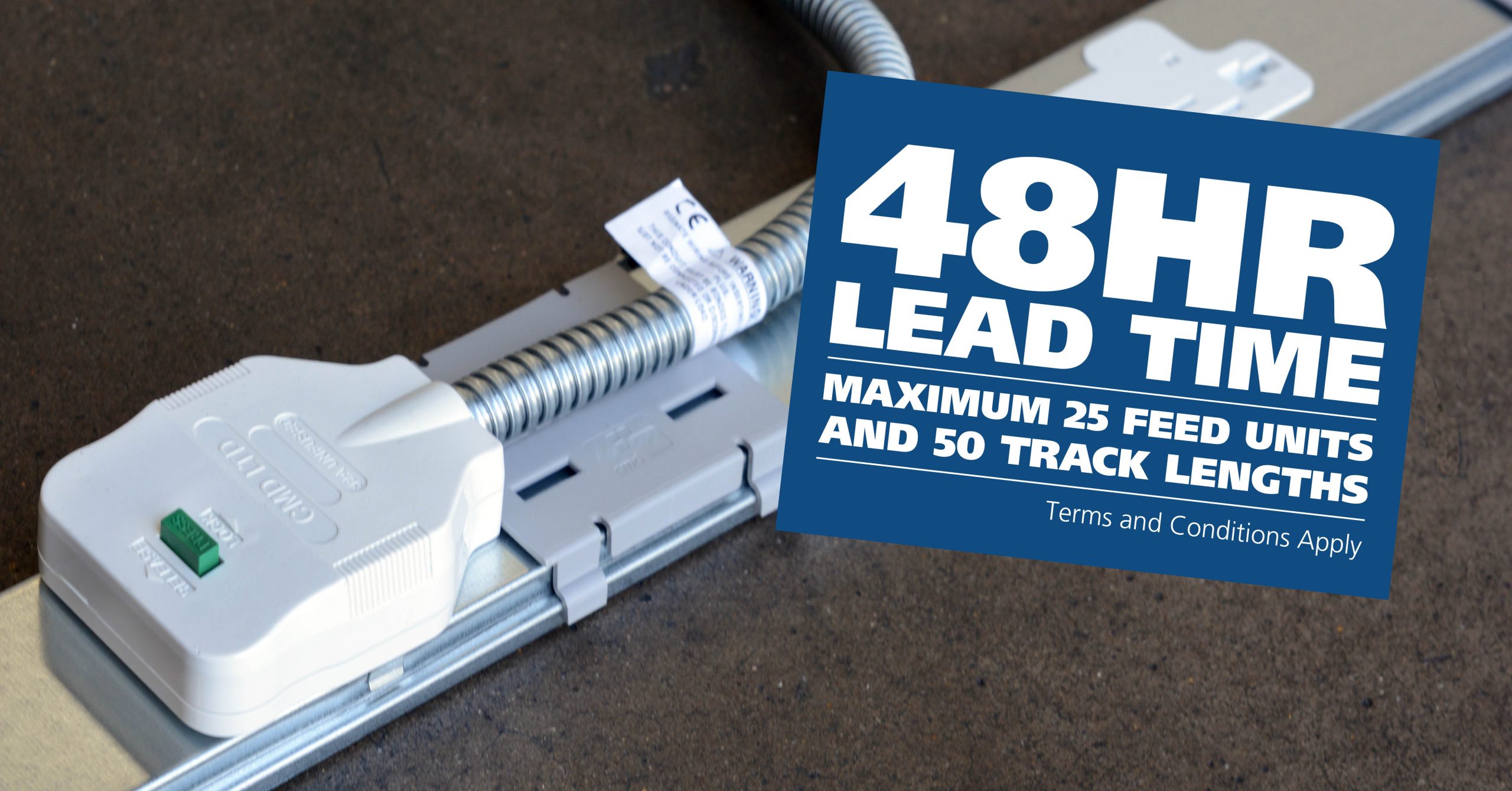
CMD Ltd, the specialist in power distribution systems, workstation power and monitor arms, has launched a rapid ordering service for its Betatrak® underfloor powertrack distribution systems and accessories, with a commitment to delivering within 48-hours of an approved purchase order*. The service enables customers to order up to 50 lengths of Standard or Clean Earth (C/E) low noise Betatrak, along with up to 25 feed...

Read more
CMD INVESTS £1/4 MILLION IN NEW MACHINE AS PART OF FACTORY UPGRADE

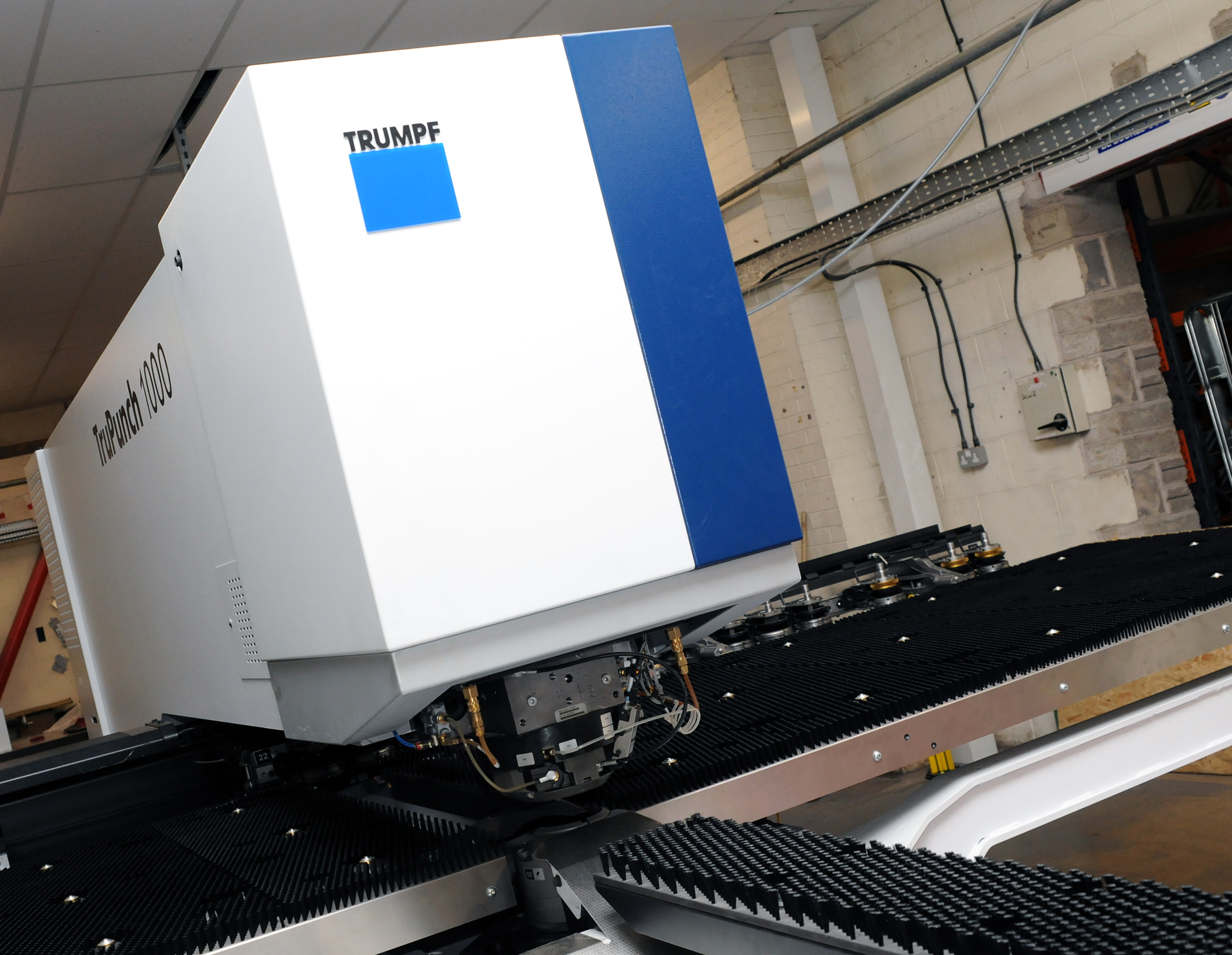
We have invested in a new £1/4m TRUMPF CNC metal punch as part of an asset renewal strategy for our UK manufacturing capability. The new machine will be used in the production of a wide variety of our power distribution systems and workstation power products at our Rotherham factory. Suitable for handling sheet metal between 0.9mm and 3.0mm thick, the new machine will replace one...

Read more
CMD CATALOGUE PROVIDES TECHNICAL POWER DISTRIBUTION GUIDE

CMD Ltd has released a new catalogue, providing an easy to follow technical guide to our power distribution systems and plug and play desk modules. Detailing CMD’s full range of UK-manufactured power distribution systems and plug and play desk modules, the catalogue will be a helpful source of information to M&E engineers and contractors alike to understand how our power distribution systems connect together and...

Read more
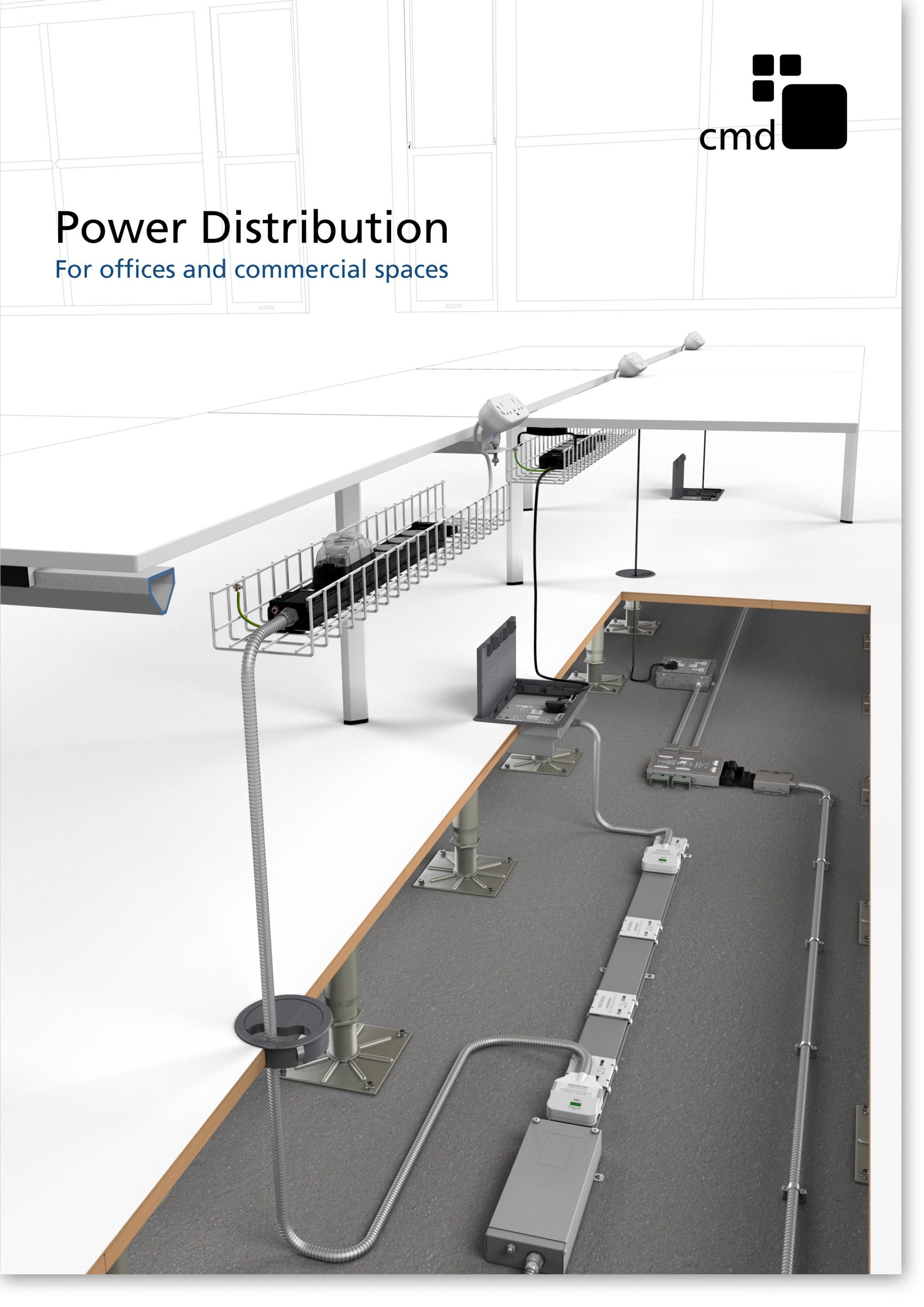
Power Distribution Catalogue
CMD Ltd PLAYS ESSENTIAL ROLE IN ELECTRICAL FIT OUT AT LONDON’S PRESTIGIOUS OFFICE DEVELOPMENT

CMD Ltd, specialist in workplace connectivity and ergonomic solutions, has provided a flexible and high-quality power distribution network for The Ray, a prestigious office development in London’s Farringdon. Well-known for being the former site of The Guardian newspaper, The Ray now stands as an 83,000ft² office development characterised by a modernised warehouse aesthetic, with level two now occupied by a global social media company. The...

Read more

The Ray
CMD plugs in to european opportunity with Schuko Capsule unit launch

CMD Ltd, the specialist in power and connectivity solutions for commercial environments, has launched a Schuko version of its popular fixed format Capsule workstation power module for export to mainland Europe and beyond. A popular on desk power module comprising two sockets and dual USB (type A and C) chargers, CMD’s Capsule unit is already widely specified in the UK as an off-the-shelf workstation power...

Read more
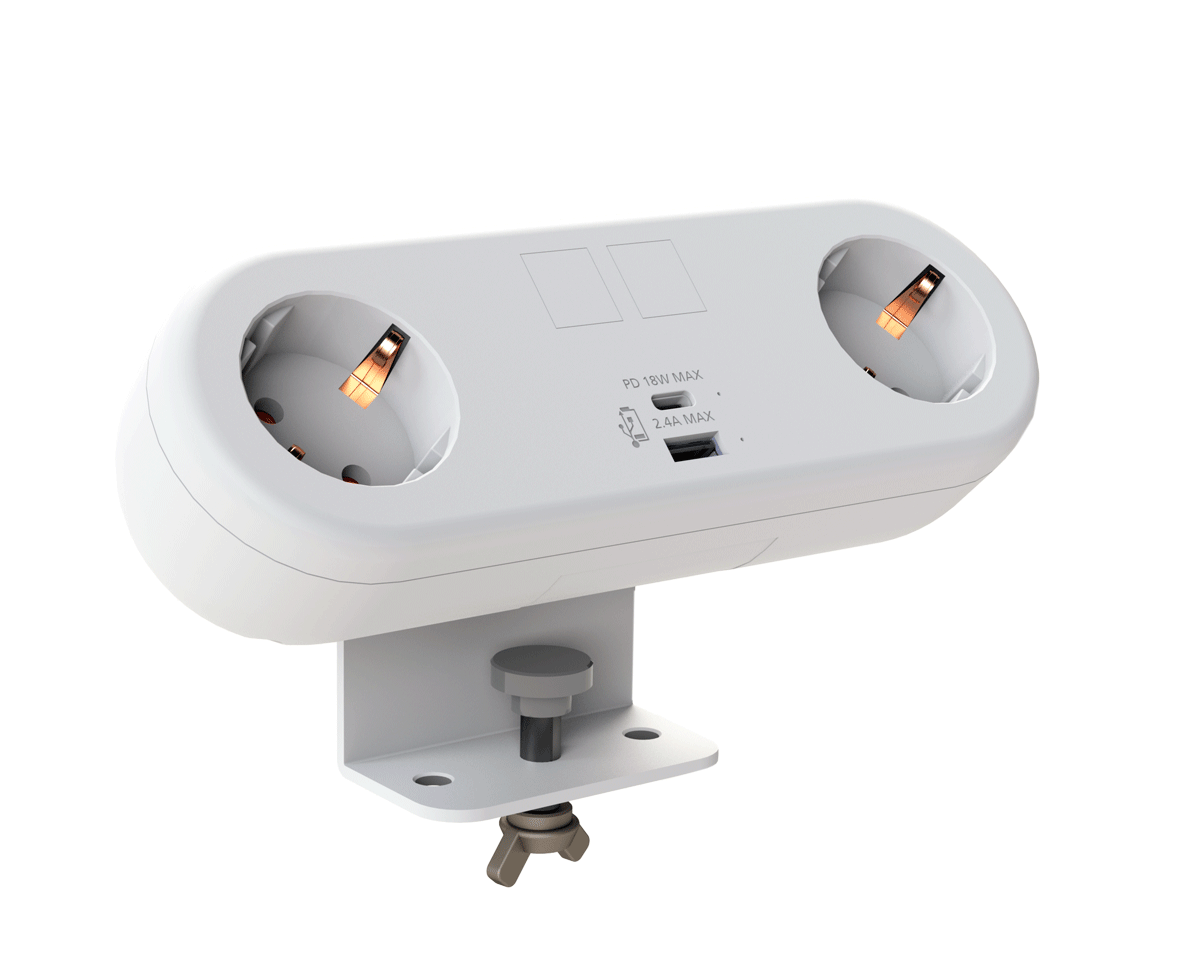
CMD White Schuko Capsule Desk Power Module
CMD LTD EXTENDS MONITOR ARM RANGE WITH THE LAUNCH OF REACH PLUS

CMD Ltd, the specialist in ergonomic and connectivity solutions for commercial interiors, has completed its Reach monitor arm range with the launch of the Reach Plus. Available in single or dual screen options, the Reach Plus has been designed to provide an ideal solution for both single and dual screen workstation configurations, or can be used with next generation of large format curved screens. Suitable...

Read more

CMD Ltd DEMONSTRATES THE ART OF POWER DISTRIBUTION AT THE UNIVERSITY OF WARWICK

CMD Ltd, the specialist in workplace connectivity and ergonomic solutions, has provided Betatrak busbar power distribution and a range of electrical accessories for two major capital investment projects at the University of Warwick. Designed by Fielden Clegg Bradley Studios, the £33 million Faculty of Arts building is a showpiece development comprising four interconnected structures set around a central atrium, which will enable inter-disciplinary collaboration across...

Read more

University of Warwick
CMD BRINGS HARMONY TO COVENTRY UNIVERSITY RESEARCH FACILITIES

CMD Ltd, the specialist in power distribution solutions and workstation power and ergonomics, has provided under desk and on desk power modules for the refurbishment of three Coventry University research buildings. Located on Coventry University Technology Park, a business park designed to encourage collaboration between the university and knowledge-based businesses, the three buildings are being repurposed as office accommodation for university research teams. The refurbishment...

Read more

Coventry University

How to Choose the Right Agricultural Machinery Parts?

Choosing Agricultural Machinery Parts is a maintenance decision, not merely a purchasing task. A worn bearing, cracked belt, or poorly matched hydraulic seal can stop planting during a narrow field window. The United Nations Food and Agriculture Organization reports that agricultural mechanization improves productivity, but access, affordability, and repair capacity remain uneven worldwide. That reality makes part selection more demanding than comparing prices.

Market estimates also require caution. Grand View Research valued the global agricultural machinery market at more than USD 160 billion in 2023, while other reports use different categories and values. The numbers vary. The trend is clear: farms increasingly depend on reliable, compatible equipment. The Association of Equipment Manufacturers has repeatedly emphasized equipment uptime as a central business concern. Dr. Scott Shearer, an agricultural engineering expert at The Ohio State University, has said, “The value of technology is in the information it provides.” That principle applies to replacement parts, too. A part number, service history, operating environment, and failure pattern provide useful evidence.

A responsible buying process should examine original specifications, material quality, dimensional tolerance, warranty terms, and supplier traceability. Check the manual. Measure the old part. Ask about testing standards. A cheaper component may appear efficient, yet premature failure can cost fuel, labor, and lost harvest time. Even experienced operators make mistakes when catalog descriptions look identical. The right choice combines technical evidence with field experience, verified documentation, and a realistic assessment of machine age. Reliability is not promised by appearance. It is demonstrated through fit, performance, and consistent support.

How to Choose the Right Agricultural Machinery Parts?

Understanding Agricultural Machinery Parts and Their Functions

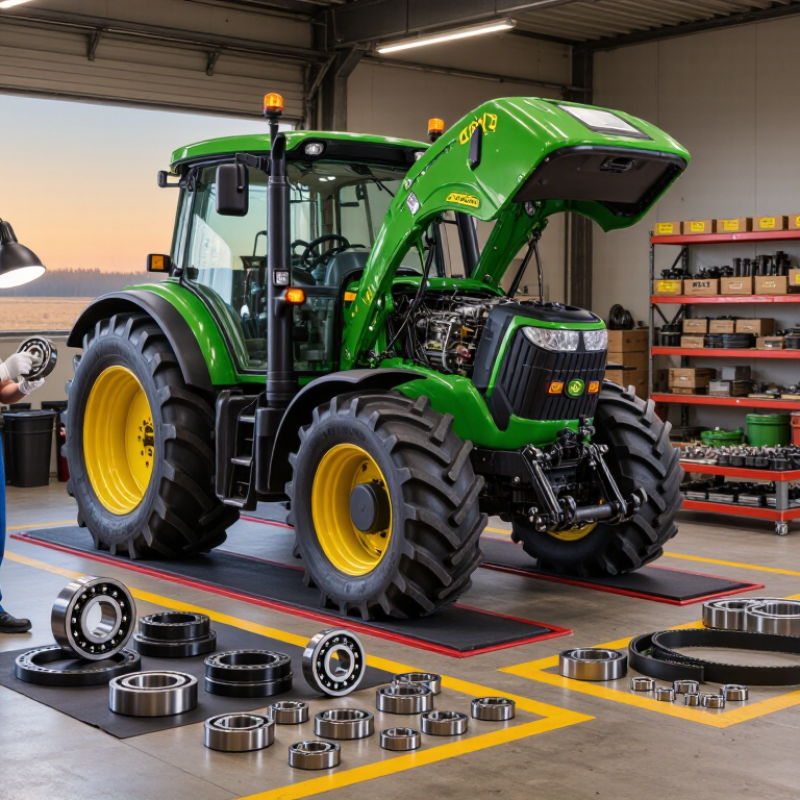
Agricultural machinery parts are not interchangeable pieces. Each one controls a specific function, from power transfer to soil contact. The engine air filter protects combustion quality. Oil and fuel filters reduce abrasive contamination. Belts transfer rotating power, while bearings reduce friction around shafts and pulleys. Hydraulic pumps create pressure for lifting, steering, and implement movement. Seals keep that pressure inside the system.

The USDA National Agricultural Statistics Service reported that 82% of U.S. farms had internet access in 2023. This supports wider use of digital manuals, service records, and equipment monitoring. Still, physical inspection remains essential. A worn hydraulic seal may leave only a thin oil film at first. A damaged bearing can produce heat before making obvious noise. The FAO’s 2022 State of Food and Agriculture emphasizes that suitable mechanization improves farm productivity when technology matches local operating conditions. That condition matters. A stronger part may still fail if its dimensions, material, or pressure rating are wrong.

Tips: Match the part number, dimensions, load rating, and operating temperature. Check the manual before ordering. Inspect nearby parts too. A new belt cannot correct a bent pulley. In field maintenance, I have seen clean-looking filters hide internal collapse. Visual checks can mislead. Measure when possible. Record operating hours and failure symptoms. Professional reports guide decisions, but farm conditions remain different. Dust, mud, vibration, and rushed repairs can change a part’s real service life.

Identifying the Correct Part for Your Equipment

How to Choose the Right Agricultural Machinery Parts?

Identifying the correct agricultural machinery part starts with evidence, not appearance. A worn belt may resemble several catalog items, yet tooth count, width, pulley profile, and tension rating can differ. I check the equipment model, production year, serial range, and operating conditions before ordering. The USDA’s 2022 Census of Agriculture counted about 1.9 million U.S. farms. That scale reflects varied machines and configurations. A “universal” part deserves careful questioning.

Match the part number against the latest service manual, parts diagram, and supplier specification sheet. Measure critical dimensions with calipers, then compare material, hardness, connector shape, and mounting holes. For hydraulic parts, record pressure, flow, port type, and seal material. FAO’s 2022 State of Food and Agriculture links suitable mechanization with improved farm efficiency, but stresses that local conditions matter. That warning matters. Soil, dust, temperature, and workload can change service life. I have sometimes trusted a photograph too quickly; that mistake can create downtime and a second freight cost.

Tips: Photograph the old part beside a ruler. Read every stamped code. Ask for a dimensional drawing, not only a product photo. Confirm left or right orientation. Check whether the part is new, rebuilt, or modified. Keep the failed component until fit and function are verified. If two measurements disagree, stop and remeasure. A small error can damage a shaft, leak fluid, or halt planting during a narrow weather window.

Checking Compatibility, Quality, and Performance Standards

Choosing the right agricultural machinery part begins with compatibility. Match the machine model, production year, serial range, and attachment system. Check shaft diameter, bolt spacing, thread direction, and hydraulic connection size. A part may look correct but still fail during installation. I once selected a replacement from a similar machine, and its mounting holes were only slightly different. That small error caused vibration and wasted a full afternoon.

Quality requires more than a clean finish. Review the material grade, heat treatment, surface protection, and manufacturing tolerances. Reliable suppliers should provide inspection records, batch information, and clear technical drawings. Look for measurable details, such as hardness, tensile strength, fatigue resistance, and sealing performance. Independent testing or recognized industry standards can add confidence. Do not trust every impressive specification. Some figures need practical verification.

Tips: Photograph the old part before removal. Measure critical surfaces with calibrated tools. Compare drawings, not appearance alone. Ask how the part performs under dust, moisture, heavy loads, and repeated impacts. For hydraulic components, confirm pressure and temperature ratings. For cutting or soil-contact parts, inspect wear resistance and edge stability. Performance depends on the whole system, including correct installation and lubrication. I sometimes focus too heavily on purchase price, which is a poor habit. A cheaper part can create downtime, uneven fieldwork, or repeated repairs. Record the test results after installation, even when everything seems normal.

How to Choose the Right Agricultural Machinery Parts? - Checking Compatibility, Quality, and Performance Standards

Part Category Compatibility Checks Key Quality Indicators Performance Standards or References Acceptance Guidance
PTO Shafts and Driveline Components Confirm tractor and implement PTO speed, shaft series, spline count, shaft diameter, connection type, working length, and required overlap. Straight splines, secure guards, correct cross-bearing fit, adequate telescoping movement, and no cracks or excessive play. ISO 500-1 for agricultural tractor power-take-off dimensions; ISO 5676 for hydraulic connections where applicable. Reject a shaft if the guard is damaged, the locking mechanism does not engage fully, or the operating length falls outside the equipment manufacturer’s limits.
Hydraulic Hoses and Couplings Match hose inside diameter, pressure rating, temperature range, fitting thread, sealing method, bend radius, and port configuration. Correct crimping, clean internal passage, undamaged cover, traceable markings, and fittings free from corrosion or deformation. ISO 18752 for rubber hoses used in hydraulic applications; ISO 17165-1 for hydraulic hose assembly practices. The hose working pressure must be equal to or higher than the system’s maximum pressure, including pressure spikes where specified.
Hydraulic and Fuel Filters Verify housing dimensions, thread or head connection, seal diameter, flow direction, fluid compatibility, and bypass-valve requirements. Uniform filter media, strong end caps, reliable sealing gasket, clean construction, and clearly identified service specifications. ISO 16889 provides a multipass method for evaluating hydraulic filter performance; filtration ratings should be compared using the same test method. Compare filtration performance, dirt-holding capacity, and pressure drop rather than relying only on the nominal micron value.
Bearings and Sealing Elements Match bearing designation, bore, outside diameter, width, clearance, load direction, rotation speed, and seal arrangement. Smooth rotation, correct dimensional tolerances, clean raceways, undamaged seals, and suitable lubrication. ISO 15 for boundary dimensions of rolling bearings; ISO 492 for dimensional accuracy and tolerances of radial rolling bearings. Do not install a bearing with visible brinelling, corrosion, rough rotation, incorrect clearance, or a damaged sealing lip.
Belts and Drive Pulleys Check belt profile, length, pulley groove dimensions, center distance, rotation direction, tension range, and guard clearance. Consistent belt profile, flexible construction, crack-free surface, accurate length, and resistance to oil, heat, or agricultural dust as required. Use the applicable ISO or manufacturer dimensional specification for the selected belt profile; pulley and belt profiles must be matched as a set. A belt should run centrally without slipping, abnormal vibration, edge wear, or overheating after correct tensioning.
Fasteners and Structural Hardware Confirm thread diameter, pitch, length, grade, head type, corrosion protection, nut compatibility, and required tightening torque. Clear thread form, consistent plating, no cracks, correct hardness or strength marking, and accurate dimensions. ISO 898-1 specifies mechanical properties for carbon-steel and alloy-steel bolts, screws, and studs; use the equipment service specification for torque. Never replace a specified high-strength fastener with a lower property class, even when the dimensions appear identical.
Three-Point Hitch and Drawbar Parts Check hitch category, pin diameter, hole spacing, lift-arm geometry, working load, locking arrangement, and attachment clearance. Accurate pin fit, strong welds, smooth pivot movement, correct locking devices, and absence of distortion or fatigue cracks. ISO 730 covers three-point linkage dimensions for agricultural tractors; ISO 6489 covers mechanical connections between tractors and towed vehicles. Confirm that the attachment can move through the full operating range without binding, overstressing, or interfering with tires or PTO guards.
Electrical Sensors and Wiring Components Match voltage, connector shape, terminal arrangement, signal type, mounting thread, cable length, polarity, and environmental sealing. Secure terminals, strain relief, intact insulation, reliable sealing, correct resistance or output signal, and protected cable routing. ISO 16750 provides environmental and electrical test guidance for electrical and electronic equipment used in road vehicles; the machinery electrical specification remains controlling. Verify the signal with the service manual or diagnostic procedure before installation; connector fit alone does not confirm electrical compatibility.
Cutting, Tillage, and Wear Parts Compare hole pattern, mounting orientation, working width, thickness, curvature, clearance, and compatibility with the implement frame. Uniform material thickness, accurate holes, sound heat treatment where specified, smooth edges, and resistance to abrasive soil wear. Use the implement manufacturer’s dimensional and material specification; ISO 4254 provides safety requirements relevant to agricultural machinery design and operation. Replace wear parts when their working profile, thickness, or cutting edge has reached the service limit specified for the implement.
Selection Rule: Always confirm the part number, dimensions, operating conditions, and service limits against the equipment technical manual. A part that fits physically may still be unsuitable if its load, pressure, temperature, material, or safety rating is incorrect.

Comparing New, Used, and Replacement Part Options

Choosing the right agricultural machinery part starts with understanding the repair, not the seller.

New parts usually offer predictable fit, updated materials, and longer service life. They suit critical areas such as hydraulic pumps, braking systems, and engine timing components.

Used parts can reduce costs, especially for older machines. However, inspect them carefully. Check wear marks, cracks, rust, thread damage, and unusual movement. A used gearbox may look clean but contain worn bearings.

Ask for operating hours and maintenance records when possible. Replacement parts from an independent supplier may provide good value, but specifications must match exactly. Compare dimensions, pressure ratings, material quality, and warranty terms.

A cheaper part can create extra downtime. I have seen small mismatches cause leaking seals and repeated repairs.

Tips: Photograph the old part before removal. Record its measurements and identification number. Compare the new part beside it. Never rely on appearance alone.

If the application is safety-critical, consult a qualified technician. My own judgment is not always perfect; field conditions can expose problems that catalog data misses.

Dust, vibration, heavy loads, and seasonal storage all affect part performance. Choose based on machine age, repair urgency, expected workload, and the cost of failure. A carefully inspected used part may outperform a poorly matched new one.

Evaluating Suppliers, Costs, Warranty, and Long-Term Support

Choosing agricultural machinery parts starts with the supplier, not the lowest online price. Ask for material specifications, dimensional tolerances, and compatibility records. A reliable supplier should explain how each part was tested. Request batch traceability and clear contact details. In my field inspections, vague answers often signal weak quality control. That matters. A part may fit today but fail under dust, vibration, or heavy loads.

Compare total cost, not just the invoice. Include shipping, downtime, installation labor, and expected service life. A cheaper seal that lasts one season can cost more than a durable seal. Check whether the supplier provides technical drawings and installation guidance. For critical components, ask about testing standards and failure documentation. I once accepted a low-cost replacement without checking heat resistance. It fitted perfectly, but its performance dropped during harvest. That mistake changed my purchasing checklist.

Warranty terms deserve careful reading. Confirm coverage length, exclusions, evidence requirements, and response times. A useful warranty should cover manufacturing defects, not hide behind vague wording. Long-term support is equally practical. Ask about spare-part availability, revised designs, repair advice, and stock continuity. Suppliers with trained technicians can reduce delays when machinery stops in the field. Keep invoices, serial numbers, photographs, and maintenance records. Still, paperwork alone cannot prove dependable support; actual response quality matters more. Check service manuals and independent engineering guidance before committing.