

News

Miro: A New Standard in Responsible Innovation

Miro: A New Standard in Responsible Innovation The Miro monitor arm is setting new benchmarks in sustainability. It offers a high-performance solution without compromising on environmental responsibility. Designed with careful material selection, local sourcing, and longevity in mind, Miro’s responsible approach to design and unique manoeuvrability set it apart from the competition. Sustainable Choices Miro is crafted from energy-efficient materials with a lower carbon impact....

Read more
HSE Advisor

Role Purpose Support in the development, implementation and maintenance of the company’s Health, Safety & Environmental policies, processes, operational procedures, and standards.  Ensuring best practice and championing a continually improving HSE culture within the business. Key Responsibilities Liaise with and provide support to all areas of the business to eliminate, mitigate or reduce identified HSE exposures. Partner with the production management team and team leaders,...

Read more
CMD Ltd LAUNCHES 48-HOUR TURNAROUND ON BETATRAK® RAPID ORDERING SERVICE

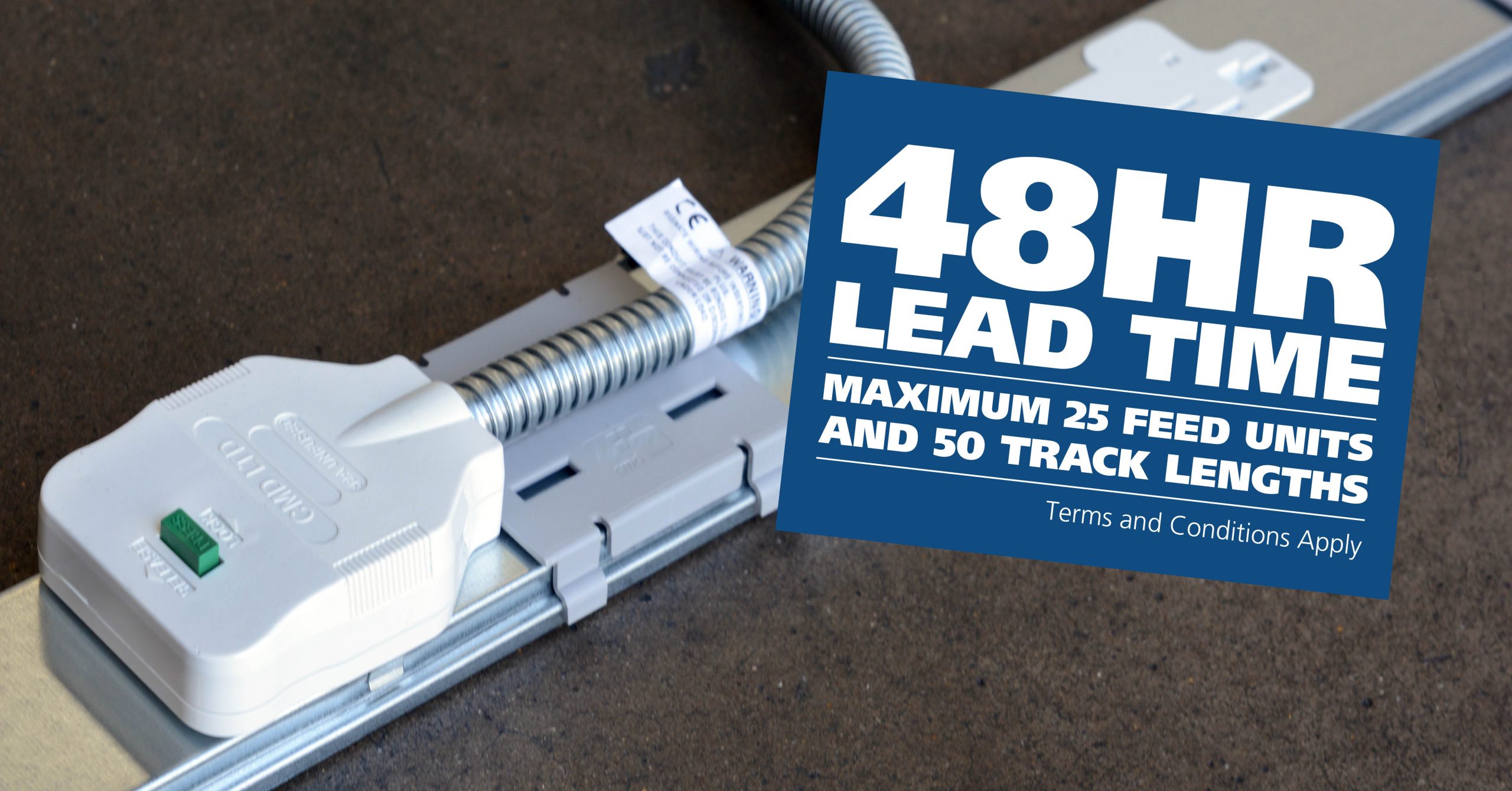
CMD Ltd, the specialist in power distribution systems, workstation power and monitor arms, has launched a rapid ordering service for its Betatrak® underfloor powertrack distribution systems and accessories, with a commitment to delivering within 48-hours of an approved purchase order*. The service enables customers to order up to 50 lengths of Standard or Clean Earth (C/E) low noise Betatrak, along with up to 25 feed...

Read more
CMD INVESTS £1/4 MILLION IN NEW MACHINE AS PART OF FACTORY UPGRADE

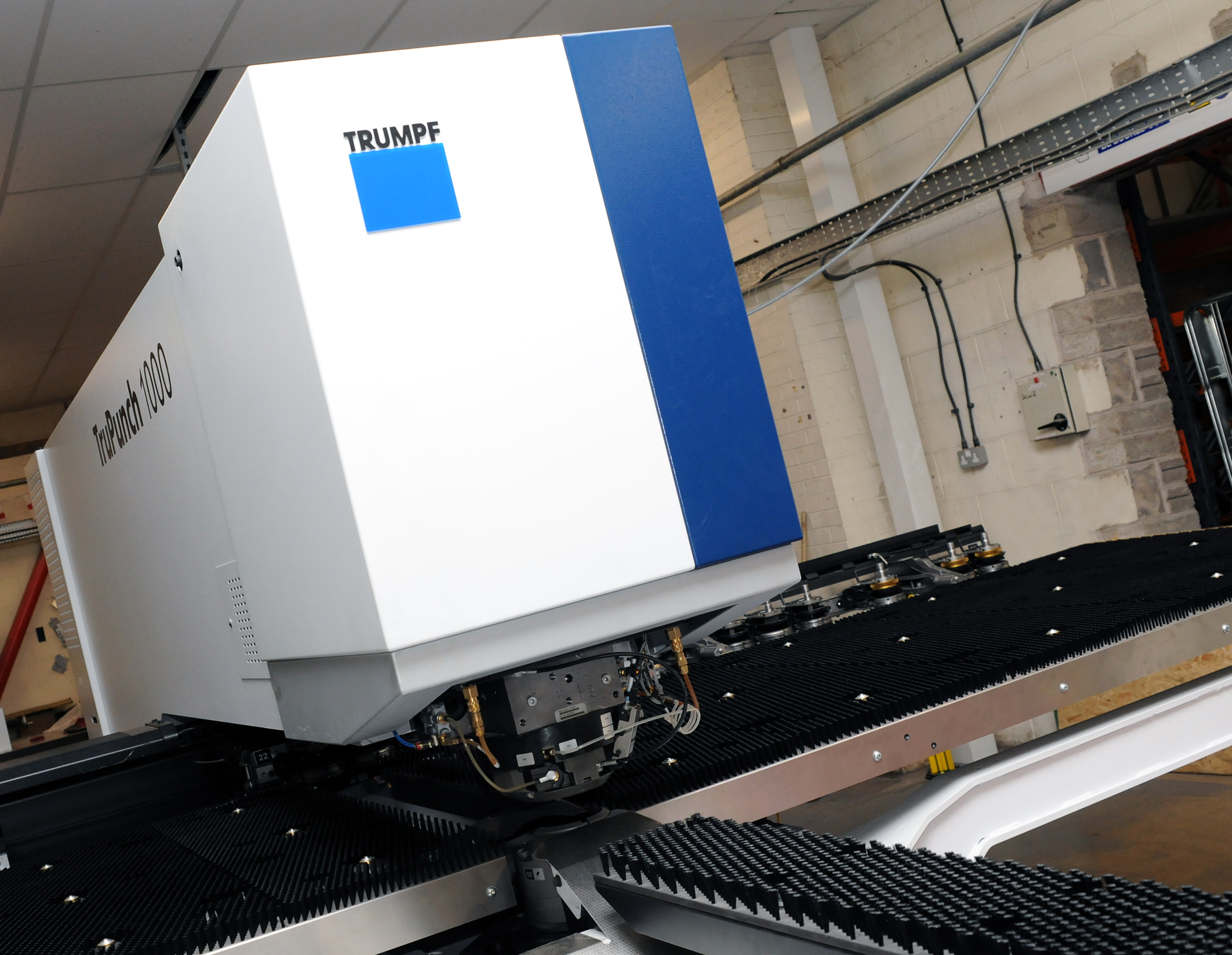
We have invested in a new £1/4m TRUMPF CNC metal punch as part of an asset renewal strategy for our UK manufacturing capability. The new machine will be used in the production of a wide variety of our power distribution systems and workstation power products at our Rotherham factory. Suitable for handling sheet metal between 0.9mm and 3.0mm thick, the new machine will replace one...

Read more
CMD CATALOGUE PROVIDES TECHNICAL POWER DISTRIBUTION GUIDE

CMD Ltd has released a new catalogue, providing an easy to follow technical guide to our power distribution systems and plug and play desk modules. Detailing CMD’s full range of UK-manufactured power distribution systems and plug and play desk modules, the catalogue will be a helpful source of information to M&E engineers and contractors alike to understand how our power distribution systems connect together and...

Read more

Power Distribution Catalogue
CMD Ltd PLAYS ESSENTIAL ROLE IN ELECTRICAL FIT OUT AT LONDON’S PRESTIGIOUS OFFICE DEVELOPMENT

CMD Ltd, specialist in workplace connectivity and ergonomic solutions, has provided a flexible and high-quality power distribution network for The Ray, a prestigious office development in London’s Farringdon. Well-known for being the former site of The Guardian newspaper, The Ray now stands as an 83,000ft² office development characterised by a modernised warehouse aesthetic, with level two now occupied by a global social media company. The...

Read more

The Ray
CMD plugs in to european opportunity with Schuko Capsule unit launch

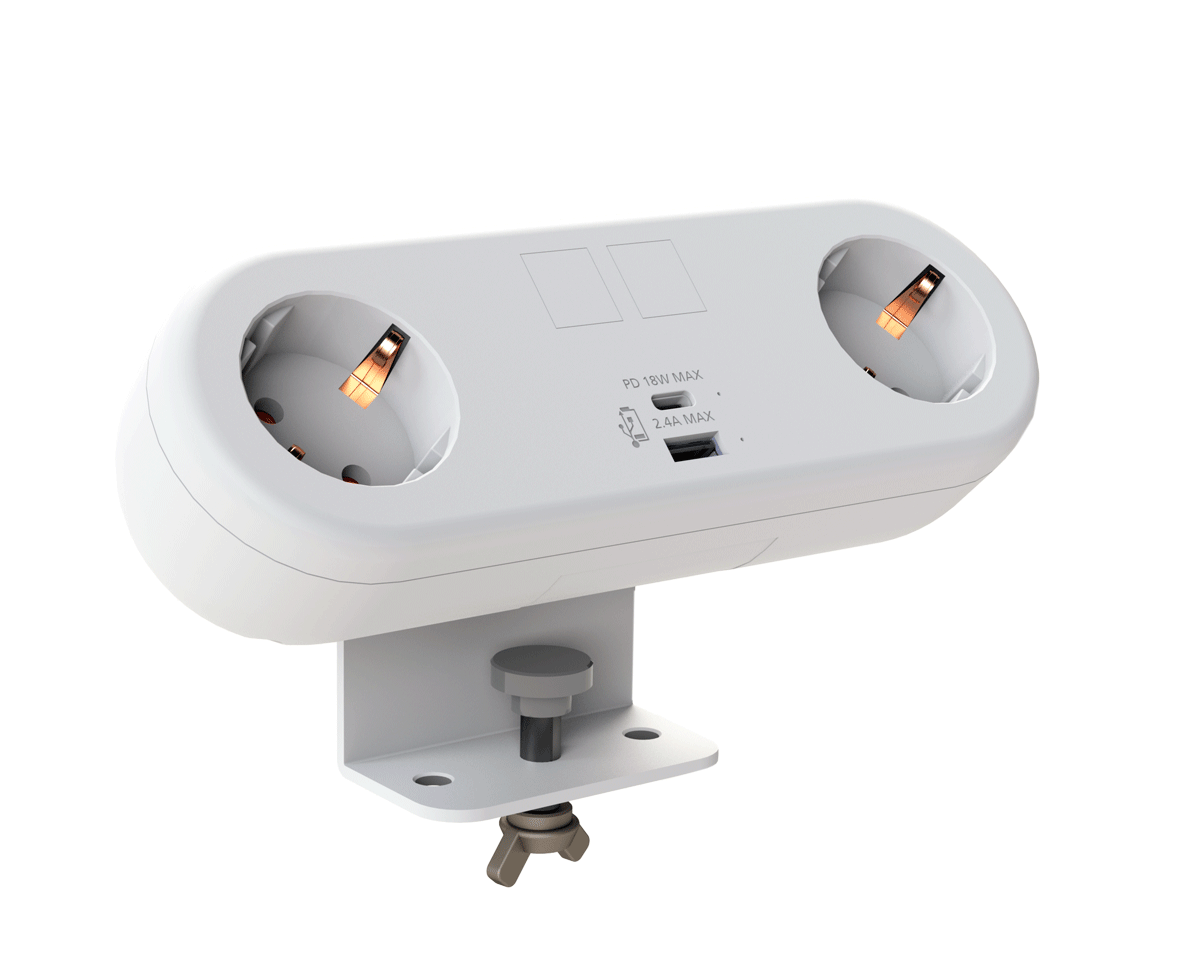
CMD Ltd, the specialist in power and connectivity solutions for commercial environments, has launched a Schuko version of its popular fixed format Capsule workstation power module for export to mainland Europe and beyond. A popular on desk power module comprising two sockets and dual USB (type A and C) chargers, CMD’s Capsule unit is already widely specified in the UK as an off-the-shelf workstation power...

Read more
CMD White Schuko Capsule Desk Power Module
CMD LTD EXTENDS MONITOR ARM RANGE WITH THE LAUNCH OF REACH PLUS

CMD Ltd, the specialist in ergonomic and connectivity solutions for commercial interiors, has completed its Reach monitor arm range with the launch of the Reach Plus. Available in single or dual screen options, the Reach Plus has been designed to provide an ideal solution for both single and dual screen workstation configurations, or can be used with next generation of large format curved screens. Suitable...

Read more

CMD Ltd DEMONSTRATES THE ART OF POWER DISTRIBUTION AT THE UNIVERSITY OF WARWICK

CMD Ltd, the specialist in workplace connectivity and ergonomic solutions, has provided Betatrak busbar power distribution and a range of electrical accessories for two major capital investment projects at the University of Warwick. Designed by Fielden Clegg Bradley Studios, the £33 million Faculty of Arts building is a showpiece development comprising four interconnected structures set around a central atrium, which will enable inter-disciplinary collaboration across...

Read more

University of Warwick
CMD BRINGS HARMONY TO COVENTRY UNIVERSITY RESEARCH FACILITIES

CMD Ltd, the specialist in power distribution solutions and workstation power and ergonomics, has provided under desk and on desk power modules for the refurbishment of three Coventry University research buildings. Located on Coventry University Technology Park, a business park designed to encourage collaboration between the university and knowledge-based businesses, the three buildings are being repurposed as office accommodation for university research teams. The refurbishment...

Read more


Coventry University

How to Choose the Best Whey Hydrolyzed Peptide Supplier

Choosing the best Whey Hydrolyzed Peptide supplier requires more than comparing prices. Product quality can change between batches. So can digestion, solubility, and peptide profiles.

Grand View Research valued the global sports nutrition market at approximately USD 45.27 billion in 2023. It projects a 7.9% compound annual growth rate from 2024 to 2030. Mordor Intelligence also reports continued expansion in the whey protein market. However, these estimates cover broader categories. They do not measure every Whey Hydrolyzed Peptide application. That limitation matters.

Look beyond the sales brochure. Ask for recent certificates of analysis, amino acid testing, hydrolysis information, allergen controls, and microbiological results. Check whether the supplier operates under recognized food safety systems, such as ISO 22000, FSSC 22000, or HACCP-based controls. Traceability should reach the raw milk source and production batch.

Protein researcher Dr. Stuart Phillips has stated, “Protein quality matters.” That short point deserves practical attention. A supplier should explain its degree of hydrolysis, peptide distribution, flavor treatment, and manufacturing consistency. If the explanation sounds vague, pause. A low price may hide weaker documentation, unstable supply, or unnecessary additives.

Experience also reveals smaller warning signs. A sample may dissolve quickly in cold water but perform poorly in a finished beverage. Testing should include realistic conditions, not only laboratory demonstrations. Compare samples independently when possible. The best supplier is not always the largest. It is the one that can prove quality repeatedly, communicate clearly, and improve when evidence exposes a weakness.

How to Choose the Best Whey Hydrolyzed Peptide Supplier

Define Your Product Requirements and Quality Standards

Choosing the best whey hydrolyzed peptide supplier starts with precise product requirements. Define protein content, hydrolysis degree, peptide-size distribution, flavor, solubility, and intended serving format. FAO/WHO/UNU’s expert report recommends 0.83 grams of protein per kilogram of adult body weight daily. Your formula may require more targeted performance than a basic protein powder.

Request a complete specification sheet and recent certificates of analysis. Check protein results using validated AOAC or ISO methods, not only nitrogen-based calculations. Ask for peptide profiles measured by HPLC or LC-MS. Microbial limits, heavy metals, allergens, residual processing aids, and shelf-life data also need clear acceptance criteria. ISO 22000 certification can support food-safety controls, but certification alone does not prove superior peptide quality. I learned this the hard way: attractive documents can hide weak batch traceability.

Tips: Compare three recent production lots. Review assay variation, not just one impressive result. Require lot-specific testing and retain samples. Confirm whether the supplier controls enzymatic hydrolysis in-house. Ask for processing temperature records, because excessive heat may affect solubility and sensory performance. Keep your standard practical. An overly strict specification can increase cost without improving the finished product. Recheck it after pilot trials.

How to Choose the Best Whey Hydrolyzed Peptide Supplier

Define product requirements and quality standards before comparing suppliers. The chart below presents practical target specifications commonly used for whey hydrolyzed peptide procurement. Final limits should be confirmed according to the intended application and applicable regulations.

Key requirements include high protein concentration, a controlled peptide molecular-weight profile, low moisture and lactose, and strict microbiological control. Suppliers should provide batch-specific certificates of analysis, validated testing methods, traceability records, and allergen documentation.

Assess Supplier Expertise, Manufacturing Capacity, and Certifications

How to Choose the Best Whey Hydrolyzed Peptide Supplier

Assess Supplier Expertise, Manufacturing Capacity, and Certifications

A capable supplier should explain its hydrolysis process in practical terms. Ask about enzyme selection, hydrolysis time, peptide distribution, and bitterness control. A technical team should connect these details with your product’s solubility, flavor, and intended use. Vague answers are warning signs. So are impressive claims without test data.

Manufacturing capacity must match your actual demand, not an optimistic sales forecast. Review pilot-batch procedures, production volumes, equipment maintenance, and typical lead times. Request samples from different lots, then compare solubility, taste, moisture, protein content, and microbial results. I once found a promising sample performed poorly after storage. That experience changed my view of sample approval. Stability evidence matters.

Reliable suppliers provide current certificates and traceable records. Look for relevant GMP, HACCP, and ISO 22000 systems, supported by independent audits where possible. Each shipment should include a clear certificate of analysis, allergen statement, heavy metal results, and microbiological testing. Check whether laboratories use validated methods. Also ask how complaints, deviations, and recalls are documented. No system is perfect. A supplier willing to discuss mistakes may be more dependable than one claiming none. Personally, I would verify every critical document with the issuing organization and review the facility before signing a long-term agreement.

Verify Peptide Purity, Testing Methods, and Traceability

Selecting the best whey hydrolyzed peptide supplier starts with verified purity, not attractive labels. Request a batch-specific certificate of analysis, then compare its results with the product specification. Useful tests may include HPLC, LC-MS, amino acid profiling, moisture analysis, microbiological screening, and heavy metal testing. Ask who performed each test and whether the method is validated.

A reliable supplier can explain sampling procedures, detection limits, and out-of-specification handling. Independent laboratory results add confidence, especially for high-value purchases. A polished certificate is not enough. During a practical quality review, check the lot number on the certificate, bag, invoice, and shipping record. Keep a retained sample when possible. Storage conditions matter too, because heat and humidity can affect peptide quality. No system is perfect. Missing data should be recorded and investigated, not quietly ignored.

Tips: Request a traceability map covering raw material receipt, hydrolysis, filtration, drying, packaging, and shipment. Confirm production dates, equipment records, cleaning checks, and storage temperatures. Ask how the supplier manages recalls and customer complaints. Clear answers show control. Vague answers deserve caution. A transparent supplier should provide updated documents without pressure or defensiveness.

Compare Pricing, Supply Reliability, and Customization Options

How to Choose the Best Whey Hydrolyzed Peptide Supplier

Price should be compared by usable protein, not only by the quoted kilogram. Hydrolysis level, protein concentration, freight, testing, and minimum order quantities can change the real cost. Grand View Research estimated the global whey protein market at approximately USD 9.6 billion in 2023, with strong growth expected through 2030. That growth can pressure raw material availability. Request three delivered-cost scenarios: trial, regular production, and sudden demand increase. Cheap is not always efficient.

Supply reliability needs evidence. Ask for documented lead times, batch-release procedures, lot traceability, and contingency plans. The 2024 USDA Foreign Agricultural Service Dairy: World Markets and Trade report highlights continuing changes in global dairy production and trade flows. Those changes may affect whey availability and shipping schedules. A supplier with two qualified production sites is usually safer than one depending on a single facility. Request recent certificates of analysis, microbiological results, allergen controls, and stability data. Small details matter.

Customization separates a trading quote from technical support. Confirm the degree of hydrolysis, peptide distribution, solubility, flavor system, sweetness, and packaging format. MarketsandMarkets reported continued expansion in functional nutrition demand, but customization still increases testing time and development cost. Allow realistic sample stages. I have seen specifications become too ambitious. A lower target may perform better in a drink. Ask whether changes are supported by pilot batches, not promises alone. Record every acceptance limit in the supply agreement.

Select the Supplier Through Samples, Audits, and Contract Review

How to Choose the Best Whey Hydrolyzed Peptide Supplier

Select the Supplier Through Samples, Audits, and Contract Review

Choosing the best whey hydrolyzed peptide supplier requires more than a low quotation. Start with a controlled sample review. Request a sealed sample from a defined production lot. Record the lot number, packaging condition, and arrival temperature. Test solubility in cold water, taste, odor, color, and dispersibility. Ask for peptide distribution data, protein content, moisture, microbiology, heavy metals, and allergen controls. Compare the certificate of analysis with independent laboratory results. A polished sample can mislead. Test more than once.

An audit reveals what documents cannot. Review raw-material approval, pasteurization controls, hydrolysis parameters, cleaning records, calibration logs, and batch traceability. Check whether operators understand deviation handling. Inspect the warehouse for humidity control and damaged bags. Ask for recent corrective-action reports. Silence is not proof of control. Remote audits can help, but an on-site visit often exposes practical gaps. Do not treat a tidy tour as evidence alone. Follow one batch from receiving through release.

Contract review should convert expectations into measurable obligations. Define peptide specifications, testing methods, sampling plans, and release criteria. State responsibilities for contaminants, allergen statements, packaging, shelf life, and transport conditions. Include change-notification periods and approval rights. Set procedures for rejected lots, investigations, recalls, and replacement timelines. Require traceable records and audit access. Agree on governing law and dispute procedures. Avoid vague terms such as “premium quality.” They create room for argument. I would also leave a review point after the first three shipments. Early assumptions often fail under production pressure.