

News

Miro: A New Standard in Responsible Innovation

Miro: A New Standard in Responsible Innovation The Miro monitor arm is setting new benchmarks in sustainability. It offers a high-performance solution without compromising on environmental responsibility. Designed with careful material selection, local sourcing, and longevity in mind, Miro’s responsible approach to design and unique manoeuvrability set it apart from the competition. Sustainable Choices Miro is crafted from energy-efficient materials with a lower carbon impact....

Read more
HSE Advisor

Role Purpose Support in the development, implementation and maintenance of the company’s Health, Safety & Environmental policies, processes, operational procedures, and standards.  Ensuring best practice and championing a continually improving HSE culture within the business. Key Responsibilities Liaise with and provide support to all areas of the business to eliminate, mitigate or reduce identified HSE exposures. Partner with the production management team and team leaders,...

Read more
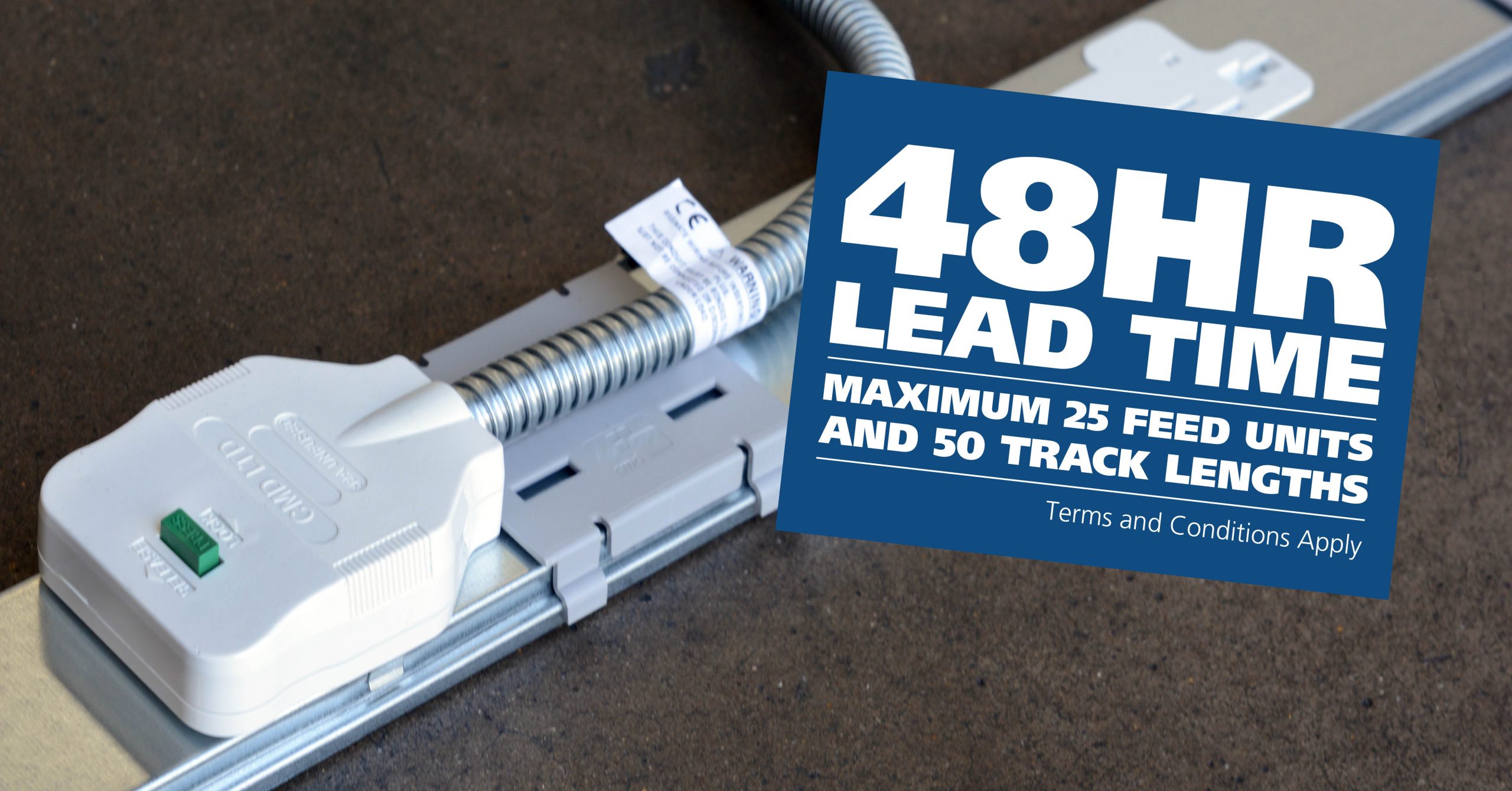
CMD Ltd LAUNCHES 48-HOUR TURNAROUND ON BETATRAK® RAPID ORDERING SERVICE

CMD Ltd, the specialist in power distribution systems, workstation power and monitor arms, has launched a rapid ordering service for its Betatrak® underfloor powertrack distribution systems and accessories, with a commitment to delivering within 48-hours of an approved purchase order*. The service enables customers to order up to 50 lengths of Standard or Clean Earth (C/E) low noise Betatrak, along with up to 25 feed...

Read more
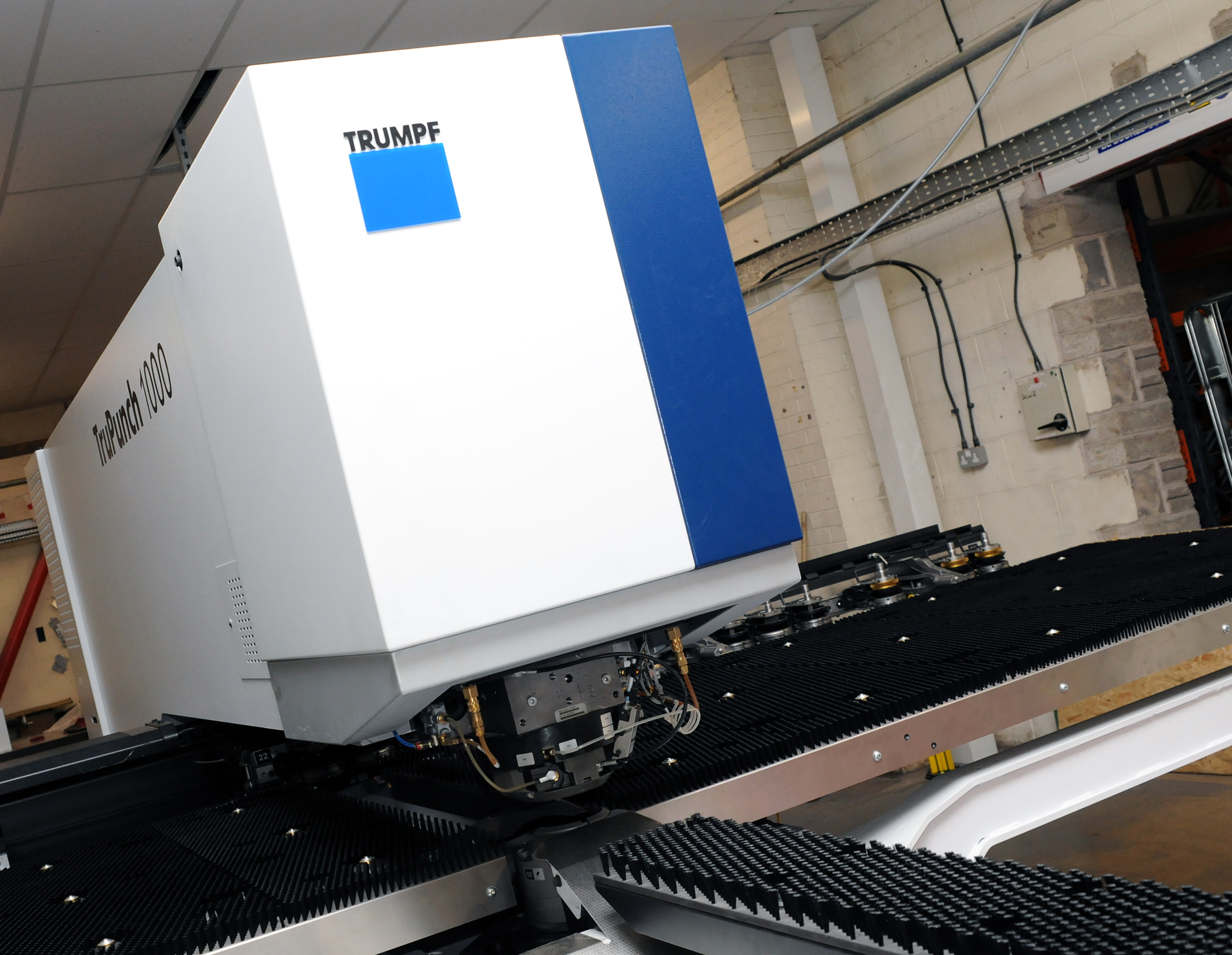
CMD INVESTS £1/4 MILLION IN NEW MACHINE AS PART OF FACTORY UPGRADE

We have invested in a new £1/4m TRUMPF CNC metal punch as part of an asset renewal strategy for our UK manufacturing capability. The new machine will be used in the production of a wide variety of our power distribution systems and workstation power products at our Rotherham factory. Suitable for handling sheet metal between 0.9mm and 3.0mm thick, the new machine will replace one...

Read more
CMD CATALOGUE PROVIDES TECHNICAL POWER DISTRIBUTION GUIDE

CMD Ltd has released a new catalogue, providing an easy to follow technical guide to our power distribution systems and plug and play desk modules. Detailing CMD’s full range of UK-manufactured power distribution systems and plug and play desk modules, the catalogue will be a helpful source of information to M&E engineers and contractors alike to understand how our power distribution systems connect together and...

Read more
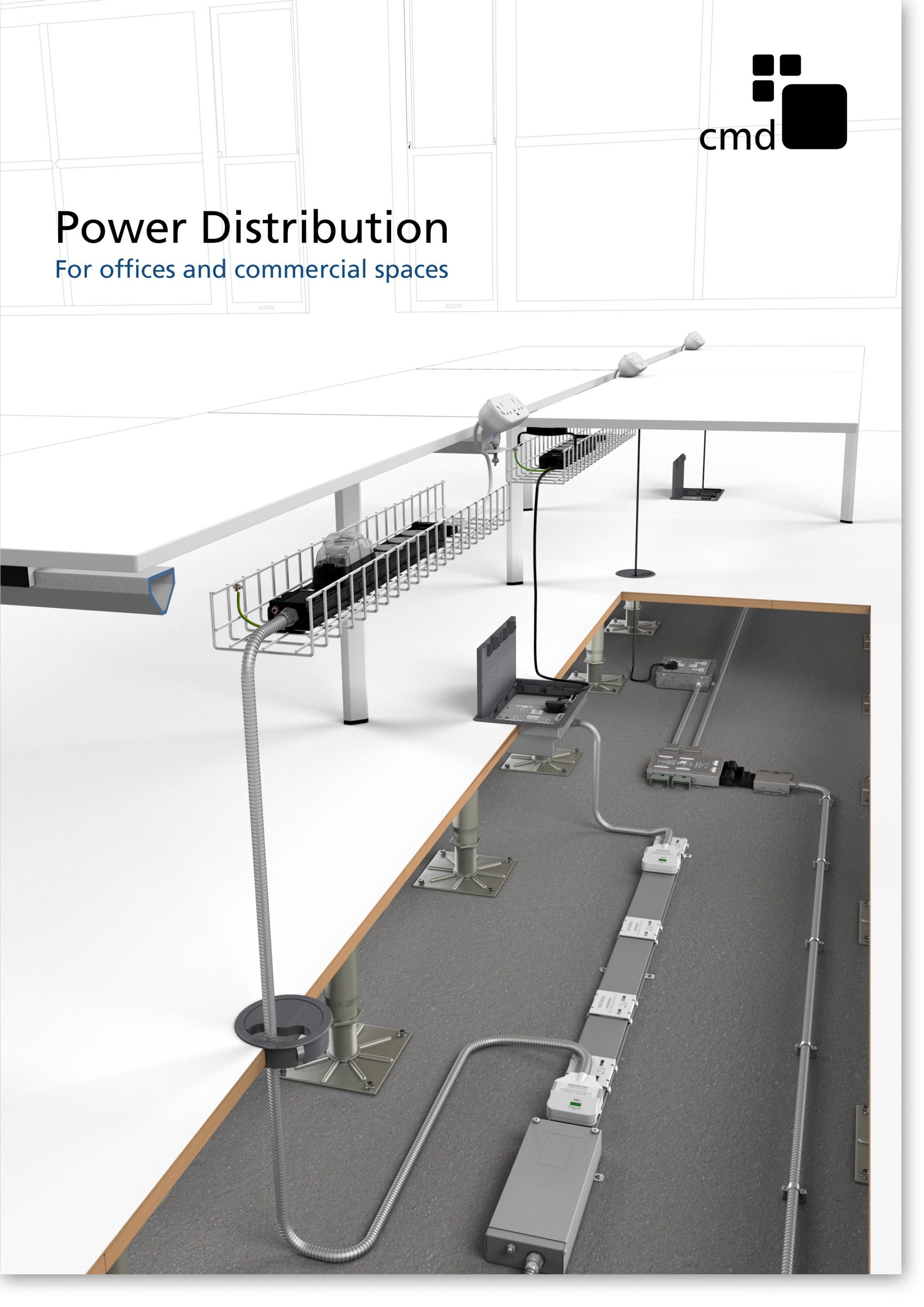
Power Distribution Catalogue
CMD Ltd PLAYS ESSENTIAL ROLE IN ELECTRICAL FIT OUT AT LONDON’S PRESTIGIOUS OFFICE DEVELOPMENT

CMD Ltd, specialist in workplace connectivity and ergonomic solutions, has provided a flexible and high-quality power distribution network for The Ray, a prestigious office development in London’s Farringdon. Well-known for being the former site of The Guardian newspaper, The Ray now stands as an 83,000ft² office development characterised by a modernised warehouse aesthetic, with level two now occupied by a global social media company. The...

Read more
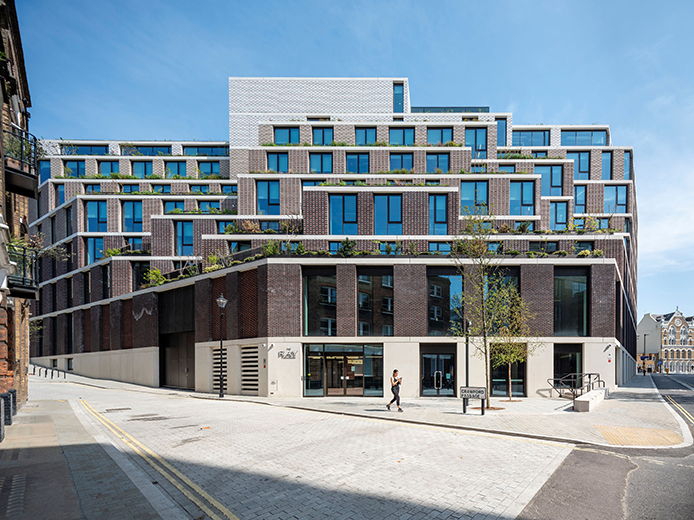
The Ray
CMD plugs in to european opportunity with Schuko Capsule unit launch

CMD Ltd, the specialist in power and connectivity solutions for commercial environments, has launched a Schuko version of its popular fixed format Capsule workstation power module for export to mainland Europe and beyond. A popular on desk power module comprising two sockets and dual USB (type A and C) chargers, CMD’s Capsule unit is already widely specified in the UK as an off-the-shelf workstation power...

Read more
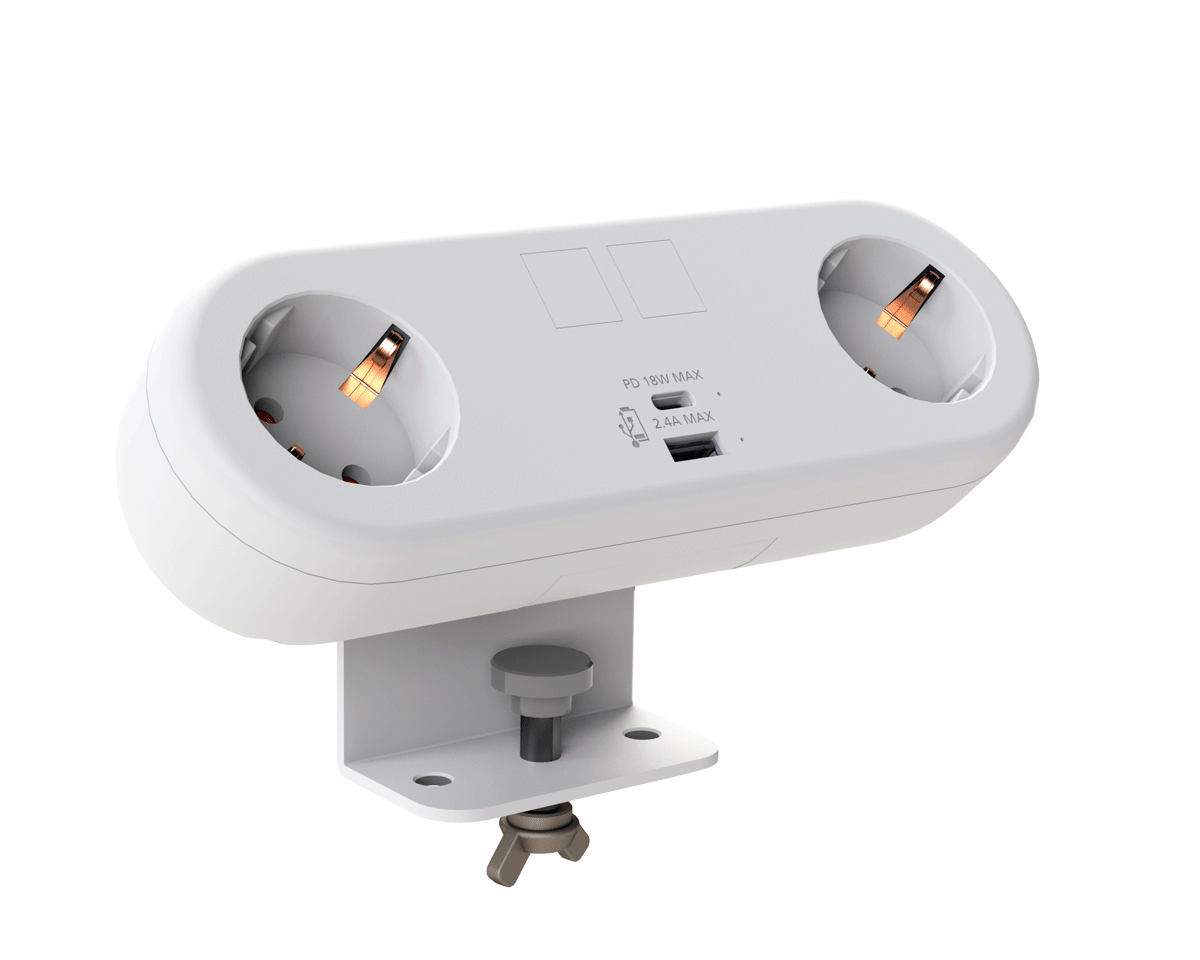
CMD White Schuko Capsule Desk Power Module
CMD LTD EXTENDS MONITOR ARM RANGE WITH THE LAUNCH OF REACH PLUS

CMD Ltd, the specialist in ergonomic and connectivity solutions for commercial interiors, has completed its Reach monitor arm range with the launch of the Reach Plus. Available in single or dual screen options, the Reach Plus has been designed to provide an ideal solution for both single and dual screen workstation configurations, or can be used with next generation of large format curved screens. Suitable...

Read more
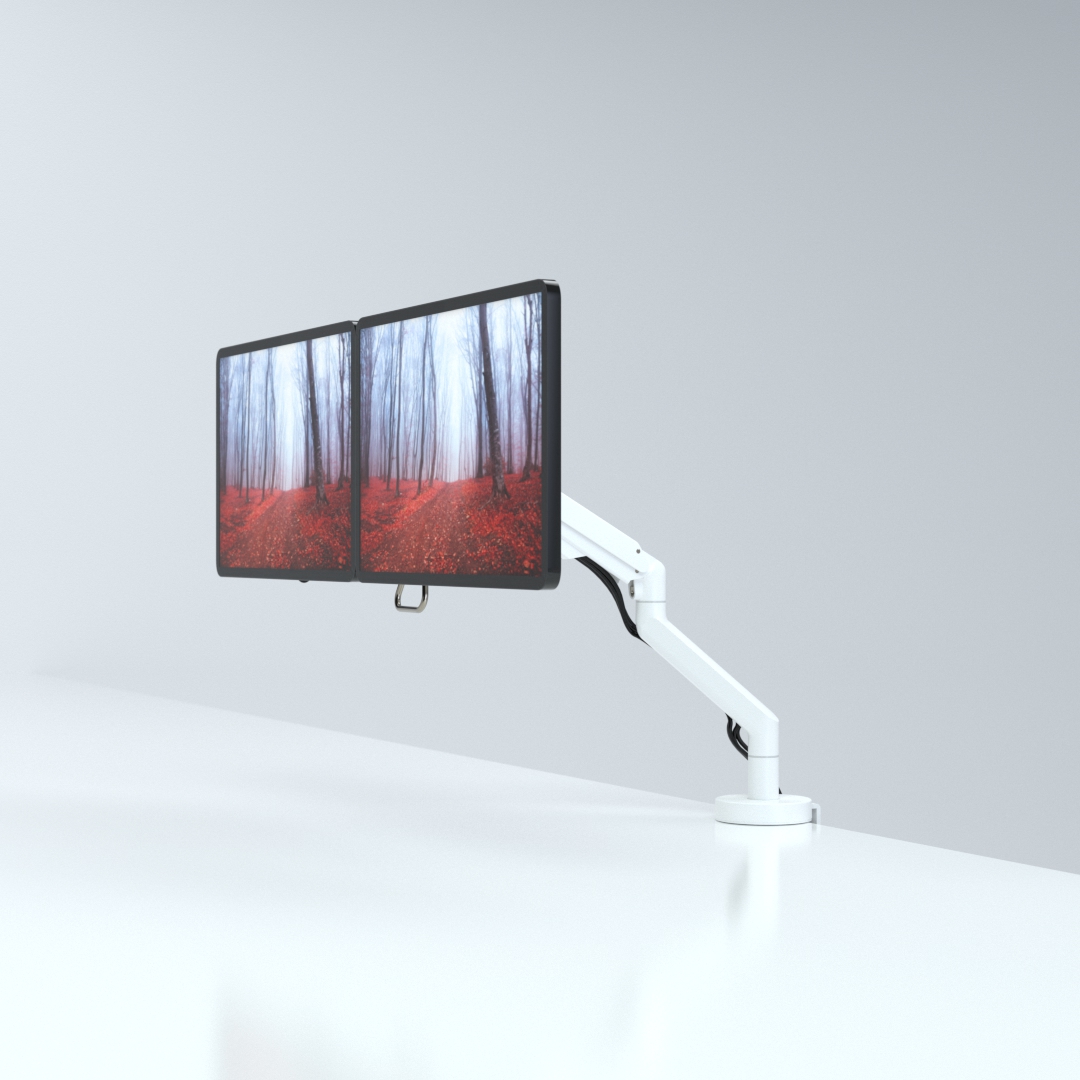
CMD Ltd DEMONSTRATES THE ART OF POWER DISTRIBUTION AT THE UNIVERSITY OF WARWICK

CMD Ltd, the specialist in workplace connectivity and ergonomic solutions, has provided Betatrak busbar power distribution and a range of electrical accessories for two major capital investment projects at the University of Warwick. Designed by Fielden Clegg Bradley Studios, the £33 million Faculty of Arts building is a showpiece development comprising four interconnected structures set around a central atrium, which will enable inter-disciplinary collaboration across...

Read more

University of Warwick
CMD BRINGS HARMONY TO COVENTRY UNIVERSITY RESEARCH FACILITIES

CMD Ltd, the specialist in power distribution solutions and workstation power and ergonomics, has provided under desk and on desk power modules for the refurbishment of three Coventry University research buildings. Located on Coventry University Technology Park, a business park designed to encourage collaboration between the university and knowledge-based businesses, the three buildings are being repurposed as office accommodation for university research teams. The refurbishment...

Read more
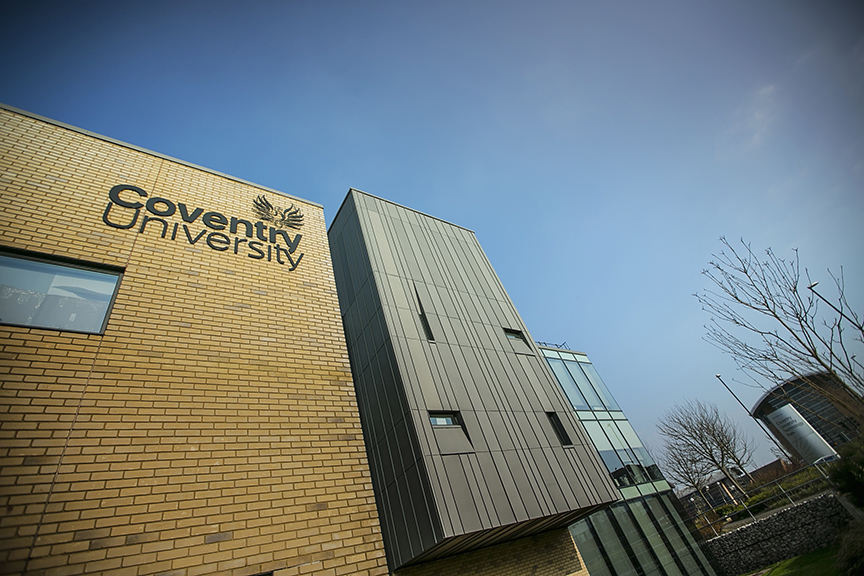
Coventry University

How to Choose Airport Flood Lights for Global Projects?

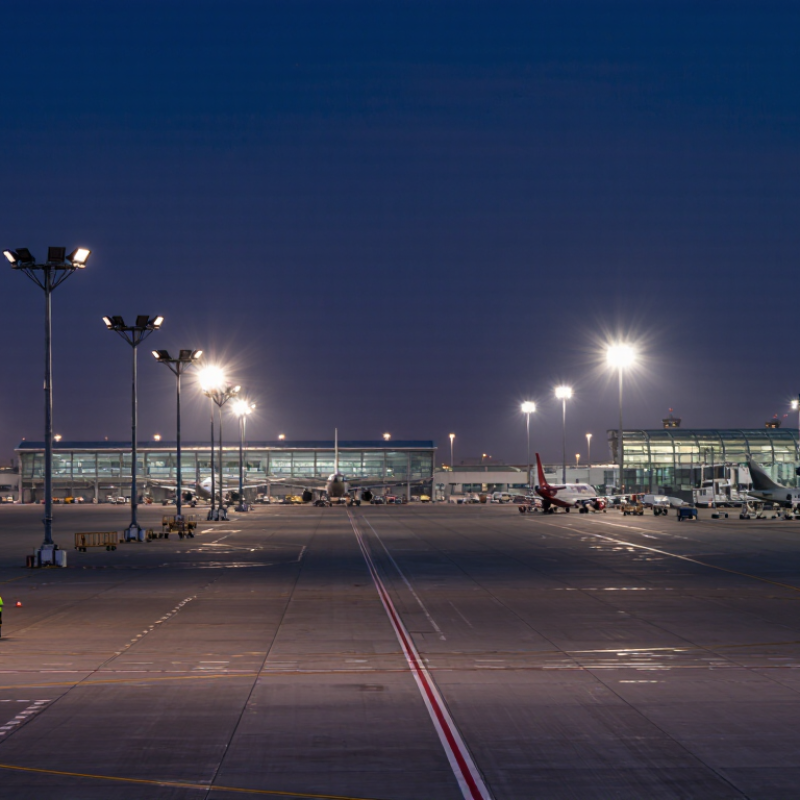
Choosing Airport Flood Lights for a global project requires more than comparing wattage, price, and product photographs. Airports operate through changing weather, strict safety procedures, and demanding nighttime schedules. A fitting that performs well in Dubai may struggle with freezing rain in Toronto. Coastal terminals create another challenge. Salt can attack housings, connectors, and mounting hardware.

Lighting designer and educator James R. Benya has said, “Good lighting is not just about seeing; it is about seeing safely and comfortably.” This principle is especially relevant to Airport Flood Lights. Runways, aprons, service roads, and aircraft stands need clear, controlled illumination without distracting glare. Beam angles, color consistency, optical efficiency, and flicker performance all deserve careful review. Maintenance access matters, too. A perfect light is not useful if technicians cannot reach it safely.

Global selection also demands evidence. Look for verified photometric files, ingress and impact ratings, thermal testing, surge protection, and documented service support. Check compatibility with local voltage, control systems, and airport specifications. Do not rely on marketing claims alone. Ask for installation references in similar climates. Request real test data.

There is no universal floodlight. That is the uncomfortable truth. A higher lumen package can still create poor visibility when aimed carelessly. A lower-wattage design may perform better with precise optics. Every project needs a site survey, glare assessment, and maintenance plan. This guide explains how to compare Airport Flood Lights with practical judgment, technical discipline, and room for reconsideration when field conditions change.

How to Choose Airport Flood Lights for Global Projects?

Define Airport Flood Light Requirements and Operating Conditions

Airport flood light selection begins with a precise definition of each illuminated area. Aprons, cargo zones, service roads, and maintenance stands need different lighting conditions. Record the required illuminance, uniformity, glare limits, and color rendering for every task. Passenger boarding needs visual comfort. Vehicle movement needs clear edges and controlled shadows.

I have seen projects specify brightness before mapping actual operations. That approach often creates dark pockets or excessive glare. Measure mounting heights, pole spacing, beam angles, and nearby obstructions. Consider aircraft windows, control towers, drivers, and ground crews. A photometric simulation should reflect real pavement reflectance. It should also include aging and dirt.

Operating conditions require equal attention. Check temperature ranges, wind loads, vibration, salt exposure, dust, humidity, and heavy rainfall. Select suitable ingress and impact protection for the site. Confirm electrical frequency, voltage variation, emergency power, and control-system compatibility. Lighting should support dimming, scheduling, fault alerts, and manual override. Maintenance teams need safe access and replaceable components. Local aviation rules and electrical standards must guide the final design. A spreadsheet is never the whole site. Walk the apron at night. Note unexpected shadows, reflections, and glare. Then revise the specification before procurement.

Compare Light Sources, Beam Angles, and Illumination Performance

Airport flood lights must balance visibility, glare control, and energy use. Light source selection affects every later decision. The U.S. Department of Energy’s 2023 Solid-State Lighting R&D Plan reports laboratory LED packages above 200 lumens per watt. Real airport fixtures usually deliver less, often around 120–170 lumens per watt after optics and thermal losses. High-pressure sodium can provide strong output, but its poor color rendering weakens surface and vehicle recognition. LED systems offer better white-light visibility and instant control. However, excessive blue content may increase sky glow and discomfort.

Beam angle is equally important. Narrow beams, commonly 15–30 degrees, suit high masts and focused apron zones. Medium beams, around 30–60 degrees, reduce dark gaps between aircraft stands. Wide beams can illuminate roads and service areas, but they may waste light beyond the pavement. IES RP-8-22 and CIE 150:2017 emphasize uniformity and discomfort-glare control, not brightness alone. A brighter installation can still create unsafe contrast near a dark taxiway. That detail is often underestimated.

Tips: Request photometric files, not only lumen ratings. Check maintained illuminance after dirt, aging, and weather losses. Compare vertical illumination on aircraft doors and service vehicles. Measure flicker at low dimming levels. Review spill light from the control tower and nearby roads. The U.S. DOE’s 2022 SSL market analysis also shows fixture efficacy varies widely by design, so one impressive datasheet should not decide the project. Field testing remains valuable. Models can be wrong.

How to Choose Airport Flood Lights for Global Projects?

Comparison of light sources, beam angles, and calculated center-beam illumination performance

The chart uses representative planning values for a 1,000 W luminaire installed at 20 m: LED 140 lm/W, metal halide 90 lm/W, and high-pressure sodium 120 lm/W. Center-beam illuminance is calculated from luminous flux and the beam solid angle for 10°, 30°, and 60° full beam angles.

Narrow beams produce higher center illuminance but cover a smaller area, while wider beams improve area coverage. Final airport designs should be verified with manufacturer IES/LDT photometry, glare limits, uniformity targets, and applicable aviation standards.

Evaluate Weather Resistance, Safety Standards, and Airport Compliance

How to Choose Airport Flood Lights for Global Projects?

Airport flood lights must survive more than rain. They face wind, dust, salt, vibration, and sudden temperature changes. The WMO State of the Global Climate 2023 reported that 2023 was the warmest year recorded, at about 1.45°C above the pre-industrial average. This trend makes thermal testing and corrosion protection more important for global projects.

Look for tested ingress protection, not only attractive housing. IP66 can protect against dust and powerful water jets, while higher protection may suit exposed coastal locations. Ask for test evidence under IEC 60598, IEC 60529, and ISO 9227 salt-spray methods. Check operating temperature, surge protection, wind-load calculations, and drainage around cable entries. Small sealing weaknesses often become expensive faults.

Safety and compliance need equal attention. ICAO Annex 14 defines airport lighting principles, while FAA AC 150/5340-30J provides detailed guidance for lighting equipment and photometric performance. Confirm glare limits, color performance, emergency operation, and electromagnetic compatibility with the local airport authority. EN 62471 testing can help assess photobiological risks from powerful LEDs. CIE 150 guidance is also useful for controlling stray light near aircraft operations and nearby communities. A perfect specification is rare. In practice, project teams sometimes approve a light before checking maintenance access, which is a costly oversight. Reserve space for cleaning, driver replacement, and measurable field verification after installation.

Select Mounting Systems, Controls, and Maintenance Features

For global airport projects, floodlight selection starts with the mounting system, not fixture wattage. Runway edges, aprons, and cargo yards create different wind loads and aiming requirements. Use galvanized steel or marine-grade aluminum where salt, dust, and heavy rain are expected. Hinged brackets can speed servicing, but they need secure locking hardware. Very important. Confirm pole height, foundation capacity, access clearance, and vibration risks through site surveys. I have seen powerful lights perform poorly because their brackets allowed small aiming shifts.

Controls should match operational reality. Astronomical timers, photocells, and networked dimming can reduce unnecessary operation. Yet automation needs a manual override for inspections, emergencies, and commissioning. Use shielded communication cables and surge protection across exposed aprons. Group lights by zone, not simply by building. This supports staged illumination during aircraft movement and maintenance. Keep control logic documented. A clever system becomes difficult when only one technician understands it.

Maintenance features decide long-term value. Select sealed housings, replaceable drivers, corrosion-resistant fasteners, and accessible connection chambers. A tilt indicator helps technicians restore the original beam angle after cleaning. Require inspection records for torque, insulation, lumen output, and water ingress. Plan safe access before installation; a lift truck route may change after construction. Do not trust “maintenance-free” wording. Even robust equipment needs cleaning, thermal checks, and occasional recalibration. Dust levels are often underestimated during design. Build cleaning intervals from local observations, then revise them after the first operating season.

Assess Energy Efficiency, Total Cost, and Global Project Support

Airport flood lights must be judged beyond brightness and purchase price. The International Energy Agency reports that lighting uses about 15% of global electricity consumption. LED conversion can reduce this burden, but only when optics, controls, and operating schedules match the apron. For example, replacing a 1,000-watt fixture with a 500-watt model, operating 12 hours daily, saves about 2,190 kWh annually. Measure the apron.

Total cost includes electricity, lamp replacement, lift access, cleaning, controls, and downtime. The U.S. Department of Energy reports that LED products can use at least 75% less energy and last up to 25 times longer than incandescent lighting. That comparison is useful, but airport projects often replace discharge lamps, not incandescent lamps. The spreadsheet is rarely perfect. Use local tariffs, actual running hours, and maintenance records instead of optimistic payback assumptions. Check photometric files and testing methods, including LM-79 and LM-80 documentation where applicable.

Global project support also affects cost and reliability. Require compatibility with local voltage, frequency, surge conditions, weather, and aviation lighting requirements. IEC 60598 testing, documented ingress protection, and verified thermal performance provide stronger evidence than marketing claims. Ask for multilingual manuals, regional spare parts, remote troubleshooting, and trained commissioning support. A practical supplier should explain warranty exclusions clearly. Customs delays can stop a runway upgrade. Even a technically excellent light may fail commercially when replacement parts take ten weeks. I would also review glare, sky glow, and dimming behavior with airport operators, because energy efficiency without safe visibility is a false economy.