

News

Miro: A New Standard in Responsible Innovation

Miro: A New Standard in Responsible Innovation The Miro monitor arm is setting new benchmarks in sustainability. It offers a high-performance solution without compromising on environmental responsibility. Designed with careful material selection, local sourcing, and longevity in mind, Miro’s responsible approach to design and unique manoeuvrability set it apart from the competition. Sustainable Choices Miro is crafted from energy-efficient materials with a lower carbon impact....

Read more
HSE Advisor

Role Purpose Support in the development, implementation and maintenance of the company’s Health, Safety & Environmental policies, processes, operational procedures, and standards.  Ensuring best practice and championing a continually improving HSE culture within the business. Key Responsibilities Liaise with and provide support to all areas of the business to eliminate, mitigate or reduce identified HSE exposures. Partner with the production management team and team leaders,...

Read more
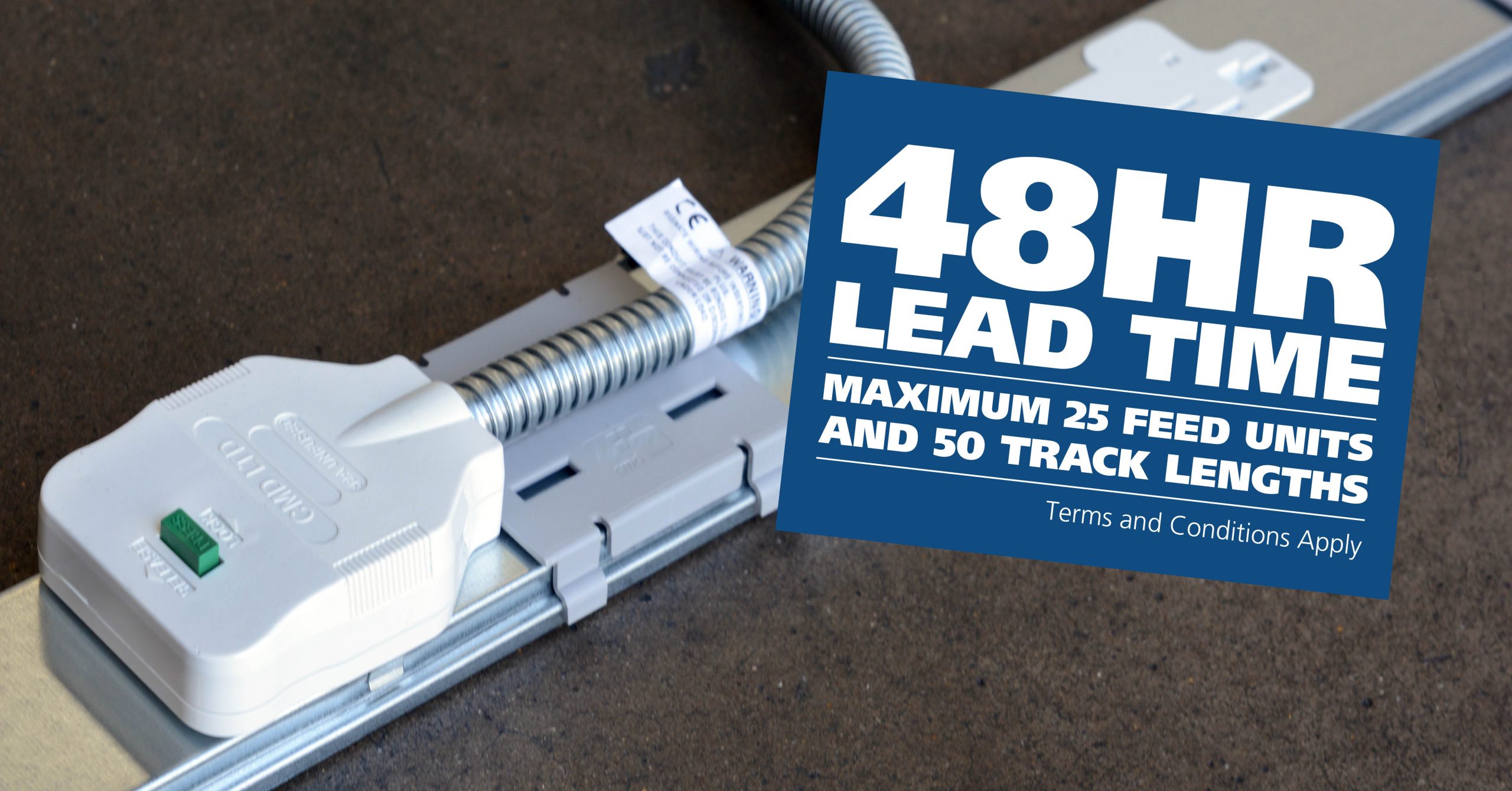
CMD Ltd LAUNCHES 48-HOUR TURNAROUND ON BETATRAK® RAPID ORDERING SERVICE

CMD Ltd, the specialist in power distribution systems, workstation power and monitor arms, has launched a rapid ordering service for its Betatrak® underfloor powertrack distribution systems and accessories, with a commitment to delivering within 48-hours of an approved purchase order*. The service enables customers to order up to 50 lengths of Standard or Clean Earth (C/E) low noise Betatrak, along with up to 25 feed...

Read more
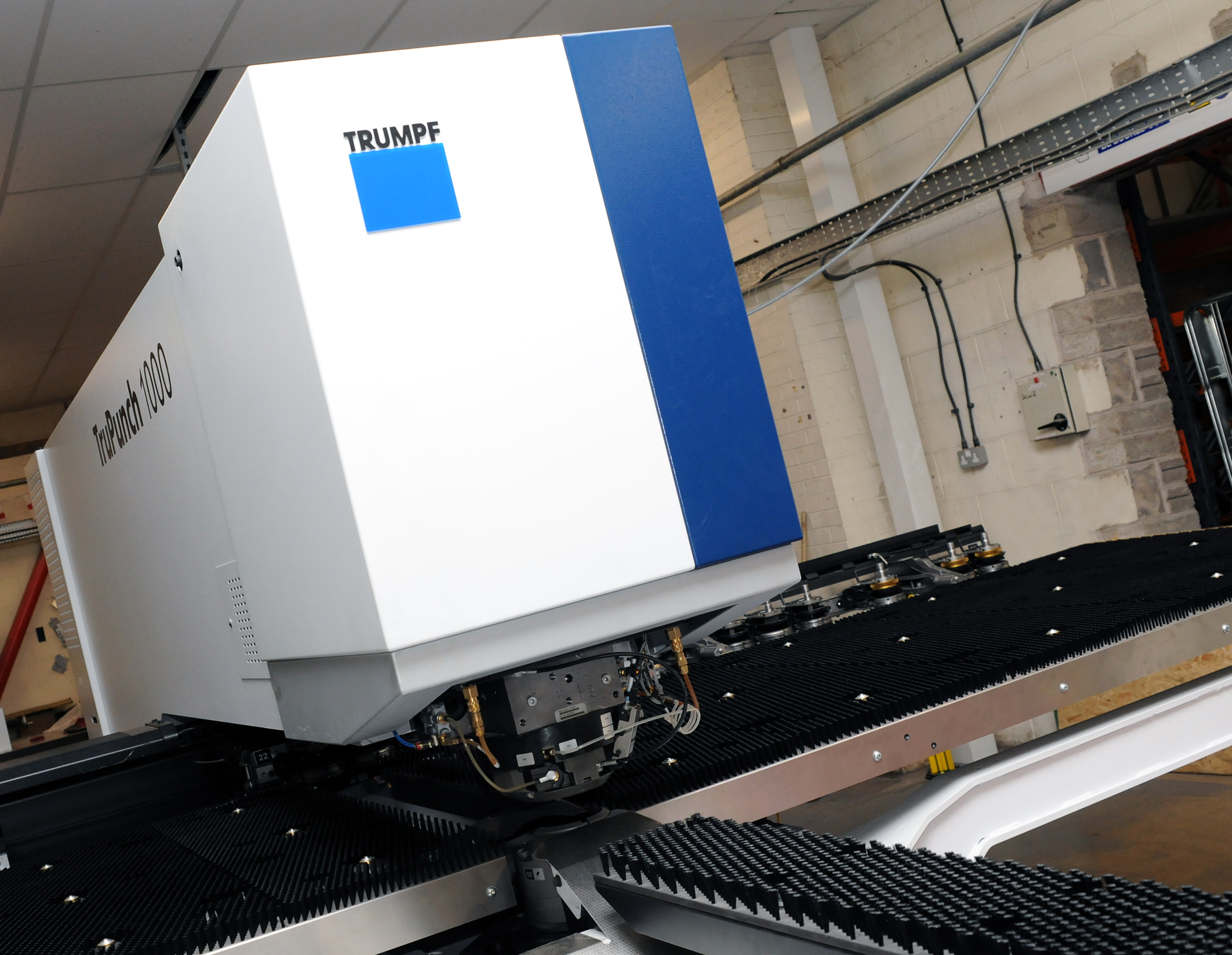
CMD INVESTS £1/4 MILLION IN NEW MACHINE AS PART OF FACTORY UPGRADE

We have invested in a new £1/4m TRUMPF CNC metal punch as part of an asset renewal strategy for our UK manufacturing capability. The new machine will be used in the production of a wide variety of our power distribution systems and workstation power products at our Rotherham factory. Suitable for handling sheet metal between 0.9mm and 3.0mm thick, the new machine will replace one...

Read more
CMD CATALOGUE PROVIDES TECHNICAL POWER DISTRIBUTION GUIDE

CMD Ltd has released a new catalogue, providing an easy to follow technical guide to our power distribution systems and plug and play desk modules. Detailing CMD’s full range of UK-manufactured power distribution systems and plug and play desk modules, the catalogue will be a helpful source of information to M&E engineers and contractors alike to understand how our power distribution systems connect together and...

Read more
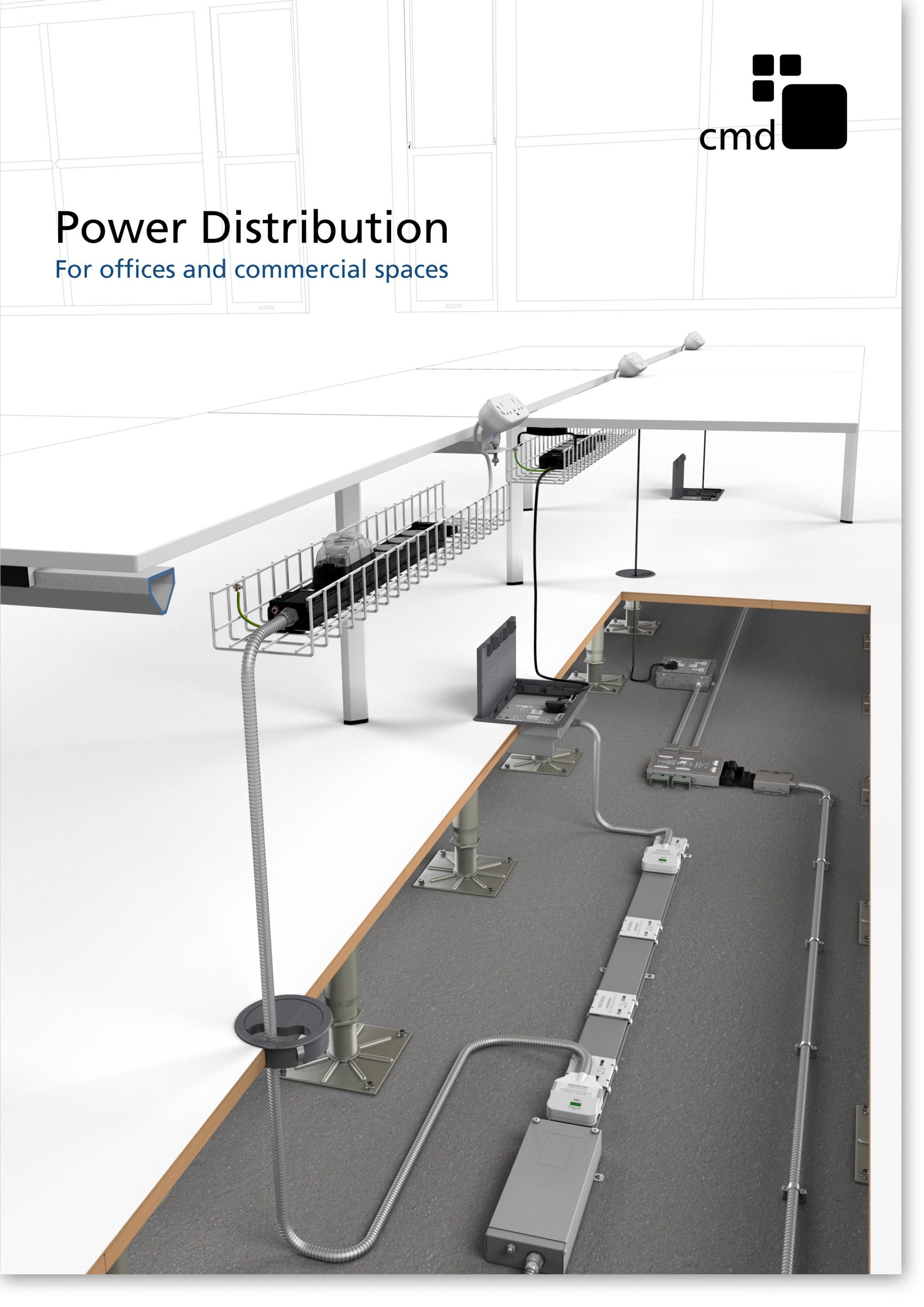
Power Distribution Catalogue
CMD Ltd PLAYS ESSENTIAL ROLE IN ELECTRICAL FIT OUT AT LONDON’S PRESTIGIOUS OFFICE DEVELOPMENT

CMD Ltd, specialist in workplace connectivity and ergonomic solutions, has provided a flexible and high-quality power distribution network for The Ray, a prestigious office development in London’s Farringdon. Well-known for being the former site of The Guardian newspaper, The Ray now stands as an 83,000ft² office development characterised by a modernised warehouse aesthetic, with level two now occupied by a global social media company. The...

Read more

The Ray
CMD plugs in to european opportunity with Schuko Capsule unit launch

CMD Ltd, the specialist in power and connectivity solutions for commercial environments, has launched a Schuko version of its popular fixed format Capsule workstation power module for export to mainland Europe and beyond. A popular on desk power module comprising two sockets and dual USB (type A and C) chargers, CMD’s Capsule unit is already widely specified in the UK as an off-the-shelf workstation power...

Read more
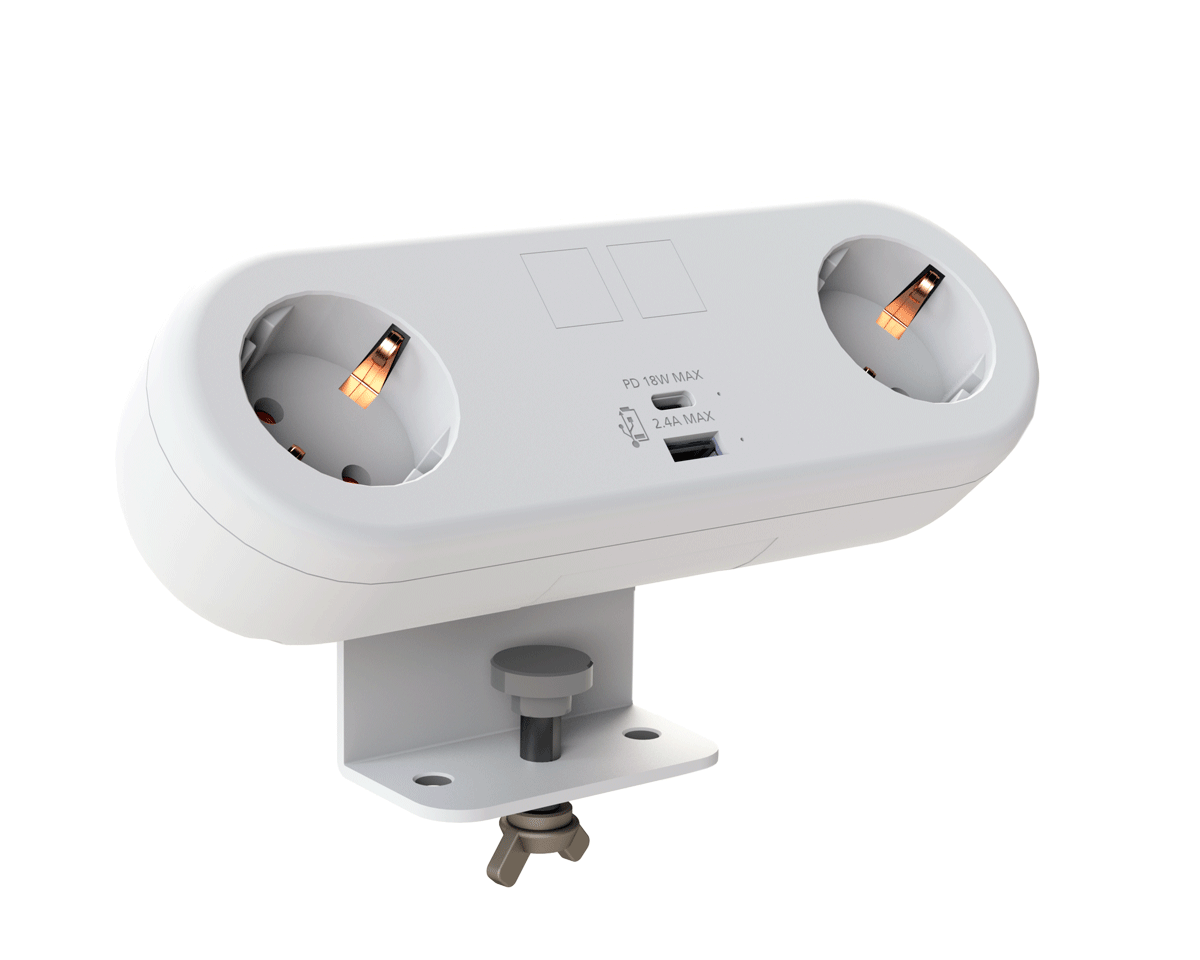
CMD White Schuko Capsule Desk Power Module
CMD LTD EXTENDS MONITOR ARM RANGE WITH THE LAUNCH OF REACH PLUS

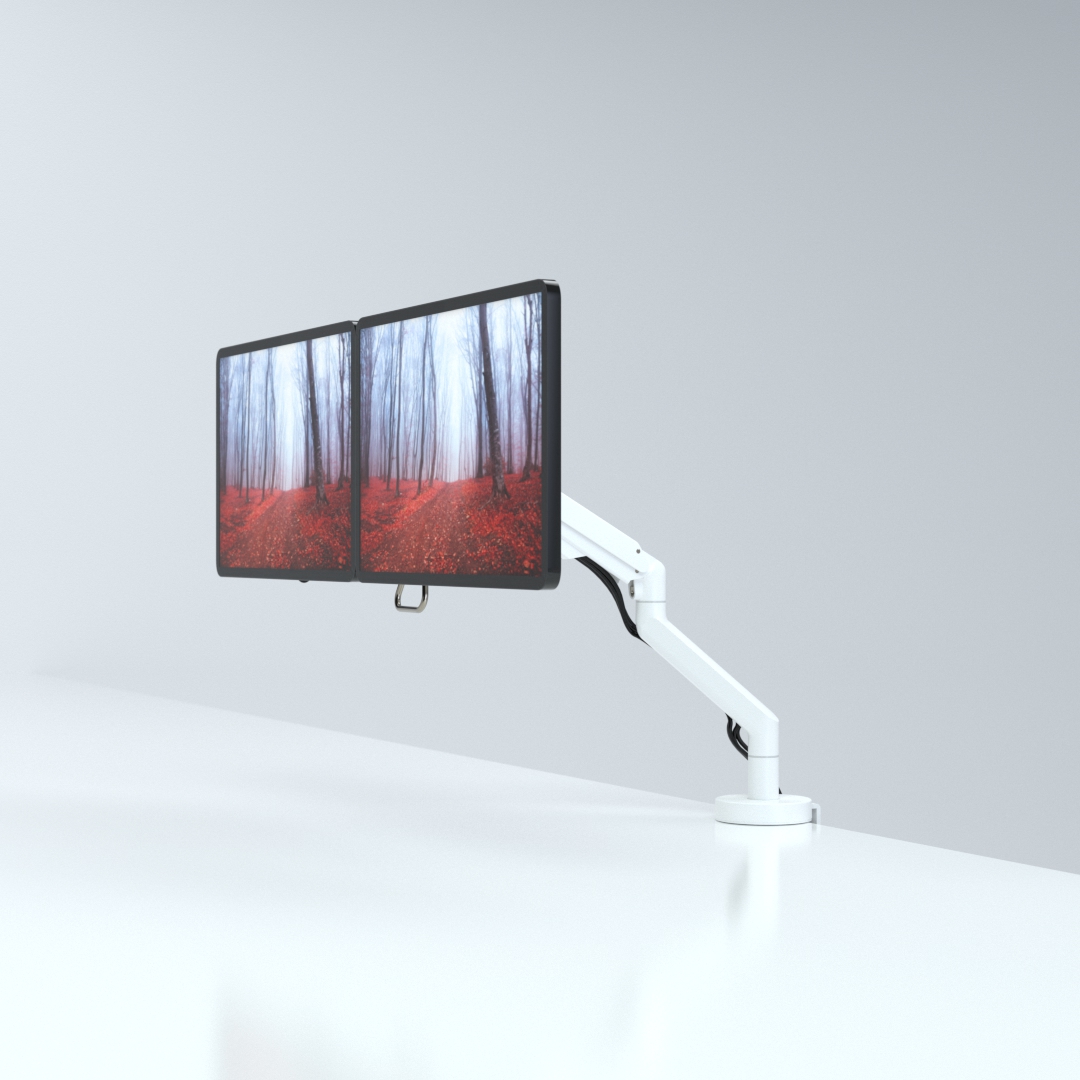
CMD Ltd, the specialist in ergonomic and connectivity solutions for commercial interiors, has completed its Reach monitor arm range with the launch of the Reach Plus. Available in single or dual screen options, the Reach Plus has been designed to provide an ideal solution for both single and dual screen workstation configurations, or can be used with next generation of large format curved screens. Suitable...

Read more
CMD Ltd DEMONSTRATES THE ART OF POWER DISTRIBUTION AT THE UNIVERSITY OF WARWICK

CMD Ltd, the specialist in workplace connectivity and ergonomic solutions, has provided Betatrak busbar power distribution and a range of electrical accessories for two major capital investment projects at the University of Warwick. Designed by Fielden Clegg Bradley Studios, the £33 million Faculty of Arts building is a showpiece development comprising four interconnected structures set around a central atrium, which will enable inter-disciplinary collaboration across...

Read more

University of Warwick
CMD BRINGS HARMONY TO COVENTRY UNIVERSITY RESEARCH FACILITIES

CMD Ltd, the specialist in power distribution solutions and workstation power and ergonomics, has provided under desk and on desk power modules for the refurbishment of three Coventry University research buildings. Located on Coventry University Technology Park, a business park designed to encourage collaboration between the university and knowledge-based businesses, the three buildings are being repurposed as office accommodation for university research teams. The refurbishment...

Read more


Coventry University

10 Best Smoke Precipitator Suppliers for Global Buyers

A Smoke Precipitator is more than a metal cabinet beside a production line. It is a carefully selected control system, sized for the process, smoke load, and operating conditions. For global buyers, the right supplier must offer more than an attractive quotation. Buyers need clear technical data, dependable installation support, accessible replacement parts, and evidence that performance claims match real operating needs.

Air-pollution specialist Dr. John H. Seinfeld’s research focuses on aerosols and atmospheric particles. No verified quotation from him on smoke precipitator purchasing is available here, so the following is an editorial paraphrase, not a direct quote: “Effective particle control begins with understanding the process, not just choosing equipment.” That distinction matters. A unit designed for one workshop may struggle with another line’s airflow, particulate characteristics, or maintenance schedule.

This guide compares ten suppliers for buyers evaluating equipment across markets. It considers product range, engineering support, customization, service access, and the clarity of published specifications. A supplier’s brochure can look convincing. The details deserve a closer look. Buyers should confirm airflow capacity, filtration approach, cleaning requirements, and installation assumptions before comparing prices. One limitation remains: supplier information can change, and published claims do not replace an application-specific assessment. Use this shortlist as a starting point, then verify each supplier’s fit against your site conditions and operating priorities.

10 Best Smoke Precipitator Suppliers for Global Buyers

What Smoke Precipitators Are and How They Work

A smoke precipitator removes fine particles from an exhaust stream before the air leaves a process area. Many designs use electrostatic forces rather than a fine mesh filter. Inside the unit, high-voltage electrodes give airborne particles an electrical charge. The charged particles then move toward oppositely charged or grounded collection plates. Cleaner air continues through the outlet. The device does not necessarily remove gases, odors, or every particle, so its performance depends on the pollutant and system design.

Details matter. A cookline or workshop may produce different particle sizes and airflow patterns, which affect collection efficiency. Dust and oily deposits can build up on plates, reducing performance if cleaning is delayed. Operators should check pressure, electrical components, and visible deposits according to the equipment instructions. Small checks help. Even a correctly sized precipitator may perform poorly if air moves too quickly or leaks bypass the collection zone. That is easy to overlook. Buyers should compare stated airflow and particle-removal data with actual operating conditions, while treating test results as specific to their stated setup. A little skepticism is useful.

Smoke Precipitators: Particle Sizes and How They Work

Smoke precipitators, commonly called electrostatic precipitators (ESPs), electrically charge airborne particles and draw them onto oppositely charged collection plates. This chart compares common particle-size ranges; smoke particle sizes vary with the source and operating conditions. PM2.5 and PM10 are size categories, not removal-efficiency ratings.

Particle-size values are in micrometers (µm). PM2.5 and PM10 indicate particles with aerodynamic diameters up to 2.5 µm and 10 µm, respectively. Human-hair diameter is shown as an approximate comparison.

Key Criteria for Comparing Global Smoke Precipitator Suppliers

Global buyers should compare smoke precipitator suppliers against the same operating conditions, not just headline efficiency figures. Ask for test data at your expected airflow, smoke load, particle size, and temperature. A result from clean, steady laboratory air may not predict performance beside a busy production line. Request the test method and clarify whether figures describe initial or sustained operation.

Check construction details that affect daily use. Inspect the collector plates, electrical components, seals, and access doors in drawings or sample photographs. Ask how cleaning works, how often service is expected, and which replacement parts are stocked. Downtime matters. A compact unit can look attractive on a quotation, yet be difficult to maintain in a cramped plant room. That trade-off is easy to miss.

Compare suppliers’ installation guidance, operator training, warranty terms, and response times for technical support. Confirm that documentation addresses the destination market’s applicable requirements, and ask for references from installations with similar smoke characteristics. Total cost should include energy, consumables, labor, and likely service visits—not only purchase price. Some answers may remain uncertain until a site survey; record those assumptions rather than treating estimates as guarantees.

10 Best Smoke Precipitator Suppliers for Global Buyers - Key Criteria for Comparing Global Smoke Precipitator Suppliers

Comparison criterion Data to request from each supplier How to evaluate it
1. Collection technology Technology offered, such as an electrostatic precipitator (ESP), a mechanical filter, or a combined system; include the intended particle and process type. Check that the proposed technology matches the smoke or particulate characteristics. ESP performance can be affected by particle resistivity, gas temperature, moisture, and gas-flow distribution.
2. Design airflow Rated airflow in m³/h or CFM, operating range, inlet conditions, and the number of operating hours assumed in the design. Compare suppliers using the same stated operating conditions. Confirm the equipment is sized for the actual process flow, including expected peak loads.
3. Removal performance Guaranteed inlet and outlet particulate concentrations, stated in mg/Nm³ where applicable, plus the test method, sampling location, and operating conditions. Compare outlet concentration and test basis rather than relying on an efficiency percentage alone. Ask for project-specific guarantees and documented test results.
4. Pressure drop and energy use Clean and operating pressure drop in Pa, fan power, and the electrical consumption of the collector, controls, and any high-voltage supply. Consider total system energy, not just collector power. Pressure drop and fan demand can vary with system design, dust loading, and maintenance condition.
5. Emissions compliance support Applicable project or jurisdictional emissions limits, proposed testing approach, and documentation the supplier will provide for commissioning. Verify requirements for the specific site and process. For stationary-source dust measurements, EN 13284-1 is one recognized gravimetric measurement method; confirm its suitability with the project’s compliance specialist.
6. Materials and operating conditions Housing and electrode materials, design temperature, corrosion protection, and any limits for humidity, corrosive gases, or abrasive particles. Match materials and operating limits to the actual gas chemistry and temperature. Request written confirmation for any corrosive or high-temperature service.
7. Dust handling and maintenance Hopper or collection-bin capacity, discharge method, cleaning method, expected inspection tasks, and access requirements. Check that collected dust can be safely removed and handled at the site. Compare maintenance tasks, access needs, and the effect of cleaning or shutdowns on production.
8. Electrical and process safety Electrical supply, control-panel details, interlocks, isolation provisions, and the safety documentation supplied for installation and operation. Confirm compatibility with local electrical codes and site safety procedures. For ESP equipment, review high-voltage isolation and safe-access arrangements.
9. Installation and commissioning Scope split for equipment, duct connections, foundations, wiring, commissioning, operator training, and performance testing. Compare a complete scope of supply and identify exclusions before comparing prices. Confirm who is responsible for commissioning and documenting results.
10. Global service and commercial terms Service coverage by region, spare-parts availability, response arrangements, warranty terms, delivery schedule, and language of technical documents. Assess support for the installation location and the expected equipment life. Compare warranty conditions and spare-parts lead times in writing rather than relying on general assurances.

Profiles of 10 Smoke Precipitator Suppliers for Global Buyers

A useful comparison of ten smoke precipitator suppliers starts with their actual areas of expertise. One profile may be a broad industrial equipment manufacturer serving factories with high-volume exhaust. Another may focus on modular electrostatic units, where replaceable collection plates simplify maintenance. A third may design compact systems for kitchens or small commercial spaces. A fourth may specialize in hot process gases and specify temperature limits clearly. Small details matter. Ask for operating ranges, not just headline efficiency figures.

Other suppliers bring different strengths. A fifth may integrate wet treatment stages for sticky or moisture-heavy fumes. A sixth may concentrate on retrofits, measuring existing ductwork before proposing equipment. A seventh may offer custom fabrication for unusual airflow layouts. An eighth may have export experience and provide clear packing, installation, and technical documents. A ninth may stand out through local service teams and accessible replacement parts. The tenth could be a smaller engineering firm with testing experience in a narrow industrial sector. Its expertise may be valuable, but its support capacity deserves careful checking.

For each profile, compare the same evidence: rated airflow, pressure drop, collection method, maintenance intervals, and test conditions. Request reference installations with similar smoke characteristics. A polished data sheet is helpful, but it cannot show how often plates need cleaning in your operating environment. I would also ask who handles commissioning and troubleshooting after delivery. Supplier claims are not always easy to compare; test methods can differ, and that is an inconvenient limitation. Choose based on documented fit, not the longest feature list.

How to Evaluate Supplier Capabilities, Compliance, and Support

A capable smoke precipitator supplier should explain how its equipment performs under your actual operating conditions. Share dust characteristics, gas temperature, flow rate, and expected load changes before comparing quotations. The U.S. EPA’s Dry Electrostatic Precipitator fact sheet reports collection efficiencies of 99% to 99.9% for this technology. That range is not a guarantee for every installation. Particle properties, maintenance, and operating stability all matter.

Check whether the supplier provides documented performance tests, commissioning procedures, and clear acceptance criteria. Ask how measurements will be taken and who verifies the results. Request drawings, material specifications, and a compliance matrix mapped to the emission limits applicable at your site. A polished certificate is useful, but it cannot replace project-specific evidence. Details matter.

Support can decide whether a high-performing unit stays reliable. Compare response times, technician coverage, spare-part availability, and training for your maintenance team. Ask for service records from similar operating environments, not just reference contacts. A supplier may offer fast remote support, yet a delayed replacement electrode can still extend downtime. That gap deserves scrutiny. Even careful buyers can overlook it. Before purchase, confirm responsibilities for installation, troubleshooting, and performance retesting in writing.

Steps for Selecting a Supplier for Your Application

Selecting a smoke precipitator supplier starts with a clear picture of your process, not a catalogue. Record exhaust volume, operating temperature, moisture, particle type, and peak production hours. A dusty welding line differs from a cooking exhaust, even when both look smoky. Small details matter. Ask suppliers how their proposed unit handles changing loads, pressure drop, and collection efficiency. Request the test conditions behind each performance figure; a percentage without airflow and particle-size data is difficult to compare. If possible, share a representative sample or arrange a site assessment. Real operating conditions can expose gaps that a neat spreadsheet misses.

Check the practical fit too. Confirm the installation footprint, electrical requirements, cleaning method, consumable life, and access for routine maintenance. Service matters. Ask who trains operators and how quickly replacement parts can reach your region. Review commissioning records, service coverage, and references from applications with similar smoke characteristics. A supplier should discuss limitations, not promise perfect capture under every condition. Compare operating costs alongside purchase price, including energy, downtime, replacement components, and disposal needs. Verify that the design can meet applicable workplace and environmental requirements at your site. Do not treat the first quote as final; some assumptions may be wrong. A pilot or acceptance test can help when emissions vary by shift. Keep your selection criteria in writing and apply them consistently.