

News

Miro: A New Standard in Responsible Innovation

Miro: A New Standard in Responsible Innovation The Miro monitor arm is setting new benchmarks in sustainability. It offers a high-performance solution without compromising on environmental responsibility. Designed with careful material selection, local sourcing, and longevity in mind, Miro’s responsible approach to design and unique manoeuvrability set it apart from the competition. Sustainable Choices Miro is crafted from energy-efficient materials with a lower carbon impact....

Read more
HSE Advisor

Role Purpose Support in the development, implementation and maintenance of the company’s Health, Safety & Environmental policies, processes, operational procedures, and standards.  Ensuring best practice and championing a continually improving HSE culture within the business. Key Responsibilities Liaise with and provide support to all areas of the business to eliminate, mitigate or reduce identified HSE exposures. Partner with the production management team and team leaders,...

Read more
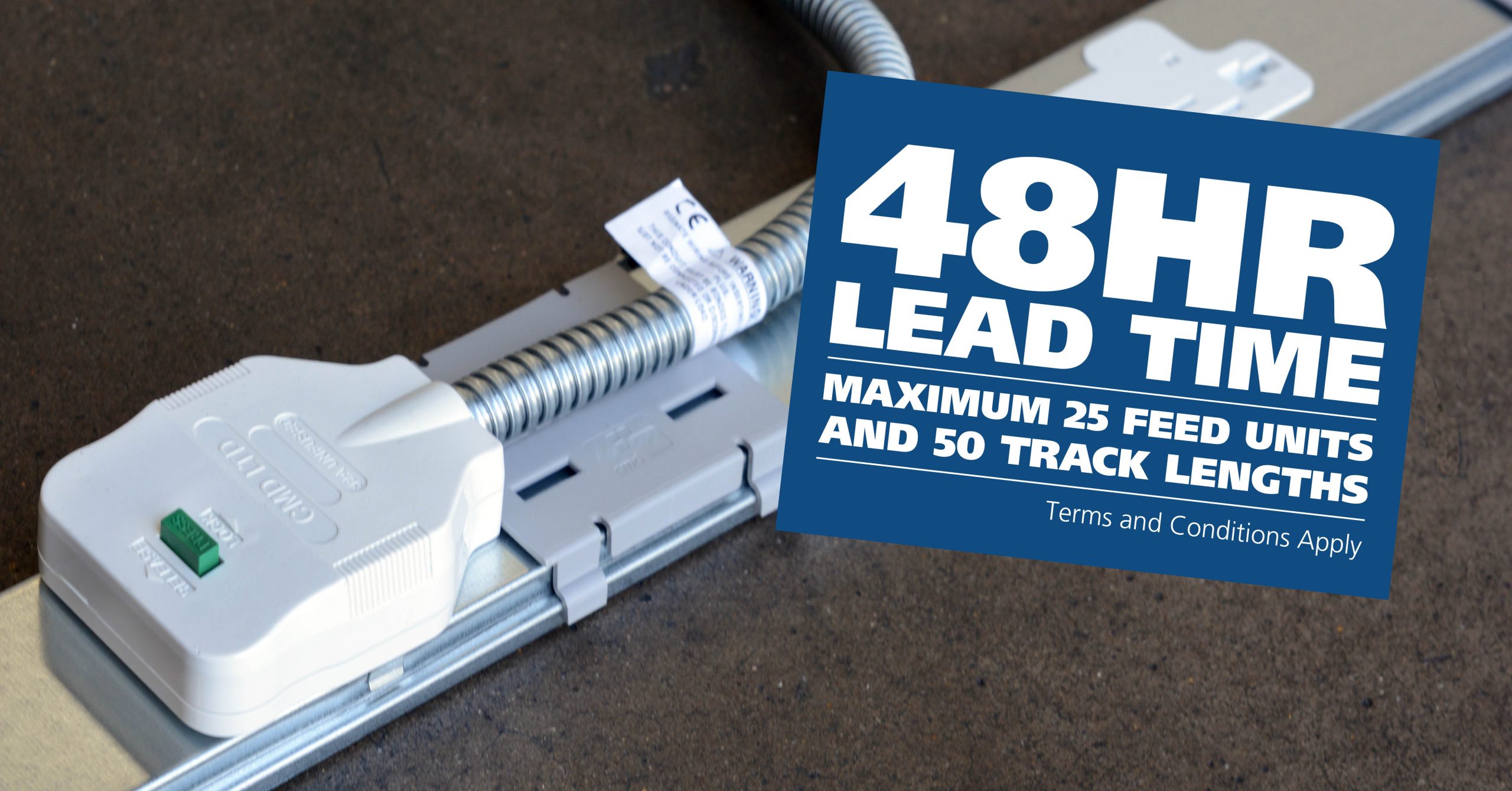
CMD Ltd LAUNCHES 48-HOUR TURNAROUND ON BETATRAK® RAPID ORDERING SERVICE

CMD Ltd, the specialist in power distribution systems, workstation power and monitor arms, has launched a rapid ordering service for its Betatrak® underfloor powertrack distribution systems and accessories, with a commitment to delivering within 48-hours of an approved purchase order*. The service enables customers to order up to 50 lengths of Standard or Clean Earth (C/E) low noise Betatrak, along with up to 25 feed...

Read more
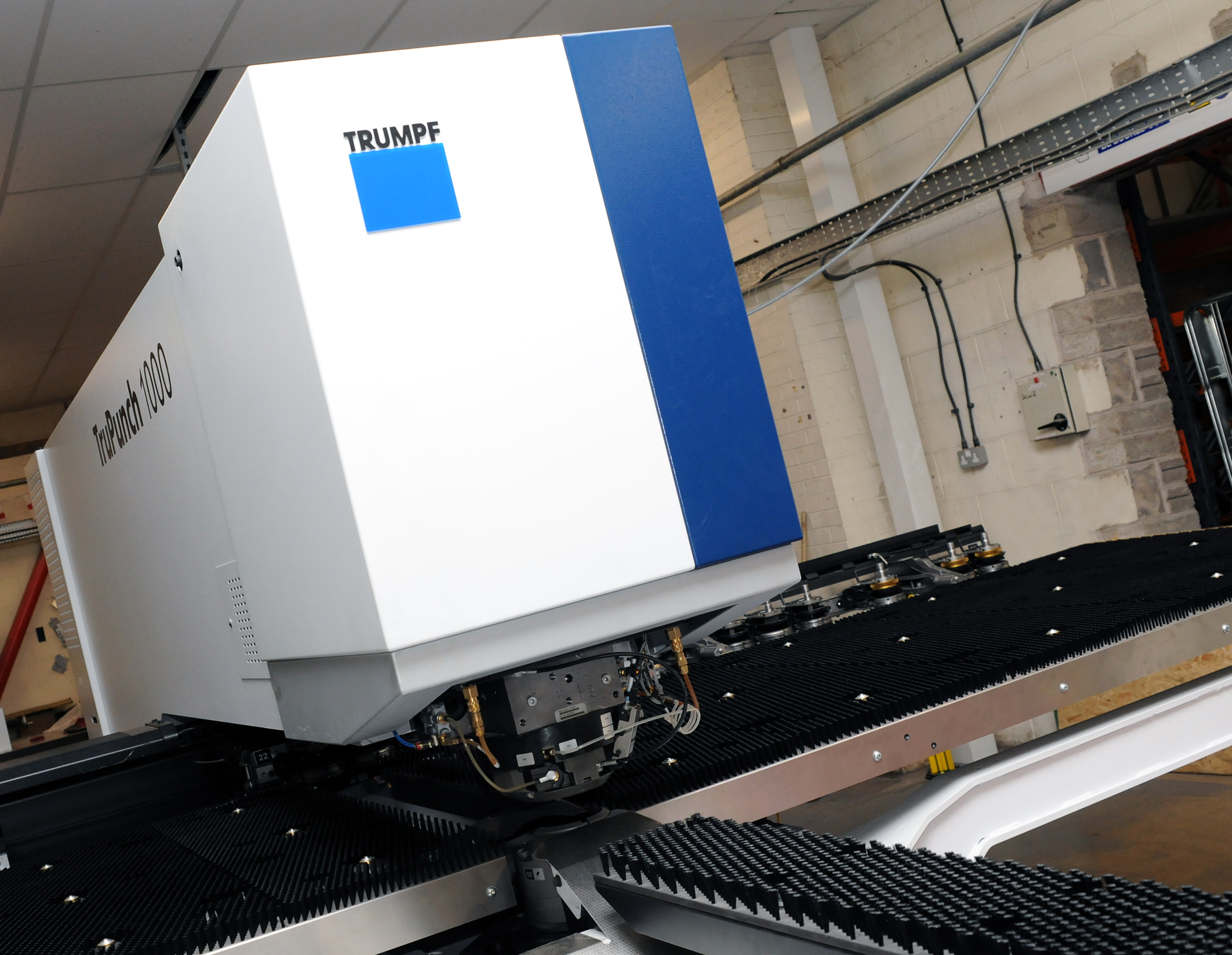
CMD INVESTS £1/4 MILLION IN NEW MACHINE AS PART OF FACTORY UPGRADE

We have invested in a new £1/4m TRUMPF CNC metal punch as part of an asset renewal strategy for our UK manufacturing capability. The new machine will be used in the production of a wide variety of our power distribution systems and workstation power products at our Rotherham factory. Suitable for handling sheet metal between 0.9mm and 3.0mm thick, the new machine will replace one...

Read more
CMD CATALOGUE PROVIDES TECHNICAL POWER DISTRIBUTION GUIDE

CMD Ltd has released a new catalogue, providing an easy to follow technical guide to our power distribution systems and plug and play desk modules. Detailing CMD’s full range of UK-manufactured power distribution systems and plug and play desk modules, the catalogue will be a helpful source of information to M&E engineers and contractors alike to understand how our power distribution systems connect together and...

Read more
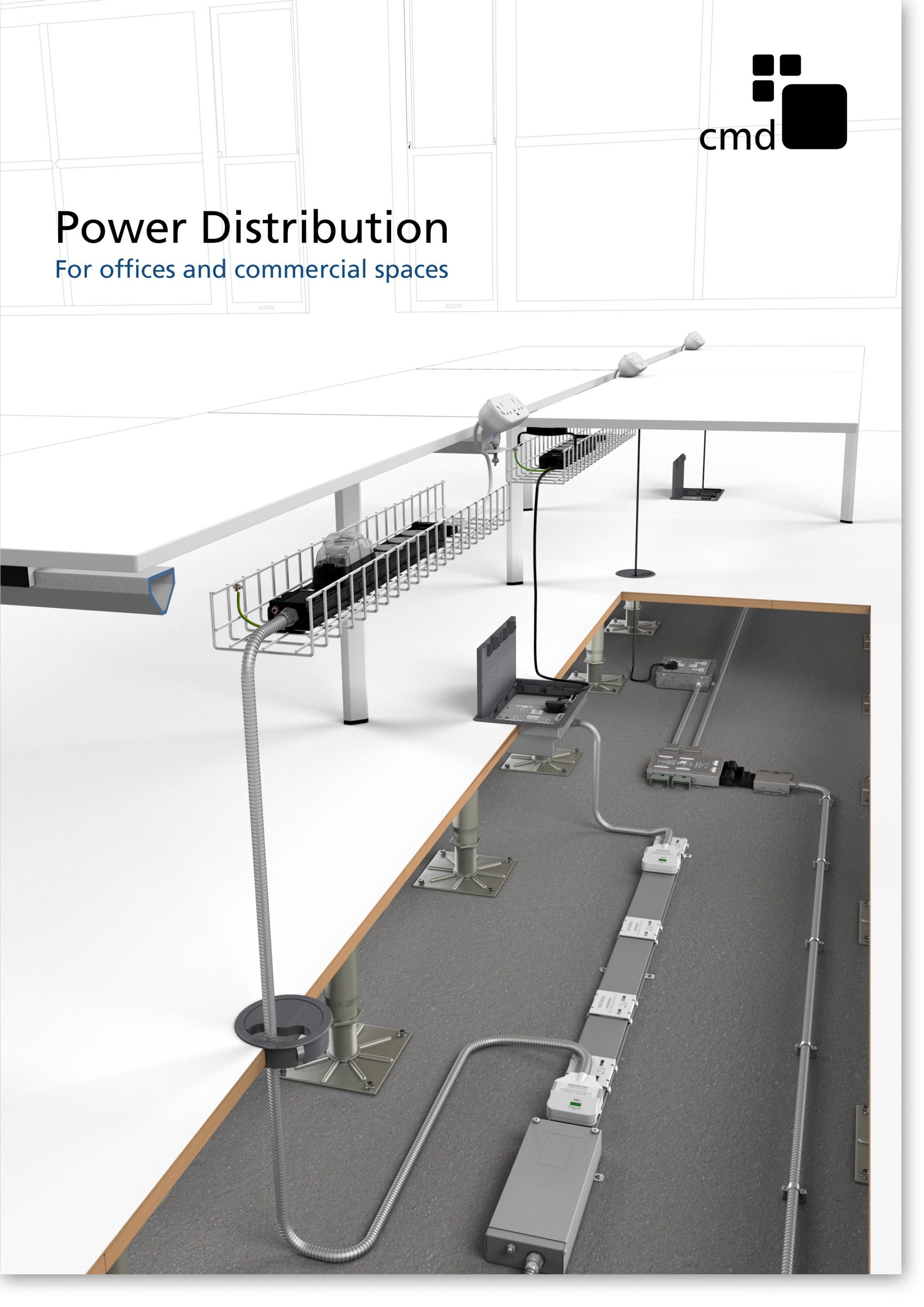
Power Distribution Catalogue
CMD Ltd PLAYS ESSENTIAL ROLE IN ELECTRICAL FIT OUT AT LONDON’S PRESTIGIOUS OFFICE DEVELOPMENT

CMD Ltd, specialist in workplace connectivity and ergonomic solutions, has provided a flexible and high-quality power distribution network for The Ray, a prestigious office development in London’s Farringdon. Well-known for being the former site of The Guardian newspaper, The Ray now stands as an 83,000ft² office development characterised by a modernised warehouse aesthetic, with level two now occupied by a global social media company. The...

Read more

The Ray
CMD plugs in to european opportunity with Schuko Capsule unit launch

CMD Ltd, the specialist in power and connectivity solutions for commercial environments, has launched a Schuko version of its popular fixed format Capsule workstation power module for export to mainland Europe and beyond. A popular on desk power module comprising two sockets and dual USB (type A and C) chargers, CMD’s Capsule unit is already widely specified in the UK as an off-the-shelf workstation power...

Read more
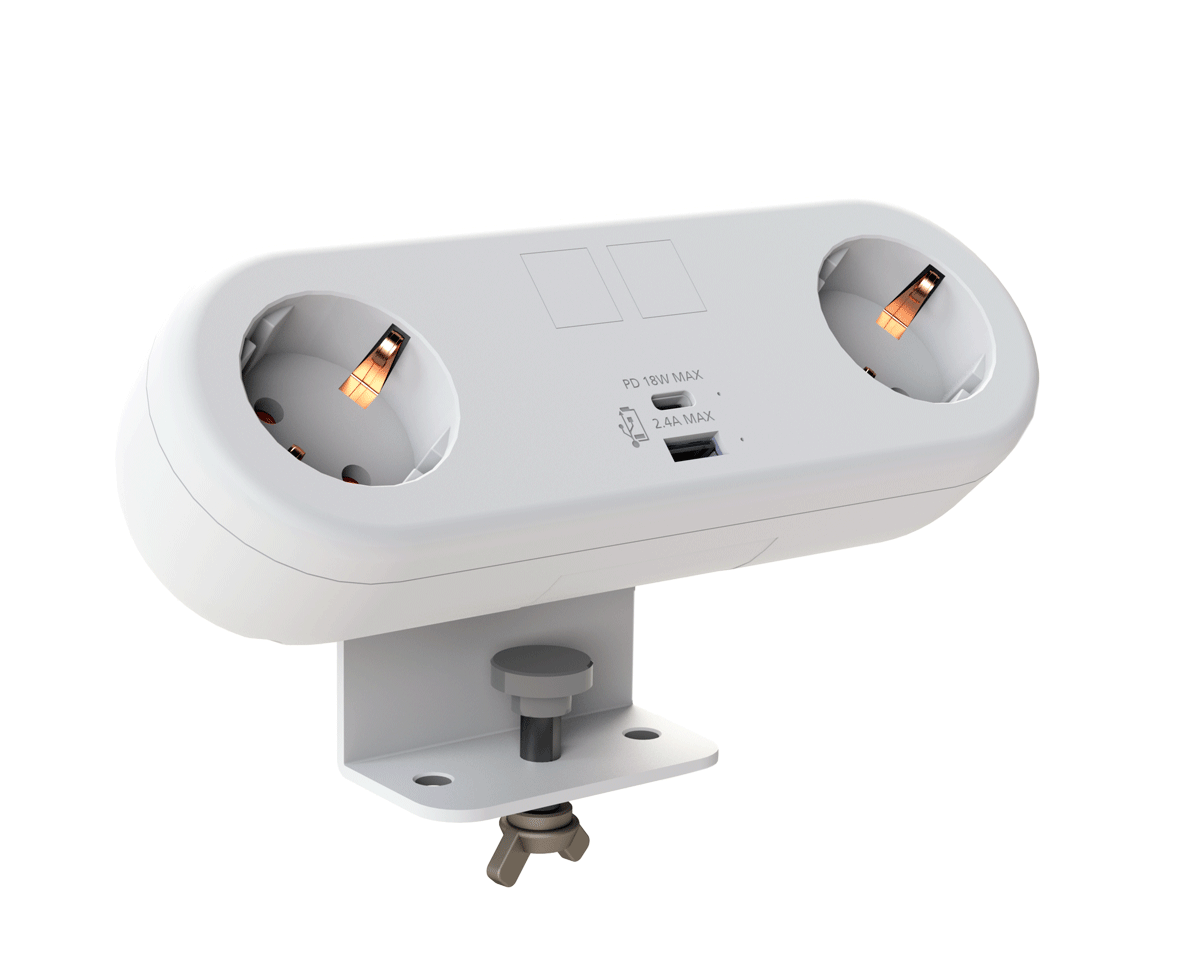
CMD White Schuko Capsule Desk Power Module
CMD LTD EXTENDS MONITOR ARM RANGE WITH THE LAUNCH OF REACH PLUS

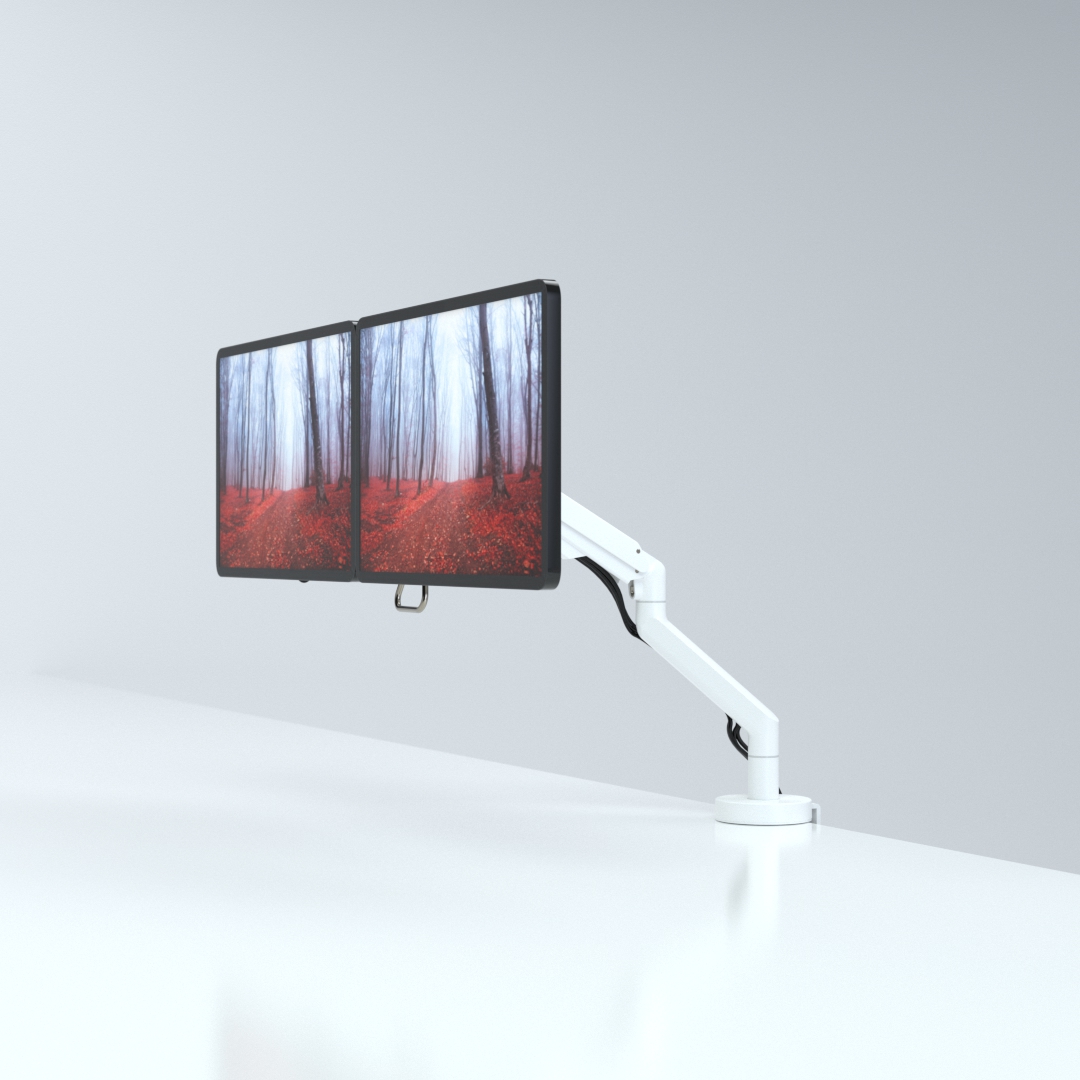
CMD Ltd, the specialist in ergonomic and connectivity solutions for commercial interiors, has completed its Reach monitor arm range with the launch of the Reach Plus. Available in single or dual screen options, the Reach Plus has been designed to provide an ideal solution for both single and dual screen workstation configurations, or can be used with next generation of large format curved screens. Suitable...

Read more
CMD Ltd DEMONSTRATES THE ART OF POWER DISTRIBUTION AT THE UNIVERSITY OF WARWICK

CMD Ltd, the specialist in workplace connectivity and ergonomic solutions, has provided Betatrak busbar power distribution and a range of electrical accessories for two major capital investment projects at the University of Warwick. Designed by Fielden Clegg Bradley Studios, the £33 million Faculty of Arts building is a showpiece development comprising four interconnected structures set around a central atrium, which will enable inter-disciplinary collaboration across...

Read more

University of Warwick
CMD BRINGS HARMONY TO COVENTRY UNIVERSITY RESEARCH FACILITIES

CMD Ltd, the specialist in power distribution solutions and workstation power and ergonomics, has provided under desk and on desk power modules for the refurbishment of three Coventry University research buildings. Located on Coventry University Technology Park, a business park designed to encourage collaboration between the university and knowledge-based businesses, the three buildings are being repurposed as office accommodation for university research teams. The refurbishment...

Read more

Coventry University

7 Tips for Choosing a Pick And Place Robot?

Choosing the right Pick And Place Robot can determine whether an automation project runs smoothly or struggles daily. The decision is rarely based on speed alone. A robot may move 120 parts per minute, yet fail when components arrive slightly misaligned. Real production conditions matter: dusty trays, changing product sizes, tight workspaces, and operators who need simple adjustments.

This guide presents seven practical tips for evaluating a Pick And Place Robot. It considers payload, reach, cycle time, accuracy, tooling, vision systems, safety, maintenance, and supplier support. These factors should connect with your actual workflow, not only with figures printed in a brochure. During equipment reviews, technicians often discover that a smaller robot fits better and costs less to maintain. I have also seen teams prioritize maximum speed, then face vibration, poor gripping, or difficult programming. That mistake is easy to make.

Look closely.

Reliable selection requires measurable evidence. Request sample testing with your real parts, packaging, and production speeds. Check how the robot behaves after repeated cycles, not just during a short demonstration. Confirm electrical requirements, guarding expectations, spare-part availability, and training options with qualified professionals. Standards and local workplace rules should guide the final installation. No model is perfect for every factory, and that is worth admitting. The best choice balances performance, flexibility, safety, and long-term operating value. These seven tips will help turn a promising specification into a dependable automation decision.

7 Tips for Choosing a Pick And Place Robot?

Define Throughput Targets: Compare 30–200 Picks per Minute by Application

Choosing a pick-and-place robot starts with a realistic throughput target, not the highest advertised speed. Applications may range from 30 to 200 picks per minute. A 30-pick task may involve heavy items, long travel, or careful placement. A 200-pick task usually needs lightweight products, short movements, and consistent presentation.

Define whether one pick means one item or one complete handling cycle. Then measure product arrival, gripping, transfer, release, and return time. Include pauses caused by inspection, refilling, or conveyor gaps. In production trials, I have seen theoretical speed fall sharply when products arrive unevenly. That difference matters. A robot rated for 200 picks per minute may deliver only 150 in a stable operation.

Test the robot with real products and the intended gripper. Product texture, size variation, and orientation can change the result. Leave practical capacity for cleaning, minor stoppages, and operator adjustments. A useful target may be 70–85% of the laboratory maximum. I once treated a short test as representative, and the estimate was too optimistic. That mistake reinforced a simple rule: compare net throughput, not brochure speed. Record results across several shifts before selecting the final model.

7 Tips for Choosing a Pick and Place Robot: Define Throughput Targets — Compare 30–200 Picks per Minute by Application
Application Typical Throughput Target Approximate Cycle Time Common Product Characteristics Recommended Robot Considerations Throughput Risks to Check
Case Packing of Bottles or Cans 30–60 picks/min 1.0–2.0 seconds per pick Rigid products, generally consistent dimensions, moderate-to-high unit weight Payload capacity, grip reliability, carton pattern control, and reach across the case Product collisions, unstable stacks, carton indexing delays, and gripper changeover time
Primary Food Packaging 60–120 picks/min 0.5–1.0 seconds per pick Lightweight, hygienic, frequently changing product orientation High-speed motion, food-compatible materials, washdown suitability, and gentle gripping Irregular product spacing, damaged packaging, sanitation cycles, and product slippage
Bakery or Snack Collation 80–140 picks/min 0.43–0.75 seconds per pick Light, delicate products with variable shapes and surface textures Low-inertia tooling, vision guidance, soft contact surfaces, and accurate placement Crushing, crumbs or debris affecting vacuum, inconsistent product presentation, and belt speed variation
Cartoning of Small Consumer Goods 50–100 picks/min 0.6–1.2 seconds per pick Small packaged items with defined orientation and moderate presentation consistency Compact work envelope, repeatability, synchronized infeed, and quick recipe changes Open cartons, poor product separation, barcode or vision verification delays, and frequent format changes
Pharmaceutical or Medical Sorting 30–80 picks/min 0.75–2.0 seconds per pick Small, lightweight products requiring traceability and controlled handling Validated motion profiles, cleanable construction, vision inspection, and data logging Inspection rejects, batch changeovers, serialization checks, and strict handling requirements
E-Commerce Item Picking 40–100 picks/min 0.6–1.5 seconds per pick Mixed shapes, sizes, materials, and packaging formats 3D vision, adaptive gripping, broad payload range, and software integration with order systems Unknown product geometry, occlusion, reflective surfaces, failed grasps, and SKU variability
High-Speed Part Sorting 120–200 picks/min 0.30–0.50 seconds per pick Small, lightweight parts presented in a controlled orientation Fast delta-style motion, high-speed vision, short conveyor pitch, and optimized end-of-arm tooling Insufficient spacing, vibration, missed detections, excessive acceleration, and tooling wear
Planning note: These are practical planning ranges rather than guaranteed robot ratings. Actual throughput depends on product weight and geometry, pick-point spacing, robot reach, conveyor speed, end-of-arm tooling, vision performance, placement accuracy, reject handling, changeovers, and required line availability. Validate the target with a time study using representative products and packaging.

Size Payload and Reach: Include Tooling Mass and 10–20% Safety Margins

Choosing a pick-and-place robot starts with the object, but ends with the complete moving assembly. Payload includes the product, gripper, vacuum cups, fingers, sensors, brackets, and cable flex. Ignoring tooling mass is a common sizing mistake. A 2 kg product can become 3.2 kg at the wrist. Measure every component, not just the carton. Then add a 10–20% payload margin for normal variation and future tooling changes.

Reach requires equal care. Map the nearest and farthest pick points, conveyor height, drop position, and safe approach angles. A robot may reach a target but still struggle with wrist orientation or collision clearance. Check payload performance at maximum reach, where leverage increases wrist loading. Acceleration also matters; fast stops create forces that static weight calculations miss. Review published wrist moment and inertia limits, not only the headline payload rating.

During trials, weigh the finished tool and run a slow dry cycle before increasing speed. Watch for vibration, suction loss, cable strain, and settling after placement. A 10% margin may work for a rigid, predictable process; 20% is safer when products vary or motion is aggressive. Do not treat this range as a guarantee. Mounting height, center of gravity, and cycle frequency can change the result. The spreadsheet can be wrong. My first estimate is not always right.

Compare Robot Types: Delta, SCARA, and 6-Axis Working Envelopes

7 Tips for Choosing a Pick And Place Robot?

Working envelope matters more than headline speed. The IFR World Robotics 2024 report recorded 541,302 industrial robot installations in 2023. That scale reflects a mature market, but each cell still needs careful measurement. A delta robot suits fast, repeated top-loading within a shallow, circular workspace. Its wrist range is limited, and tall products can expose an unsuitable approach angle. Measure product spacing, conveyor width, tooling clearance, and vertical travel.

Tip 1: Draw the real envelope, not the brochure envelope. Leave room for guarding, cables, maintenance, and human access.

A SCARA robot offers a flatter, cylindrical envelope and strong repeatability for assembly, sorting, and horizontal transfers. It often reaches around fixtures more easily than a delta robot. However, its joints can create unreachable pockets near the base. The ISO 9283 standard supports repeatability testing, yet laboratory figures may not reflect vibration, temperature, or flexible packaging.

Tip 2: Test the robot with the actual gripper and product. Small errors become expensive at high cycle rates. The first estimate is rarely perfect.

A 6-axis robot provides the broadest orientation control and a more complex spherical envelope. It can approach bins from the side, tilt irregular parts, and serve multiple stations. That flexibility usually brings slower motion, higher integration effort, and more collision points. Interact Analysis has reported continued growth in robotic automation investment, but growth does not remove application risk.

Tip 3: Choose six axes only when orientation, reach, or future change genuinely requires them. Map singularities, payload at full reach, and recovery positions before approval. Test the awkward case.

Validate Accuracy: Apply ISO 9283 Testing and ±0.01 mm Repeatability

7 Tips for Choosing a Pick and Place Robot

Validate accuracy before judging a pick and place robot. ISO 9283 provides a structured method for measuring robot performance. It examines positioning accuracy, repeatability, path accuracy, and related behavior. These tests should reflect the robot’s real working conditions. Use the intended payload, speed, tooling, and workspace during evaluation. A laboratory result may look excellent but fail on a production line.

A repeatability claim of ±0.01 mm requires careful verification. Run repeated movements between defined points, then record the measured position. Use calibrated instruments and document temperature, fixture stability, payload, and cycle speed. Check several locations, not only the easiest point near the robot’s center. The outer reaches may reveal larger deviations. Test both short and long movements. Small details matter.

Do not confuse repeatability with absolute accuracy. A robot may return consistently to the same wrong position. That error can still damage alignment, sealing, or component placement. Review test data rather than relying on a specification sheet. Ask how many cycles were completed and whether the tool was included. A few hundred cycles may not expose thermal drift. More testing costs time, but insufficient testing costs more. I would also repeat the trial after maintenance, because assumptions often age badly. Choose a robot only when its measured performance matches your process tolerance.

Estimate ROI: Benchmark Payback Against IFR Automation Productivity Data

Choosing a pick and place robot should begin with the payback question, not the fastest advertised cycle. Check payload, reach, repeatability, gripper design, vision needs, and available floor space. A robot that handles your real product mix may outperform a faster model built for one ideal part.

Estimate ROI with measured production data. Record current cycle time, changeover minutes, labor hours, downtime, rejects, and maintenance costs. Then compare those figures with published IFR automation productivity data and your integrator’s validated tests. Do not treat an industry benchmark as a promise. Product shape, feeding consistency, safety controls, and operator training can change results sharply. A simple payback calculation is useful: divide the complete project cost by annual savings. Include integration, tooling, software, training, energy, and planned service.

In one pilot review, the projected payback looked attractive until changeovers were counted. The estimate missed nearly two hours each week. That mistake mattered. Test several product sizes and run the robot during realistic shifts, including short stops and awkward replenishment tasks. Build low, expected, and high-performance scenarios. If payback depends on perfect uptime, the model is fragile. Recheck labor savings carefully, too. Reassigning workers may create value without eliminating every position. A reliable estimate explains those limits instead of hiding them.

7 Tips for Choosing a Pick and Place Robot: Estimate ROI

Modeled payback period compared with productivity improvement across different operating patterns. The calculations use a neutral loaded labor rate of $28 per hour, a $160,000 installed cell investment, 2,000 operating hours per shift annually, and a 50% throughput improvement from 30 to 45 units per hour.

Payback = installed investment ÷ annual labor savings × 12. Labor-equivalent savings are modeled at 0.5, 1.5, and 2.5 FTEs for one-, two-, and three-shift operations. IFR publishes industry-level robot adoption and installation data, but there is no universal IFR payback or productivity value; actual ROI depends on utilization, integration cost, staffing, quality, and uptime.