

News

Miro: A New Standard in Responsible Innovation

Miro: A New Standard in Responsible Innovation The Miro monitor arm is setting new benchmarks in sustainability. It offers a high-performance solution without compromising on environmental responsibility. Designed with careful material selection, local sourcing, and longevity in mind, Miro’s responsible approach to design and unique manoeuvrability set it apart from the competition. Sustainable Choices Miro is crafted from energy-efficient materials with a lower carbon impact....

Read more
HSE Advisor

Role Purpose Support in the development, implementation and maintenance of the company’s Health, Safety & Environmental policies, processes, operational procedures, and standards.  Ensuring best practice and championing a continually improving HSE culture within the business. Key Responsibilities Liaise with and provide support to all areas of the business to eliminate, mitigate or reduce identified HSE exposures. Partner with the production management team and team leaders,...

Read more
CMD Ltd LAUNCHES 48-HOUR TURNAROUND ON BETATRAK® RAPID ORDERING SERVICE

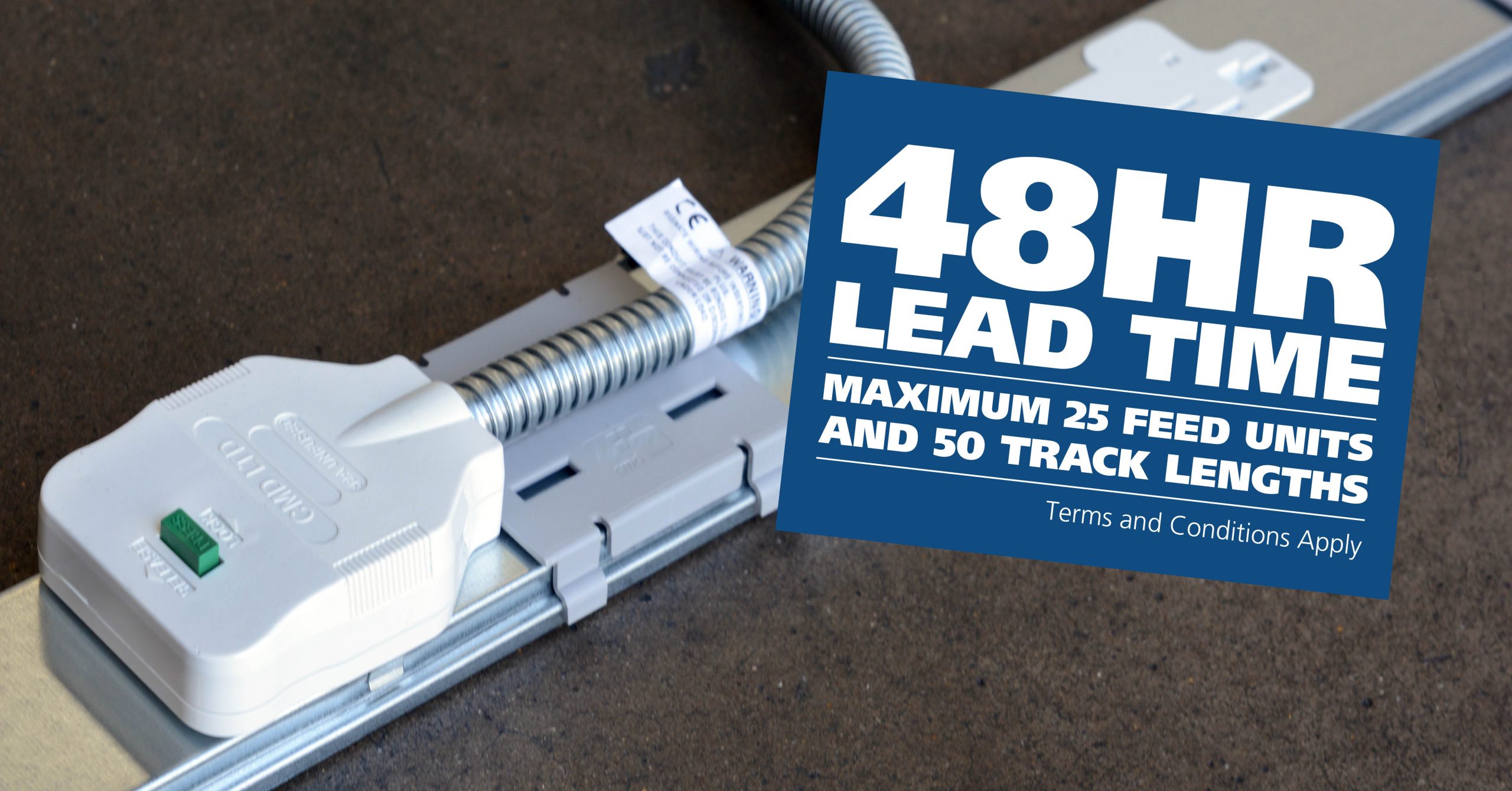
CMD Ltd, the specialist in power distribution systems, workstation power and monitor arms, has launched a rapid ordering service for its Betatrak® underfloor powertrack distribution systems and accessories, with a commitment to delivering within 48-hours of an approved purchase order*. The service enables customers to order up to 50 lengths of Standard or Clean Earth (C/E) low noise Betatrak, along with up to 25 feed...

Read more
CMD INVESTS £1/4 MILLION IN NEW MACHINE AS PART OF FACTORY UPGRADE

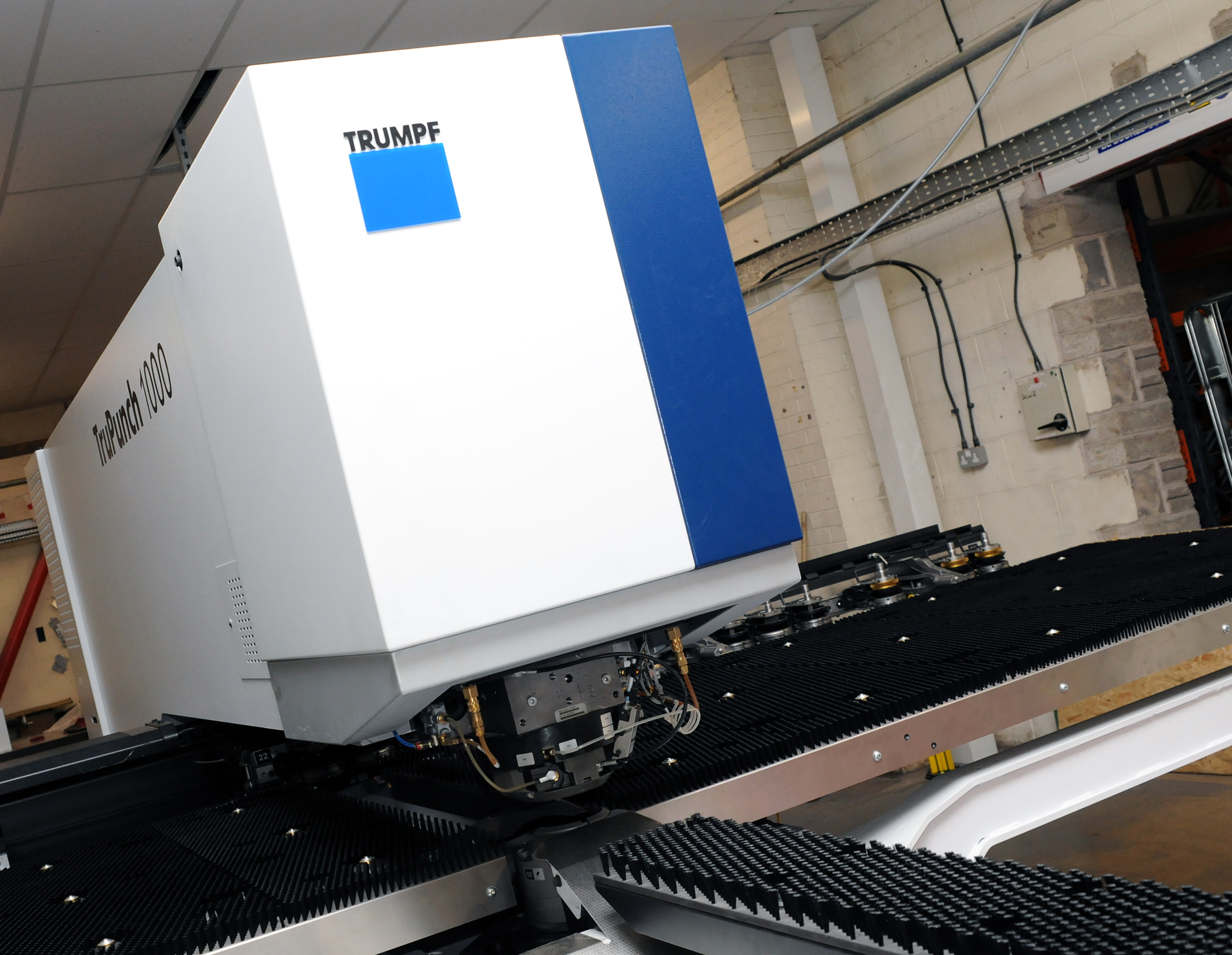
We have invested in a new £1/4m TRUMPF CNC metal punch as part of an asset renewal strategy for our UK manufacturing capability. The new machine will be used in the production of a wide variety of our power distribution systems and workstation power products at our Rotherham factory. Suitable for handling sheet metal between 0.9mm and 3.0mm thick, the new machine will replace one...

Read more
CMD CATALOGUE PROVIDES TECHNICAL POWER DISTRIBUTION GUIDE

CMD Ltd has released a new catalogue, providing an easy to follow technical guide to our power distribution systems and plug and play desk modules. Detailing CMD’s full range of UK-manufactured power distribution systems and plug and play desk modules, the catalogue will be a helpful source of information to M&E engineers and contractors alike to understand how our power distribution systems connect together and...

Read more
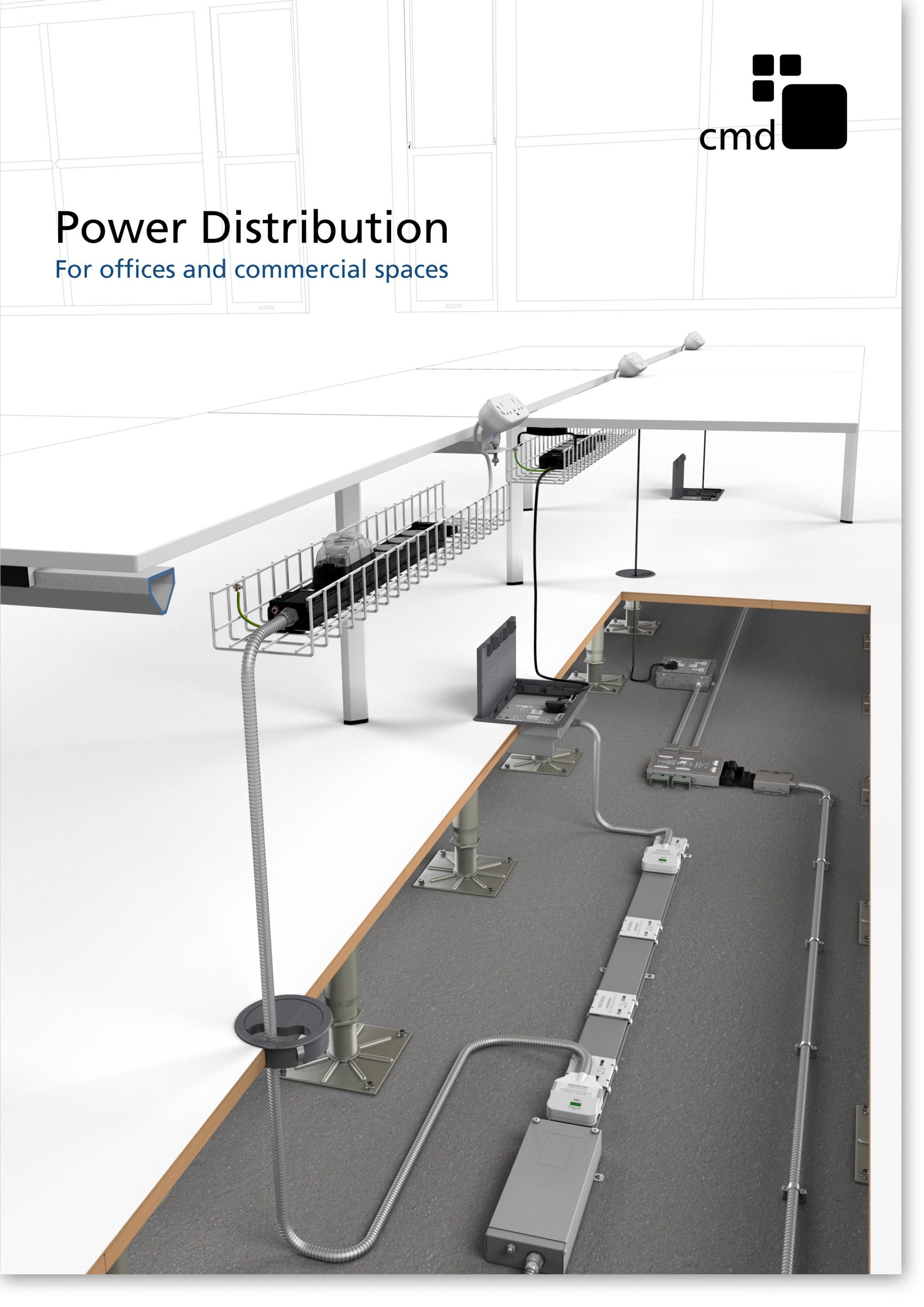
Power Distribution Catalogue
CMD Ltd PLAYS ESSENTIAL ROLE IN ELECTRICAL FIT OUT AT LONDON’S PRESTIGIOUS OFFICE DEVELOPMENT

CMD Ltd, specialist in workplace connectivity and ergonomic solutions, has provided a flexible and high-quality power distribution network for The Ray, a prestigious office development in London’s Farringdon. Well-known for being the former site of The Guardian newspaper, The Ray now stands as an 83,000ft² office development characterised by a modernised warehouse aesthetic, with level two now occupied by a global social media company. The...

Read more

The Ray
CMD plugs in to european opportunity with Schuko Capsule unit launch

CMD Ltd, the specialist in power and connectivity solutions for commercial environments, has launched a Schuko version of its popular fixed format Capsule workstation power module for export to mainland Europe and beyond. A popular on desk power module comprising two sockets and dual USB (type A and C) chargers, CMD’s Capsule unit is already widely specified in the UK as an off-the-shelf workstation power...

Read more
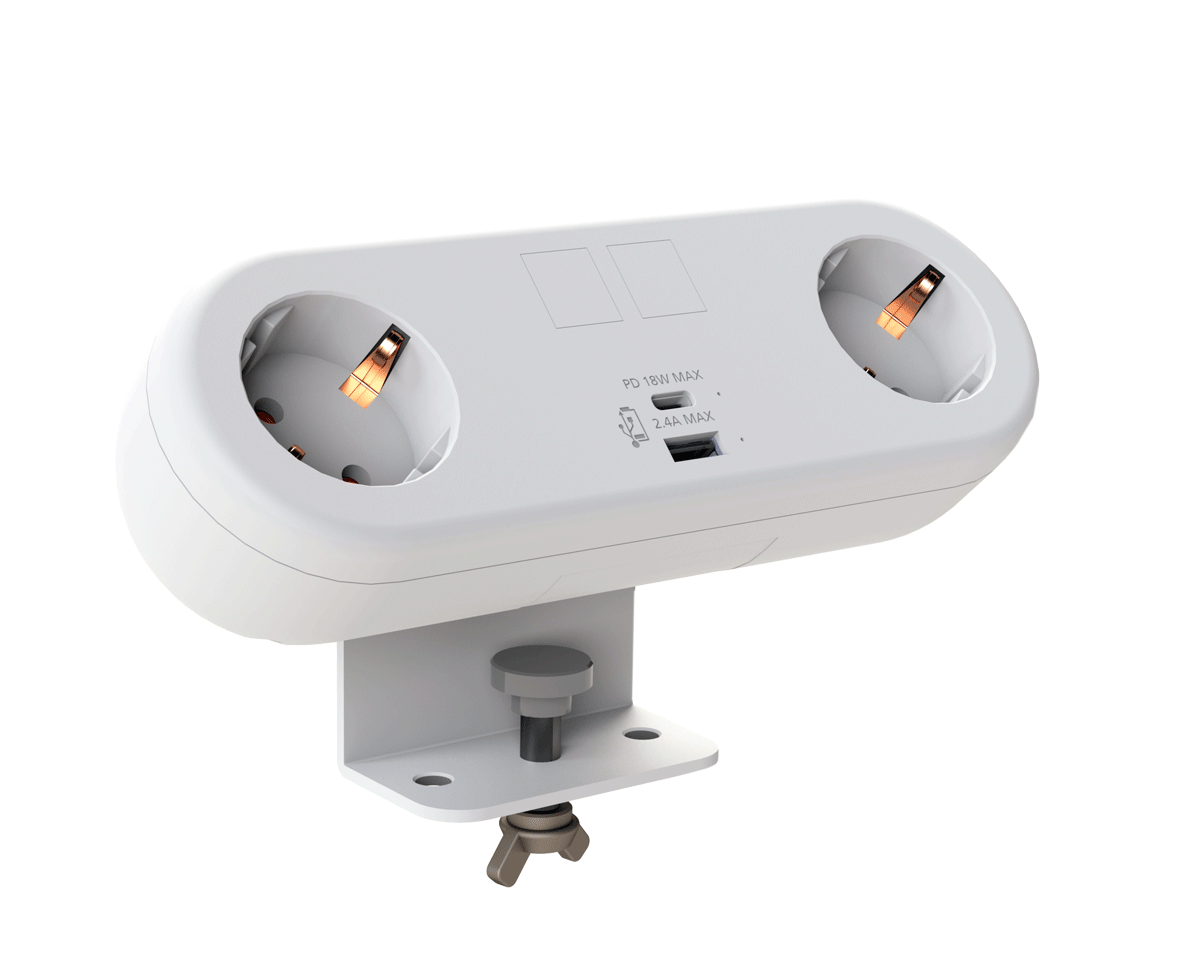
CMD White Schuko Capsule Desk Power Module
CMD LTD EXTENDS MONITOR ARM RANGE WITH THE LAUNCH OF REACH PLUS

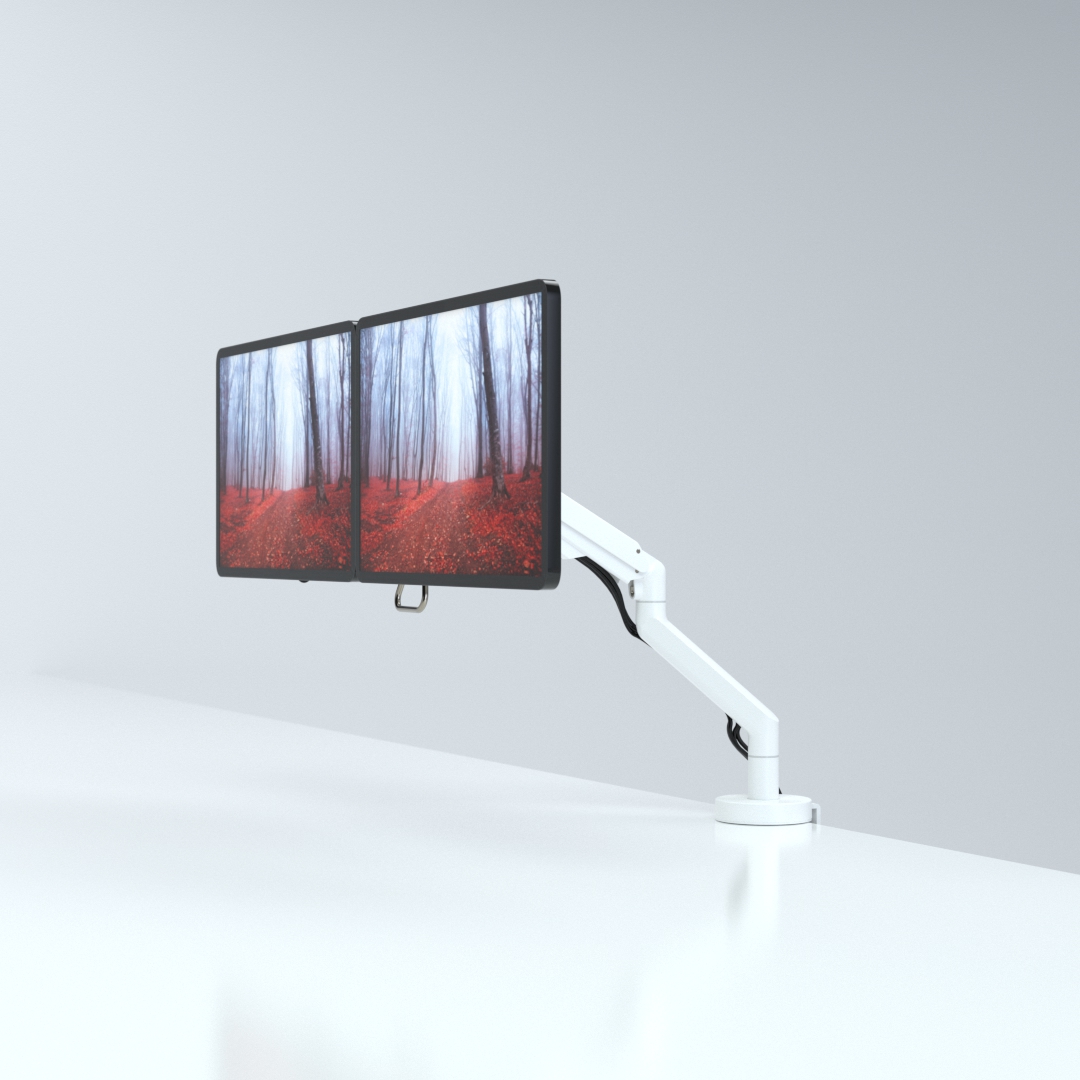
CMD Ltd, the specialist in ergonomic and connectivity solutions for commercial interiors, has completed its Reach monitor arm range with the launch of the Reach Plus. Available in single or dual screen options, the Reach Plus has been designed to provide an ideal solution for both single and dual screen workstation configurations, or can be used with next generation of large format curved screens. Suitable...

Read more
CMD Ltd DEMONSTRATES THE ART OF POWER DISTRIBUTION AT THE UNIVERSITY OF WARWICK

CMD Ltd, the specialist in workplace connectivity and ergonomic solutions, has provided Betatrak busbar power distribution and a range of electrical accessories for two major capital investment projects at the University of Warwick. Designed by Fielden Clegg Bradley Studios, the £33 million Faculty of Arts building is a showpiece development comprising four interconnected structures set around a central atrium, which will enable inter-disciplinary collaboration across...

Read more

University of Warwick
CMD BRINGS HARMONY TO COVENTRY UNIVERSITY RESEARCH FACILITIES

CMD Ltd, the specialist in power distribution solutions and workstation power and ergonomics, has provided under desk and on desk power modules for the refurbishment of three Coventry University research buildings. Located on Coventry University Technology Park, a business park designed to encourage collaboration between the university and knowledge-based businesses, the three buildings are being repurposed as office accommodation for university research teams. The refurbishment...

Read more


Coventry University

7 ESD Safe Flooring Tips for Global Buyers

Modern electronics plants cannot treat flooring as a decorative purchase. A small static discharge may damage sensitive devices without leaving a visible mark. The ESD Association’s technical guidance explains that electrostatic events can occur below human perception, while ANSI/ESD S20.20 and IEC 61340-5-1 define controlled requirements for protected areas. These standards do not approve every product labeled “conductive” or “static dissipative.” That distinction matters.

The global electronics industry is expanding rapidly. The Semiconductor Industry Association reported worldwide semiconductor sales of approximately $627.6 billion in 2024, showing why production reliability deserves close attention. More devices, tighter tolerances, and automated assembly lines increase the cost of unnoticed flooring failures. This guide presents seven practical Esd Safe Flooring tips for global buyers, from resistance testing and grounding design to moisture control, installation quality, and lifetime maintenance. It also considers procurement realities across warehouses, cleanrooms, laboratories, and contract manufacturing sites.

Performance looks good on paper.

But flooring works as part of a complete ESD control program. Personnel footwear, grounding points, cleaning chemicals, humidity, and traffic patterns can change measured resistance. A floor may pass a factory test and fail after months of forklifts, solvent exposure, or poor seam installation. Buyers should request independent test records, traceable specifications, and clear maintenance instructions. They should also compare standards carefully, because regional terminology is not always consistent. One point is easy to miss: the cheapest surface may create the highest replacement cost. These seven tips aim to support better questions, not promise a perfect purchase.

7 ESD Safe Flooring Tips for Global Buyers

Understanding ESD Flooring Standards and Global Compliance Requirements

7 ESD Safe Flooring Tips for Global Buyers

Understanding ESD Flooring Standards and Global Compliance Requirements

Global buyers should evaluate flooring against recognized standards, not marketing terms such as “static-proof.” IEC 61340-5-1:2016 addresses resistance, grounding, and electrostatic control in protected areas. ANSI/ESD S20.20-2021 also requires a documented ESD control program. Flooring alone cannot prove compliance. Confirm resistance-to-ground results, test voltage, humidity, and laboratory methods. These details matter.

Select flooring with stable electrical performance across temperature and humidity changes. Ask for batch test data, technical drawings, installation instructions, and maintenance limits. ESD Association TR53 recommends compliance verification through regular measurements and functional checks. Test the complete system, including adhesive, subfloor, footwear, and grounding points. A material may pass alone but fail after installation.

Check regional requirements before purchasing. Some projects require third-party laboratory reports, fire classifications, slip ratings, or low-emission documentation. Confirm whether the test method matches the destination market. Conductive and dissipative ranges are not interchangeable. Neither is “antistatic” a universal legal definition. Field audits often find disconnected grounds and contaminated surfaces. Small oversights create expensive uncertainty. I would also question impressive resistance figures without aging data. A perfect specification can still fail under real traffic, cleaning chemicals, and dry winter air.

7 ESD Safe Flooring Tips for Global Buyers - Understanding ESD Flooring Standards and Global Compliance Requirements

Tip Buyer Decision Dimension Recommended Requirement or Reference Value How to Verify Global Compliance Consideration Procurement Evidence to Request
1Define the ESD control level Electrical resistance classification Specify whether the project requires conductive or static-dissipative flooring. A commonly used classification is conductive: below 1.0 × 10⁶ Ω and static-dissipative: 1.0 × 10⁶ to below 1.0 × 10⁹ Ω. The final range must follow the applicable project standard. Measure resistance to ground and point-to-point resistance using calibrated equipment, controlled humidity, and the test method specified by the project. ANSI/ESD S20.20 and IEC 61340-5-1 are widely used ESD-control references. Their acceptance criteria and measurement conditions should not be mixed without technical review. Product technical data sheet, resistance test report, declared test method, calibration records, and written acceptance limits.
2Check the complete grounding path Grounding system and installation design The flooring should be part of a complete grounding system consisting of the floor surface, conductive adhesive or bonding system, copper grounding tape or equivalent, grounding point, and facility protective earth. Confirm continuity from representative floor locations to the designated grounding point. Test the installed system after curing and before production use. ESD flooring cannot provide reliable protection if the grounding network is missing, improperly bonded, or connected to an unsuitable earth point. Grounding layout, installation method statement, installer qualification, continuity records, and as-built grounding documentation.
3Evaluate the person–footwear–floor system Personnel charge control For many ESD protected areas, the complete person–footwear–floor system is evaluated, rather than the floor alone. ANSI/ESD S20.20 commonly references a maximum system resistance of 3.5 × 10⁷ Ω and a walking body-voltage limit of 100 V, where applicable to the facility program. Test representative personnel wearing the specified ESD footwear on the installed floor. Include walking-voltage testing when required by the risk assessment. Floor performance alone does not prove personnel protection. Footwear type, cleanliness, humidity, socks, and maintenance can change the result. Footwear compatibility data, personnel test procedure, qualification records, and routine compliance-monitoring plan.
4Specify test conditions and methods Repeatability of electrical measurements Define electrode type, applied voltage, conditioning time, temperature, relative humidity, sampling locations, and pass/fail limits. Resistance results should be reported in ohms using scientific notation. Use a calibrated resistance meter and a documented sampling plan. Test before handover, after installation stabilization, and at defined maintenance intervals. IEC 61340-4-1 covers electrical resistance measurement methods for floor coverings and installed floors. Other standards may require different electrodes, voltages, or conditioning conditions. Test plan, laboratory accreditation details where applicable, instrument certificates, raw readings, environmental conditions, and corrective-action records.
5Confirm mechanical and environmental durability Traffic, chemicals, moisture, and dimensional stability Match the flooring construction to forklift traffic, rolling loads, chair casters, abrasion, cleaning chemicals, moisture, temperature, and expected service life. Electrical compliance should be maintained after relevant wear and cleaning exposure. Review abrasion, dimensional stability, chemical-resistance, slip-resistance, and load-performance data. Conduct site-specific trials for severe conditions. ESD performance is not a substitute for safety performance. Local building, fire, slip-resistance, indoor-air-quality, and accessibility requirements may also apply. Technical test reports, installation limitations, cleaning-chemical compatibility list, maintenance instructions, fire-performance documentation, and warranty conditions.
6Review regional regulatory requirements Market access and compliance documentation Identify the destination country's requirements for construction products, fire classification, workplace safety, chemicals, waste, and indoor air quality before purchase. Do not assume that one certificate covers every market. Create a country-specific compliance checklist and have the importer, architect, or local authority confirm the required documents before shipment. IEC 61340-5-1 is an international reference; ANSI/ESD S20.20 is commonly used in North America and by global electronics facilities. EN 1081 is used in Europe for electrical resistance testing of resilient floor coverings. Local adoption and legal status vary. Declaration of performance or conformity where legally applicable, fire test classification, safety data information, restricted-substance statement, and country-of-origin documents.
7Plan maintenance and periodic verification Long-term ESD performance Establish routine cleaning, grounding checks, resistance testing, footwear testing, and requalification after repairs, coating changes, flooding, or major equipment movement. Use only cleaning products approved for the flooring system. Maintain a documented ESD control plan with test frequency, responsible personnel, acceptance limits, nonconformance actions, and retest requirements. ANSI/ESD S20.20 and IEC 61340-5-1 emphasize a managed ESD control program, not a one-time product purchase. Audit requirements depend on the facility and certification route. Maintenance schedule, training records, periodic test logs, repair records, audit reports, and evidence that failed areas were isolated or corrected.
Technical note: Resistance limits, test methods, environmental conditioning, and certification obligations can vary by application, country, facility risk assessment, and standard edition. Buyers should obtain the applicable standard text and confirm the final acceptance criteria with the project engineer, ESD coordinator, importer, or local authority before placing an order.

Selecting the Right ESD Flooring Materials for Different Applications

7 ESD Safe Flooring Tips for Global Buyers

Selecting the right ESD flooring starts with the application, not the color or purchase price. Electronics assembly rooms need low charge generation, stable grounding, and smooth surfaces for carts. Use conductive vinyl where frequent trolley movement demands predictable resistance. Dissipative rubber may suit laboratories, repair benches, and areas requiring better acoustic comfort. Ceramic systems can withstand heat, solvents, and heavy equipment, but installation quality becomes critical.

Review seven details: resistance range, charge decay, chemical exposure, traffic load, cleaning method, humidity, and replacement access. IEC 61340-5-1 commonly evaluates floor resistance between 1.0 × 10⁴ and 1.0 × 10⁹ ohms. The ESD Association’s flooring test methods also separate point-to-point resistance from resistance to ground. That distinction matters. A floor can pass one test and fail the other. It happens.

Data from SEMI’s 2024 World Fab Forecast indicates continued expansion across global semiconductor production capacity. More facilities mean broader flooring conditions, from dry assembly rooms to wet process corridors. In dry climates, specify verified charge-control performance under lower humidity. In medical or pharmaceutical areas, prioritize cleanability, seam design, and chemical resistance. Ask suppliers for independent test reports, not only declarations. Confirm results after installation, then repeat testing during maintenance. A perfect laboratory result may not survive poor adhesive coverage, unbonded grounding points, or aggressive cleaning. Global buyers should also check local electrical requirements, because acceptable installation practices vary between markets.

Planning Subfloor Preparation, Grounding, and Installation

Global buyers should treat subfloor preparation as an electrical control project, not a cosmetic flooring upgrade. Begin with a moisture survey at several grid points. Record concrete moisture, surface pH, cracks, joints, and contamination. Repair weak areas and remove curing compounds before adhesive application.

A clean floor matters.

Plan grounding before delivery. Specify permanent ground points, accessible test locations, and bonding routes on the installation drawing. Use trained electricians for connections. ANSI/ESD S20.20-2021 commonly uses a resistance-to-ground limit below 1.0 × 10⁹ ohms for ESD flooring systems. Measure the completed floor with a calibrated meter, not a handheld guess. Test multiple locations, including seams and the furthest point from ground. ASTM F150 provides a recognized method for measuring electrical resistance in resilient flooring.

Installation conditions deserve equal attention. Control temperature and humidity during acclimation, adhesive curing, and testing. IEC 61340-5-1 identifies environmental control as part of an effective ESD program, although humidity cannot replace grounding. Keep footwear and personnel grounding compatible with the floor. Verify continuity after equipment moves. Document readings, product batches, repair areas, and test dates.

A perfect reading on one clean sample can still mislead.

Recheck after heavy traffic. The weak point may be an overlooked seam, a damp slab, or a disconnected ground lead.

Seven practical safeguards emerge: inspect, clean, repair, acclimate, ground, measure, and record. Don’t skip the records.

Testing Electrical Performance and Maintaining Long-Term Safety

7 ESD Safe Flooring Tips for Global Buyers

Testing Electrical Performance and Maintaining Long-Term Safety

Tip 1: Measure resistance before installation and after bonding. Use a calibrated meter and follow the relevant test method for your market. Record humidity, temperature, probe pressure, and test locations. These details can change results.

Tip 2: Check resistance to ground, not only surface resistance.

Tip 3: Test several points, including seams, corners, and high-traffic areas. A single reading can mislead.

Tip 4: Confirm the grounding path with a qualified electrical professional. A conductive floor cannot protect equipment without a reliable connection.

Tip 5: Ask for independent laboratory reports, installation records, and maintenance guidance. Supplier claims need evidence.

Tip 6: Keep the surface clean with approved, non-insulating cleaners. Wax, dust, and residue may increase electrical resistance. Avoid aggressive scrubbing that damages the conductive layer.

Tip 7: Retest after spills, repairs, layout changes, or unusual wear. Schedule periodic inspections, even when the floor looks perfect. That assumption is risky. Visual condition and electrical performance can separate over time.

Global buyers should also review local technical requirements and train cleaning staff. Small mistakes often begin with unclear instructions, not defective materials. One practical improvement is a simple logbook with dates, readings, weather conditions, and corrective actions. It is not exciting, but it supports traceability and safer decisions.

Avoiding Common Purchasing Mistakes in International ESD Flooring Projects

7 ESD Safe Flooring Tips for Global Buyers

International ESD flooring purchases often fail before installation. The lowest quotation may exclude copper tape, testing, adhesive, or export packaging. Ask for a complete system specification, not a material price. ANSI/ESD S20.20-2021 emphasizes documented control programs, verification, and compliance records. A certificate alone cannot prove site performance.

Check resistance values carefully. IEC 61340-5-1:2016 uses resistance-to-ground measurements and a 1.0 × 10^9-ohm threshold within its control framework. Do not confuse conductive flooring with dissipative flooring. Request test methods, electrode details, conditioning time, and laboratory accreditation. Results can change with humidity, substrate moisture, and cleaning chemicals. Small details matter.

Coordinate grounding before production. Confirm the local electrical standard, grounding-point design, and installer qualifications. Ask for a mock-up using the actual substrate and adhesive. On international projects, a product passing factory tests may fail after long sea transport or poor slab preparation. That uncomfortable mistake is common. I would also require batch numbers, installation drawings, and post-installation resistance tests. A cheaper inspection is rarely cheaper after contamination, peeling, or rejected commissioning.