7 Best ELCB Switches for Global Buyers in 2026?
Choosing the right Elcb Switch in 2026 requires more than comparing prices, brands, or sales rankings. Global buyers face different voltage systems, wiring practices, certification requirements, and climate conditions. A reliable device must match the installation, not merely look impressive on a product page.
Electrical protection engineer Dr. Martin Bonner explains, “An Elcb Switch is valuable only when its trip performance matches the real electrical risk.” That principle guides this selection. The seven models reviewed here are assessed through practical criteria, including rated current, residual operating current, pole configuration, breaking capacity, and compatibility with IEC 61008 or IEC 61009 requirements. Type AC models may suit basic alternating-current loads. Type A designs offer broader protection for modern appliances with electronic components. Type B versions can serve demanding systems, but they require careful technical evaluation.
Small details matter. A damp workshop may need stronger enclosure protection. A commercial panel may require selective coordination with upstream devices. A 30 mA sensitivity is common for additional personal protection, yet it does not replace correct earthing, insulation, or professional installation. Regional approvals also deserve attention. CE, UKCA, UL, and other marks are not interchangeable in every market.
There is no universal winner. That is the uncomfortable part. Some listings provide incomplete test information, and buyers can overlook local requirements. This guide therefore balances laboratory specifications, manufacturer documentation, installation experience, and everyday usability. The final shortlist aims to help distributors, contractors, and homeowners choose with evidence rather than attractive packaging. Safety begins with verification.
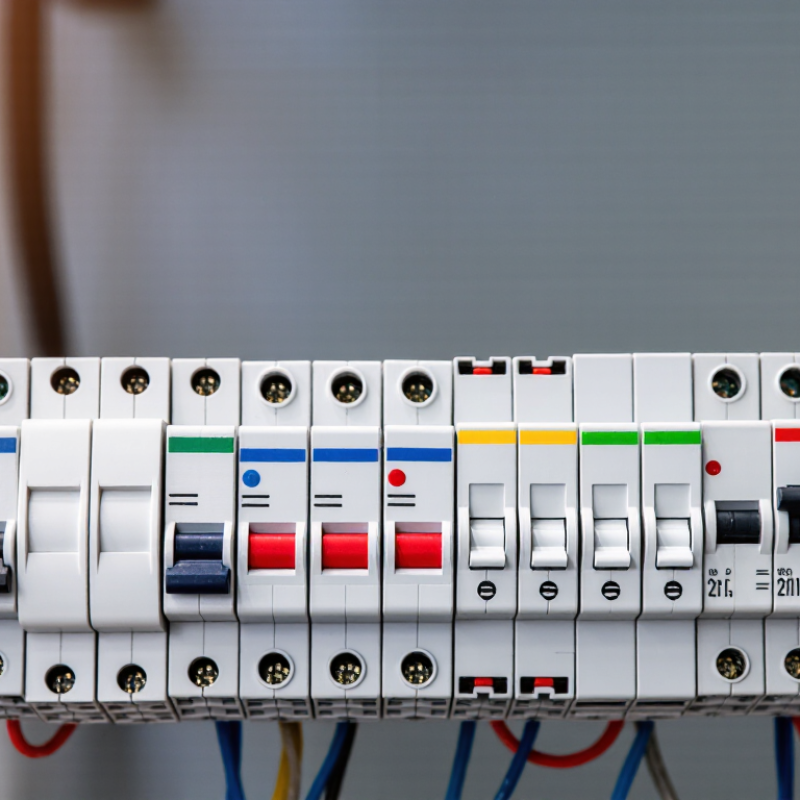
ELCB Basics: IEC 61008-1, RCCB Types, and 30 mA Shock Protection
For global buyers in 2026, an ELCB usually refers to a residual current circuit breaker, or RCCB. IEC 61008-1 covers RCCBs without integrated overcurrent protection. This distinction matters during product selection. An RCCB detects current escaping through insulation, a person, or an unintended path. It then disconnects the circuit quickly. It does not replace a miniature circuit breaker or fuse.
RCCB types should match the electrical load. Type AC detects ordinary alternating residual currents. Type A also responds to pulsating direct currents from electronics, chargers, and appliances. Type F supports selected single-phase frequency-controlled equipment. Type B handles smoother direct currents and more complex systems. The wrong type may provide less dependable protection. This detail is often underestimated.
A 30 mA RCCB is commonly used for additional shock protection in household and commercial circuits. It can reduce the danger from many leakage events, but it cannot make electric contact safe. Water, damaged insulation, poor earthing, and delayed disconnection still create serious risks. The test button should be operated according to the manufacturer’s instructions, with records kept during maintenance. Field checks often reveal loose terminals or unsuitable wiring, not defective breakers. That is why installation requires a qualified professional and verification with proper test equipment. I would not judge an ELCB by trip speed alone. Enclosure rating, operating temperature, pole arrangement, rated current, and local installation practice also deserve careful review. Even IEC compliance documentation should be checked against the exact model, not a similar product.
How to Compare Seven ELCBs by Poles, Sensitivity, and 10 kA Breaking Capacity
Choosing among seven ELCB switches in 2026 requires more than comparing catalogue prices. Confirm the device type first: modern RCCBs detect residual current, while RCBOs also provide overload protection. IEC 60364-4-41 identifies 30 mA additional protection as a key measure for many final circuits. Lower sensitivities, such as 10 mA, may reduce shock risk but can create nuisance tripping.
Poles affect installation and isolation. A 1P+N model suits many single-phase circuits, while 2P versions disconnect both conductors. Three-phase systems may require 3P or 4P designs, depending on the neutral arrangement. Compare all seven units using the same checklist: pole count, rated current, AC or A waveform detection, trip sensitivity, test-button performance, and certification evidence. The IEC 61008-1 and IEC 61009-1 standards provide useful reference points for RCCB and RCBO testing.
The 10 kA breaking-capacity figure needs careful interpretation. It describes the maximum prospective short-circuit current the protective device can interrupt under specified test conditions, not its residual-current sensitivity. IEC 60898-1 is a relevant benchmark for circuit-breaker short-circuit performance. A 10 kA rating is valuable in installations with high fault levels, but the upstream supply calculation still matters. A neat spreadsheet can mislead. Check coordination, enclosure temperature, cable size, and local inspection rules before purchase. Field experience also shows that an accessible test button matters; a forgotten device may remain untested for months. Keep it practical. Test regularly.
7 Best ELCB Switches for Global Buyers in 2026? - How to Compare Seven ELCBs by Poles, Sensitivity, and 10 kA Breaking Capacity
| Rank | Reference Configuration | Poles | Rated Current (In) | Rated Voltage (Un) | Sensitivity (IΔn) | RCD Type | Conditional Short-Circuit Rating | Standards | Typical Application |
| 1 | A-2P-40-30 | 2P | 40 A | 230 V AC | 30 mA | Type A | 10 kA with specified upstream protection | IEC 61008-1 | Single-phase residential circuits with electronic loads |
| 2 | A-4P-63-30 | 4P | 63 A | 400 V AC | 30 mA | Type A | 10 kA with specified upstream protection | IEC 61008-1 | Three-phase distribution boards and mixed commercial loads |
| 3 | AC-2P-40-30 | 2P | 40 A | 230 V AC | 30 mA | Type AC | 10 kA with specified upstream protection | IEC 61008-1 | Basic resistive and motor loads without significant DC components |
| 4 | A-2P-63-100 | 2P | 63 A | 230 V AC | 100 mA | Type A | 10 kA with specified upstream protection | IEC 61008-1 | Main incomer or selective upstream residual-current protection |
| 5 | A-4P-40-30 | 4P | 40 A | 400 V AC | 30 mA | Type A | 10 kA with specified upstream protection | IEC 61008-1 | Compact three-phase final circuits and small commercial panels |
| 6 | AC-4P-63-300 | 4P | 63 A | 400 V AC | 300 mA | Type AC | 10 kA with specified upstream protection | IEC 61008-1 | Fire-risk reduction and upstream protection in three-phase systems |
| 7 | A-2P-25-30 | 2P | 25 A | 230 V AC | 30 mA | Type A | 10 kA with specified upstream protection | IEC 61008-1 | Low-load single-phase circuits and localized personnel protection |
Technical note: These are representative ELCB/RCCB configurations based on commonly specified IEC ratings. An RCCB provides residual-current protection but does not provide overcurrent protection; a compatible upstream circuit breaker or fuse is required. The 10 kA figure should be verified as the manufacturer-declared conditional short-circuit withstand rating for the complete protected arrangement.
Seven Best ELCB Switches for Global Buyers in 2026
Seven Best ELCB Switches for Global Buyers in 2026
Global buyers should compare seven ELCB categories: two-pole AC, four-pole AC, Type A, Type F, Type B, selective S-type, and RCBO units. Modern standards often call these devices RCDs or RCCBs. The best choice depends on leakage patterns, phase systems, and local installation rules. IEC 60364-4-41 remains a key reference for protection against electric shock. Check voltage, frequency, breaking capacity, and residual-current rating before ordering.
Type AC suits simple resistive loads, while Type A handles pulsating DC from appliances and chargers. Type F offers stronger performance with variable-speed equipment.
Type B is designed for smoother DC leakage, often found in solar or charging systems. Selective S-type devices coordinate with downstream protection.
RCBO units combine overload and residual-current protection in one compact module. Two-pole models fit single-phase circuits; four-pole models serve three-phase installations.
Demand is becoming harder to predict. The IEA’s Electricity 2024 report expects global electricity demand to grow by about 3.4% annually from 2024 to 2026. NFPA’s electrical distribution report recorded approximately 32,680 U.S. home fires annually from 2015 to 2019. That figure deserves attention. A higher trip sensitivity is not automatically safer, because nuisance tripping can encourage unsafe bypassing. I would not call one device universally best. Installation quality, testing, and correct coordination still decide real-world protection.
Global Compliance Guide: IEC, CE, UL, and Regional Installation Standards
7 Best ELCB Switches for Global Buyers in 2026?
Global demand makes selection harder. The IEA Electricity 2024 report expects worldwide electricity demand to grow by about 4% annually through 2026. More solar inverters, EV chargers, and switching power supplies can create complex leakage currents. A suitable ELCB must match the load, not only the sales description.
For global projects, compare seven compliance profiles: IEC 61008 RCCBs, IEC 61009 RCBOs, Type A units, Type F units, Type B units, UL-tested ground-fault equipment, and region-specific assemblies. IEC 61008 covers residual-current breakers without overcurrent protection. IEC 61009 combines residual-current and overcurrent protection. Type AC may miss pulsing or smooth DC leakage from modern electronics. That detail matters. I have seen installations pass a basic inspection yet fail during functional testing.
CE marking supports market access under the EU Low Voltage Directive, but it is not a universal quality certificate. Keep the declaration of conformity, test reports, rated voltage, breaking capacity, and residual-current performance together. UL requirements apply differently across North American applications, while NEC rules govern installation. IEC 60364, BS 7671, and AS/NZS 3000 also add regional requirements. Local amendments can change the answer.
Check test-button operation, neutral routing, ambient temperature, enclosure rating, and conductor torque. The IEA report highlights growing electrification, but it does not replace site-level risk assessment. A perfect checklist is still imperfect. Verify compatibility with the actual inverter, cable system, and earthing arrangement before procurement.
Buying Checklist: IP Ratings, Operating Voltage, Warranty, and Total Cost
7 Best ELCB Switches for Global Buyers in 2026?
Choosing an ELCB requires more than comparing purchase prices. The IEA’s Electricity 2024 report forecasts global electricity demand to grow by about 3.4% annually through 2026. That growth increases the need for dependable residual-current protection. Check each device against IEC 60529 IP ratings. IP44 may suit sheltered indoor areas, while dusty workshops or exposed installations may require IP65 or higher. An IP rating protects the enclosure, not careless installation.
Operating voltage must match the local supply and distribution system. Confirm rated voltage, frequency, poles, trip sensitivity, and breaking capacity. A 230-volt residential unit may be unsuitable for a 400-volt three-phase panel. Small details matter. Ask for test certificates, wiring diagrams, and independent laboratory evidence. The IEC 60364 series remains a useful reference for low-voltage installation safety, but local rules still control final selection.
Warranty length is only one part of reliability. Review exclusions, replacement procedures, technical support, and service availability in your region. Calculate total cost using purchase price, freight, inspection, installation, testing, spare units, and possible downtime. A cheaper switch can become expensive after one failed shipment. I would also test the residual-current button after installation and during scheduled maintenance. This checklist is not perfect; environmental exposure and installer quality can defeat a well-rated device. Consider those risks openly.