

News

Miro: A New Standard in Responsible Innovation

Miro: A New Standard in Responsible Innovation The Miro monitor arm is setting new benchmarks in sustainability. It offers a high-performance solution without compromising on environmental responsibility. Designed with careful material selection, local sourcing, and longevity in mind, Miro’s responsible approach to design and unique manoeuvrability set it apart from the competition. Sustainable Choices Miro is crafted from energy-efficient materials with a lower carbon impact....

Read more
HSE Advisor

Role Purpose Support in the development, implementation and maintenance of the company’s Health, Safety & Environmental policies, processes, operational procedures, and standards.  Ensuring best practice and championing a continually improving HSE culture within the business. Key Responsibilities Liaise with and provide support to all areas of the business to eliminate, mitigate or reduce identified HSE exposures. Partner with the production management team and team leaders,...

Read more
CMD Ltd LAUNCHES 48-HOUR TURNAROUND ON BETATRAK® RAPID ORDERING SERVICE

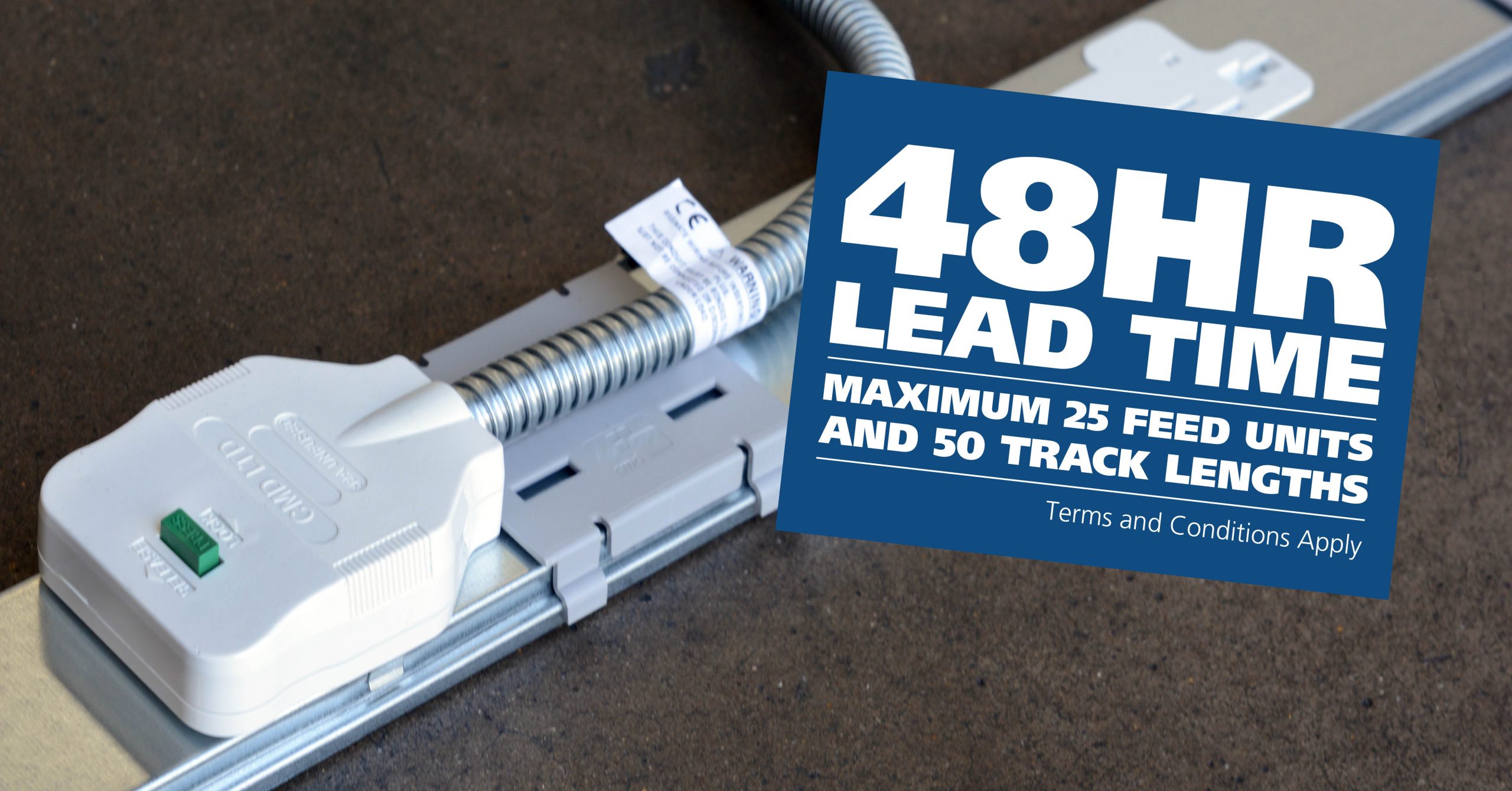
CMD Ltd, the specialist in power distribution systems, workstation power and monitor arms, has launched a rapid ordering service for its Betatrak® underfloor powertrack distribution systems and accessories, with a commitment to delivering within 48-hours of an approved purchase order*. The service enables customers to order up to 50 lengths of Standard or Clean Earth (C/E) low noise Betatrak, along with up to 25 feed...

Read more
CMD INVESTS £1/4 MILLION IN NEW MACHINE AS PART OF FACTORY UPGRADE

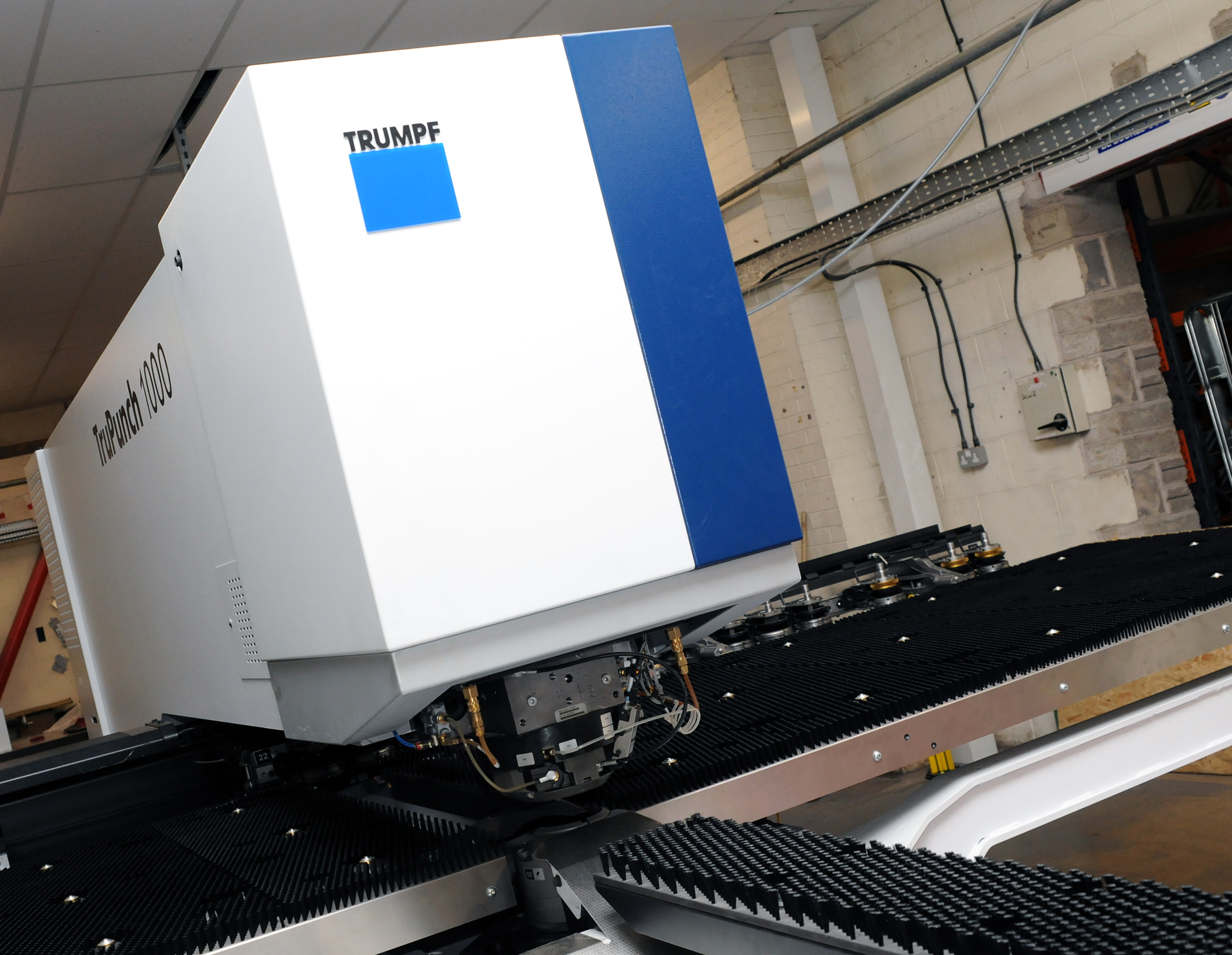
We have invested in a new £1/4m TRUMPF CNC metal punch as part of an asset renewal strategy for our UK manufacturing capability. The new machine will be used in the production of a wide variety of our power distribution systems and workstation power products at our Rotherham factory. Suitable for handling sheet metal between 0.9mm and 3.0mm thick, the new machine will replace one...

Read more
CMD CATALOGUE PROVIDES TECHNICAL POWER DISTRIBUTION GUIDE

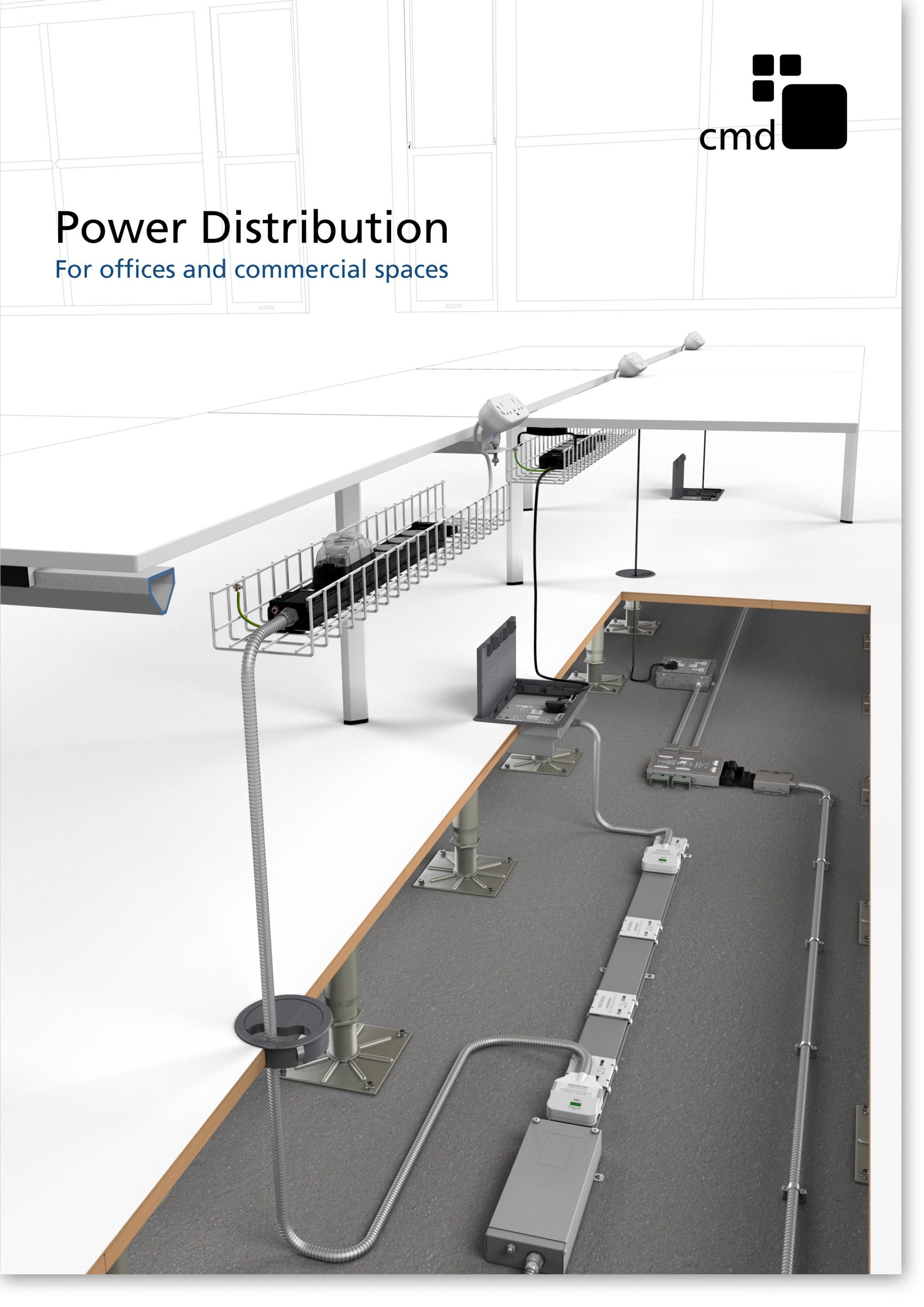
CMD Ltd has released a new catalogue, providing an easy to follow technical guide to our power distribution systems and plug and play desk modules. Detailing CMD’s full range of UK-manufactured power distribution systems and plug and play desk modules, the catalogue will be a helpful source of information to M&E engineers and contractors alike to understand how our power distribution systems connect together and...

Read more
Power Distribution Catalogue
CMD Ltd PLAYS ESSENTIAL ROLE IN ELECTRICAL FIT OUT AT LONDON’S PRESTIGIOUS OFFICE DEVELOPMENT

CMD Ltd, specialist in workplace connectivity and ergonomic solutions, has provided a flexible and high-quality power distribution network for The Ray, a prestigious office development in London’s Farringdon. Well-known for being the former site of The Guardian newspaper, The Ray now stands as an 83,000ft² office development characterised by a modernised warehouse aesthetic, with level two now occupied by a global social media company. The...

Read more

The Ray
CMD plugs in to european opportunity with Schuko Capsule unit launch

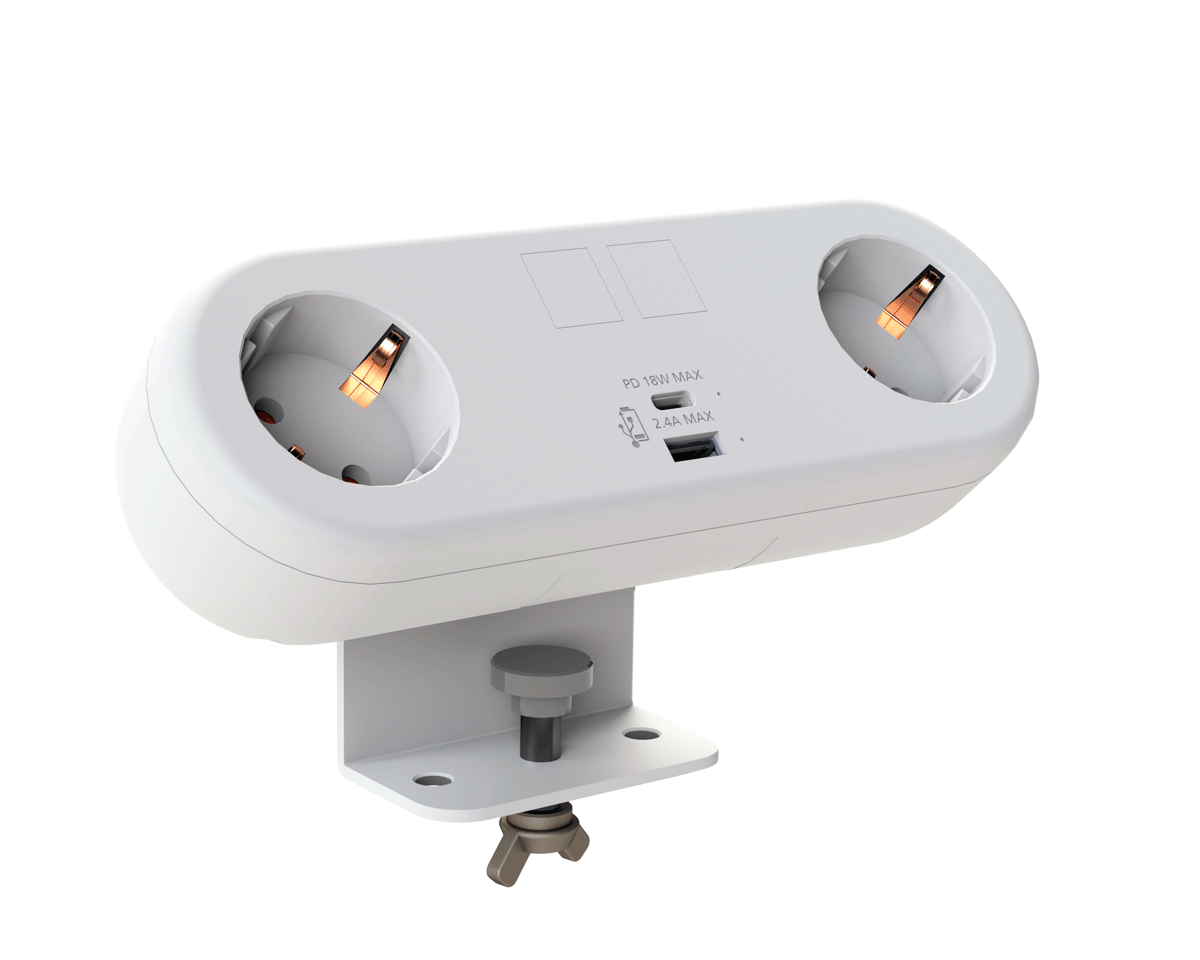
CMD Ltd, the specialist in power and connectivity solutions for commercial environments, has launched a Schuko version of its popular fixed format Capsule workstation power module for export to mainland Europe and beyond. A popular on desk power module comprising two sockets and dual USB (type A and C) chargers, CMD’s Capsule unit is already widely specified in the UK as an off-the-shelf workstation power...

Read more
CMD White Schuko Capsule Desk Power Module
CMD LTD EXTENDS MONITOR ARM RANGE WITH THE LAUNCH OF REACH PLUS

CMD Ltd, the specialist in ergonomic and connectivity solutions for commercial interiors, has completed its Reach monitor arm range with the launch of the Reach Plus. Available in single or dual screen options, the Reach Plus has been designed to provide an ideal solution for both single and dual screen workstation configurations, or can be used with next generation of large format curved screens. Suitable...

Read more

CMD Ltd DEMONSTRATES THE ART OF POWER DISTRIBUTION AT THE UNIVERSITY OF WARWICK

CMD Ltd, the specialist in workplace connectivity and ergonomic solutions, has provided Betatrak busbar power distribution and a range of electrical accessories for two major capital investment projects at the University of Warwick. Designed by Fielden Clegg Bradley Studios, the £33 million Faculty of Arts building is a showpiece development comprising four interconnected structures set around a central atrium, which will enable inter-disciplinary collaboration across...

Read more

University of Warwick
CMD BRINGS HARMONY TO COVENTRY UNIVERSITY RESEARCH FACILITIES

CMD Ltd, the specialist in power distribution solutions and workstation power and ergonomics, has provided under desk and on desk power modules for the refurbishment of three Coventry University research buildings. Located on Coventry University Technology Park, a business park designed to encourage collaboration between the university and knowledge-based businesses, the three buildings are being repurposed as office accommodation for university research teams. The refurbishment...

Read more


Coventry University

2026 Top VTOL Airframe Types for Global Buyers

Choosing a VTOL aircraft in 2026 requires more than comparing speed, range, or cabin size. Global buyers must examine mission profiles, operating climates, maintenance networks, payload demands, and certification pathways. This guide introduces the main Vtol Airframe types shaping the international market, from compact multicopters to lift-plus-cruise aircraft and advanced tiltrotor platforms. Each configuration offers practical advantages, but none performs equally well in every environment.

A useful evaluation begins with the buyer’s real operating conditions. A coastal operator may prioritize corrosion protection, while an urban service provider may need quiet rotors and precise low-speed control. Operators in remote regions may value battery access, field repairs, and reliable thermal management over headline performance. These details matter.

The guide also considers pilot workload, energy storage, structural materials, avionics integration, and supplier support. Experience from current aviation programs shows that a promising prototype can still face difficult production, training, or maintenance challenges. No ranking is perfect. Market claims can change quickly, and published specifications may not reflect payload, weather, or reserve requirements in daily operations. Buyers should verify technical data with manufacturers, independent engineers, and relevant aviation authorities before making commitments.

Safety remains central. So does practicality.

By comparing airframe architecture, maturity, lifecycle cost, and operational fit, this overview helps decision-makers narrow realistic choices. It does not treat innovation as proof of readiness. Instead, it asks a harder question: which Vtol Airframe can deliver dependable service across the buyer’s actual routes, infrastructure, and long-term support conditions?

2026 Top VTOL Airframe Types for Global Buyers

VTOL Airframes: Definition, Mission Roles, and Market Scope

2026 Top VTOL Airframe Types for Global Buyers

VTOL airframes take off and land vertically, then support hover, cruise, or both. Their mission roles differ sharply. Multicopters suit short-range inspection, medical logistics, and urban shuttle trials. Lift-plus-cruise designs add fixed wings for longer routes. Tiltrotor and tilt-wing aircraft target faster regional missions, but their transition systems demand careful maintenance planning. Conventional helicopters remain practical for heavy lifting, rough sites, and mature infrastructure.

Market scope is broader than passenger transport. It includes emergency response, offshore access, surveying, cargo, defense support, and remote-community mobility. The FAA Aerospace Forecast 2024–2044 projects the United States general aviation fleet to rise from 212,335 aircraft in 2023 to 213,695 by 2044. That modest increase suggests replacement and mission specialization may matter more than fleet volume. Meanwhile, the International Energy Agency’s Global EV Outlook 2024 reports a 14% fall in average battery-pack prices during 2023. Battery costs are improving, though aviation certification, thermal management, and reserve-energy requirements remain difficult. The category is still messy.

Tips: Compare payload at realistic reserve levels, not brochure maximums. Check hover time in heat, rain, altitude, and crosswind. Ask for independent flight-test evidence and maintenance data. A cheaper airframe may create higher infrastructure costs. Buyers should also examine local airspace rules, noise limits, pilot training, and spare-part access before selecting a configuration.

Core VTOL Airframe Configurations Available to Global Buyers in 2026

In 2026, global buyers can choose several core VTOL airframe configurations. Each design serves a different operating pattern. Multicopters offer simple vertical control, compact footprints, and strong low-speed handling. They suit short routes, inspection work, and restricted landing areas. Their weakness is limited forward-flight efficiency.

Lift-and-cruise aircraft combine separate vertical rotors with a fixed wing. This arrangement supports longer routes while keeping takeoff procedures relatively straightforward. Tiltrotor and tiltwing designs transition between vertical and forward flight. They can improve range, but their mechanisms demand careful testing and skilled maintenance. Tailsitters use one airframe position for both flight phases. They save weight, yet launch and recovery can challenge inexperienced operators. No configuration wins every mission.

Procurement teams should compare payload, useful range, battery or fuel logistics, noise, weather tolerance, and maintenance access. A payload chart may look impressive, but performance can fall sharply in heat, wind, or high-altitude locations. That detail is often underestimated. Buyers should request documented flight-test data, component life limits, training requirements, and support plans. National aviation approval, export controls, communications rules, and local operating permissions also affect practical availability. A technically capable aircraft may still be unsuitable if spare parts arrive slowly or technicians lack certification. Honest evaluation includes failure planning, not only brochure performance.

How Lift, Thrust, and Control Systems Shape Airframe Selection

2026 Top VTOL Airframe Types for Global Buyers

How Lift, Thrust, and Control Systems Shape Airframe Selection

Choosing a VTOL airframe starts with the lift requirement, not the silhouette. Multirotor layouts offer direct control and simple hovering for short-range work. Their many rotors can maintain stability after a limited motor failure. However, they often consume significant energy during forward flight. Battery weight then reduces useful payload.

Tilt-rotor and tilt-wing designs trade mechanical complexity for better cruise efficiency. Their lifting surfaces carry more weight once the aircraft accelerates. Transition control becomes critical, especially in gusty coastal weather. Buyers should examine transition testing, actuator redundancy, and pilot workload. A smooth demonstration is not enough. Ask for repeatable data.

Fixed-wing VTOL aircraft usually provide longer range through separate lift and cruise systems. This approach can simplify flight phases, but it may add dead weight. Control software must coordinate vertical lift, forward thrust, and changing airflow. Small timing errors can create uncomfortable pitch changes. I would compare flight logs, maintenance access, and emergency landing behavior. A spreadsheet can still mislead. Real operators notice battery swaps, hot motors, poor visibility, and noisy vibration first. Local service training and approved operating limits should influence the purchase as much as advertised range.

Comparing VTOL Airframes by Range, Payload, Safety, and Cost

2026 Top VTOL Airframe Types for Global Buyers

Comparing VTOL Airframes by Range, Payload, Safety, and Cost

VTOL buyers should compare mission figures, not showroom claims. Multirotors usually offer simple control and low maintenance, but their range often remains below 100 kilometers. Lift-plus-cruise designs can reach roughly 150–300 kilometers, while tiltrotor layouts target longer routes and higher cruise efficiency. Payload changes quickly with batteries, reserves, weather, and passenger seating. A five-seat cabin may carry only two passengers on a hot day.

The General Aviation Manufacturers Association reported 753 civil helicopters delivered in 2023, worth about 4.8 billion US dollars. This benchmark shows the maturity gap between conventional rotorcraft and emerging electric systems. NASA’s 2023 Advanced Air Mobility Market Study identifies utilization, energy cost, and charging infrastructure as major commercial drivers. Safety also needs measurable evidence. Buyers should request flight-hour reliability, emergency-landing procedures, software assurance, and independent test results. A published range without reserve assumptions is not enough. I have seen specification sheets hide this weakness.

Tips: Compare payload at maximum range, not maximum payload. Ask for battery replacement costs, charging time, noise readings, and maintenance hours per flight hour. Check whether figures come from certification tests or simulations. The cheapest airframe may demand expensive ground infrastructure. Operators should also model wind, temperature, spare parts, training, insurance, and airport access. These details often decide the real cost more than the aircraft price.

2026 Top VTOL Airframe Types for Global Buyers

Representative non-brand planning benchmarks for current VTOL architectures. Range and payload show typical operating bands; safety is scored from 1–5 based on redundancy, controllability after single-point failures, and operational maturity. Cost is a relative acquisition and infrastructure index, where 1.0 represents the lowest-cost architecture in this comparison. Actual performance varies by mission, certification basis, battery or fuel system, and operating environment.

Matching VTOL Airframe Types to Global Operating Environments

2026 Top VTOL Airframe Types for Global Buyers

Matching VTOL Airframe Types to Global Operating Environments

Selecting a VTOL airframe begins with the operating environment, not the brochure. Dense cities favor compact multirotor designs with precise hovering and low-speed control. They need reliable obstacle awareness around rooftops, cables, and narrow landing areas. Noise remains a practical concern.

Open farmland usually suits fixed-wing VTOL aircraft. Their vertical takeoff reduces runway needs, while wing-borne flight supports longer inspection routes. Strong winds and dust can still challenge transition performance. Field teams should test launch areas, recovery zones, and battery changes before deployment.

Coastal regions demand corrosion-resistant structures and careful sealing around motors and connectors. Tiltrotor layouts may support longer journeys, but their transition systems require disciplined maintenance and trained operators. Mountainous terrain favors aircraft with strong climb performance, stable positioning, and dependable navigation during sudden weather changes.

Cold climates expose battery limitations quickly. Hot climates increase thermal stress. Neither condition should be judged from laboratory figures alone. Local trials matter more than impressive specifications.

A common mistake is choosing maximum range first. Actual value often depends on payload, service access, landing permission, and weather limits. Operating rules also differ between countries and regions, so buyers should confirm authorization, training, and airspace requirements with the relevant aviation authority. The ideal airframe is not always the fastest. It is the one crews can inspect, operate, and recover safely every week.