

News

Miro: A New Standard in Responsible Innovation

Miro: A New Standard in Responsible Innovation The Miro monitor arm is setting new benchmarks in sustainability. It offers a high-performance solution without compromising on environmental responsibility. Designed with careful material selection, local sourcing, and longevity in mind, Miro’s responsible approach to design and unique manoeuvrability set it apart from the competition. Sustainable Choices Miro is crafted from energy-efficient materials with a lower carbon impact....

Read more
HSE Advisor

Role Purpose Support in the development, implementation and maintenance of the company’s Health, Safety & Environmental policies, processes, operational procedures, and standards.  Ensuring best practice and championing a continually improving HSE culture within the business. Key Responsibilities Liaise with and provide support to all areas of the business to eliminate, mitigate or reduce identified HSE exposures. Partner with the production management team and team leaders,...

Read more
CMD Ltd LAUNCHES 48-HOUR TURNAROUND ON BETATRAK® RAPID ORDERING SERVICE

CMD Ltd, the specialist in power distribution systems, workstation power and monitor arms, has launched a rapid ordering service for its Betatrak® underfloor powertrack distribution systems and accessories, with a commitment to delivering within 48-hours of an approved purchase order*. The service enables customers to order up to 50 lengths of Standard or Clean Earth (C/E) low noise Betatrak, along with up to 25 feed...

Read more

CMD INVESTS £1/4 MILLION IN NEW MACHINE AS PART OF FACTORY UPGRADE

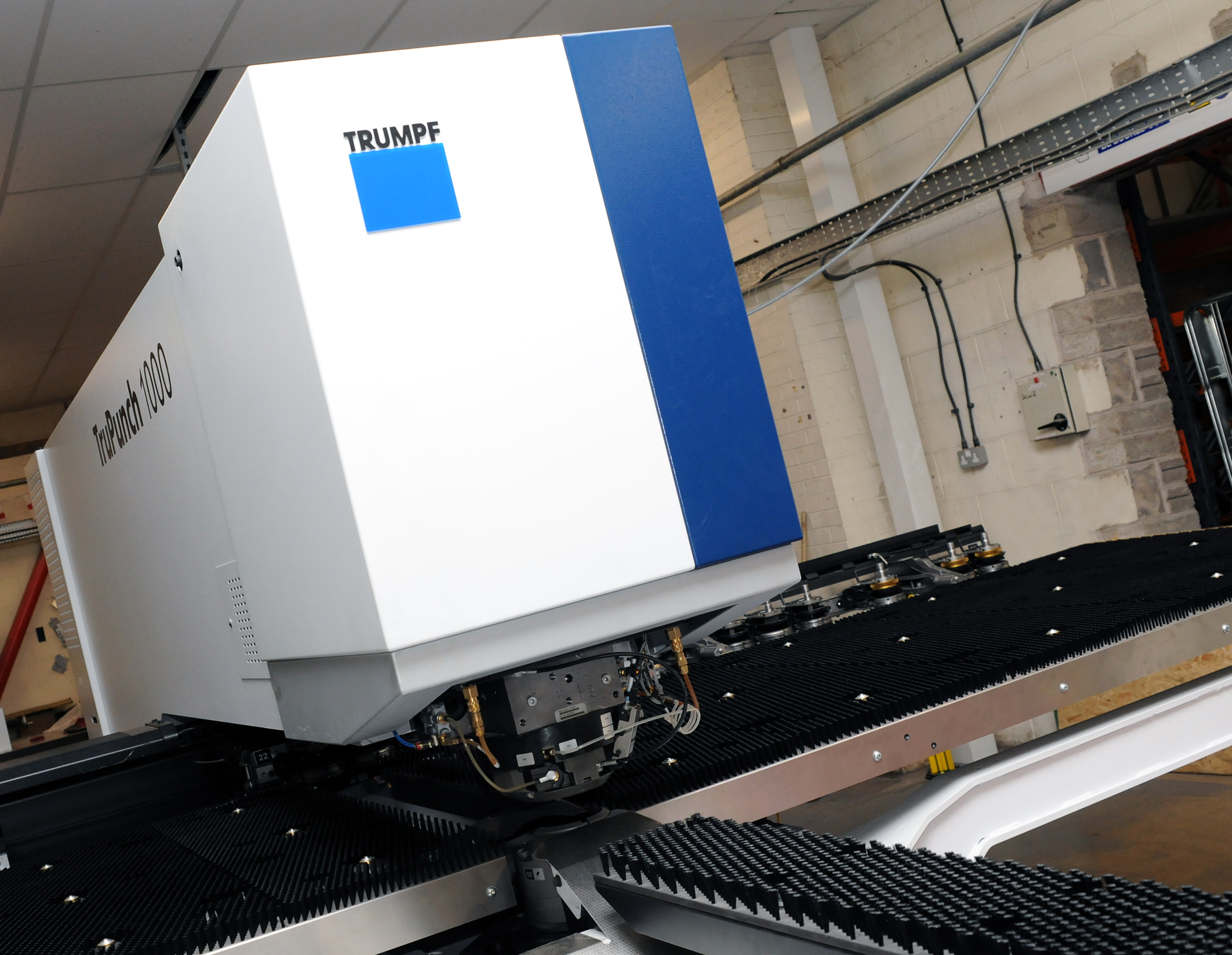
We have invested in a new £1/4m TRUMPF CNC metal punch as part of an asset renewal strategy for our UK manufacturing capability. The new machine will be used in the production of a wide variety of our power distribution systems and workstation power products at our Rotherham factory. Suitable for handling sheet metal between 0.9mm and 3.0mm thick, the new machine will replace one...

Read more
CMD CATALOGUE PROVIDES TECHNICAL POWER DISTRIBUTION GUIDE

CMD Ltd has released a new catalogue, providing an easy to follow technical guide to our power distribution systems and plug and play desk modules. Detailing CMD’s full range of UK-manufactured power distribution systems and plug and play desk modules, the catalogue will be a helpful source of information to M&E engineers and contractors alike to understand how our power distribution systems connect together and...

Read more

Power Distribution Catalogue
CMD Ltd PLAYS ESSENTIAL ROLE IN ELECTRICAL FIT OUT AT LONDON’S PRESTIGIOUS OFFICE DEVELOPMENT

CMD Ltd, specialist in workplace connectivity and ergonomic solutions, has provided a flexible and high-quality power distribution network for The Ray, a prestigious office development in London’s Farringdon. Well-known for being the former site of The Guardian newspaper, The Ray now stands as an 83,000ft² office development characterised by a modernised warehouse aesthetic, with level two now occupied by a global social media company. The...

Read more

The Ray
CMD plugs in to european opportunity with Schuko Capsule unit launch

CMD Ltd, the specialist in power and connectivity solutions for commercial environments, has launched a Schuko version of its popular fixed format Capsule workstation power module for export to mainland Europe and beyond. A popular on desk power module comprising two sockets and dual USB (type A and C) chargers, CMD’s Capsule unit is already widely specified in the UK as an off-the-shelf workstation power...

Read more

CMD White Schuko Capsule Desk Power Module
CMD LTD EXTENDS MONITOR ARM RANGE WITH THE LAUNCH OF REACH PLUS

CMD Ltd, the specialist in ergonomic and connectivity solutions for commercial interiors, has completed its Reach monitor arm range with the launch of the Reach Plus. Available in single or dual screen options, the Reach Plus has been designed to provide an ideal solution for both single and dual screen workstation configurations, or can be used with next generation of large format curved screens. Suitable...

Read more

CMD Ltd DEMONSTRATES THE ART OF POWER DISTRIBUTION AT THE UNIVERSITY OF WARWICK

CMD Ltd, the specialist in workplace connectivity and ergonomic solutions, has provided Betatrak busbar power distribution and a range of electrical accessories for two major capital investment projects at the University of Warwick. Designed by Fielden Clegg Bradley Studios, the £33 million Faculty of Arts building is a showpiece development comprising four interconnected structures set around a central atrium, which will enable inter-disciplinary collaboration across...

Read more

University of Warwick
CMD BRINGS HARMONY TO COVENTRY UNIVERSITY RESEARCH FACILITIES

CMD Ltd, the specialist in power distribution solutions and workstation power and ergonomics, has provided under desk and on desk power modules for the refurbishment of three Coventry University research buildings. Located on Coventry University Technology Park, a business park designed to encourage collaboration between the university and knowledge-based businesses, the three buildings are being repurposed as office accommodation for university research teams. The refurbishment...

Read more

Coventry University

2026 Top Bovine Collagen Peptide Types for Buyers

In 2026, buyers need more than a low price when selecting Bovine Collagen Peptide. They need evidence. This outline examines the main peptide types, their practical uses, and the quality signals that separate reliable suppliers from attractive claims. Hydrolyzed bovine hide collagen, bone collagen, and branded peptide fractions can differ in amino-acid profiles, molecular weight, solubility, taste, and processing consistency. These details matter in a clear glass of water, where poor solubility or a strong odor quickly becomes obvious.

Dr. Keith Baar, a respected connective-tissue researcher, has stated, “Collagen is not a complete protein.” That reminder deserves attention. Bovine Collagen Peptide can support product development, but it should not be presented as a substitute for a balanced protein source or a complete diet. Responsible buyers should review origin records, enzymatic hydrolysis methods, molecular-weight data, microbiological testing, heavy-metal results, allergen controls, and batch-to-batch certificates. Traceability matters.

Not every supplier explains these points well.

A strong 2026 buying decision also considers application. A beverage manufacturer may prioritize fast dispersion and neutral flavor. A supplement brand may need clinical relevance, stable documentation, and dependable supply. Cosmetic buyers may focus on purity, particle size, and formulation behavior. Some popular claims remain poorly defined. That is where careful judgment is needed. This guide compares leading Bovine Collagen Peptide types through an experience-based, evidence-aware lens, while recognizing an uncomfortable truth: published data do not always match real-world product performance.

2026 Top Bovine Collagen Peptide Types for Buyers

What Bovine Collagen Peptides Are and How They Are Produced

2026 Top Bovine Collagen Peptide Types for Buyers

Bovine collagen peptides are short protein chains produced from cattle hides, bones, or connective tissues. Most are derived from type I collagen, which contains glycine, proline, and hydroxyproline. These amino acids create a firm, fibrous structure in native collagen. Enzymatic hydrolysis breaks that structure into smaller, water-dispersible peptides. The result is usually a light powder that dissolves more easily than untreated collagen.

Production begins with controlled cleaning and pretreatment. Manufacturers remove fat and non-collagen materials before acid or alkaline processing. Enzymes then reduce the molecular size under monitored temperature and pH conditions. Filtration, concentration, and spray drying create the finished ingredient. Processing details matter. A peptide powder that looks identical may perform differently in a cold beverage.

Grand View Research reported that the global collagen market reached approximately USD 9 billion in 2023, with continued growth expected through 2030. Several market reports also identify hydrolyzed collagen as a major growth segment, although estimates differ because bovine peptides are not always reported separately. Buyers should therefore review the original methodology, not only the headline number.

Useful purchasing checks include molecular weight distribution, protein content, solubility, moisture, microbiological results, and traceability records. Certificates should match the tested production lot. Small gaps matter. I have found that “high purity” can mean different things across suppliers. The phrase needs a test method behind it. For sensitive formulations, buyers should also assess odor, taste, heavy metals, and processing consistency before approving a large volume.

Key Types of Bovine Collagen Peptides Available in 2026

Key Types of Bovine Collagen Peptides Available in 2026

Bovine collagen peptides mainly come from Type I collagen, with smaller Type III fractions. Type I supports the structural matrix of skin, bone, and connective tissue. Hydrolyzed Type I peptides remain the common choice for beverages, powders, and nutrition bars. Grand View Research’s 2024 collagen market report identifies supplements and functional foods as major growth areas, with global demand expanding steadily through 2030.

Buyers can also specify low-molecular-weight peptides, often below 3,000 Daltons, for easier formulation and faster dispersion. Tripeptide-rich materials offer a more targeted profile, but their clinical evidence is still developing. MarketsandMarkets reported continued growth in collagen peptide applications across food, healthcare, and cosmetics in its 2024 industry analysis. However, molecular weight alone does not prove superior performance. I once treated it as the deciding factor. That was too simplistic.

Tips: Ask for a current certificate of analysis, peptide distribution, moisture level, microbiological results, and heavy-metal testing. Confirm the source tissue and processing method. Look for validated laboratory methods, not attractive claims alone. Supplier documentation should match each production lot. Taste matters too. A peptide can meet specifications yet fail in a clean-label drink because of odor or slow dissolution. Third-party testing adds practical confidence, especially when comparing Type I, Type III, and tripeptide-enriched options.

2026 Top Bovine Collagen Peptide Types for Buyers

Key bovine collagen types available in 2026, organized by their representative native tissue sources.

Type I is the primary collagen in bovine skin, tendon, and bone and is the most common source for hydrolyzed bovine collagen peptides. Type II is mainly associated with bovine cartilage, while Types III and V generally occur as smaller supporting fractions. The percentages shown are representative scientific estimates of native collagen composition and can vary by tissue, age, processing method, and analytical technique; they are not market-share figures.

How Molecular Size and Solubility Affect Product Performance

When buyers compare bovine collagen peptide types in 2026, molecular size deserves careful attention. Hydrolyzed Type I peptides often provide consistent protein content and familiar processing behavior. Smaller peptides usually dissolve faster in cool water. They may also create less sediment in ready-to-mix powders. However, smaller is not automatically better. A very low molecular profile can affect taste, hygroscopicity, and manufacturing cost.

Solubility becomes obvious during real use. A peptide that dissolves in a warm laboratory sample may form floating particles in a cold bottle. Buyers should request test results at practical temperatures, such as 10–25°C. They should also review clarity, dissolution time, pH tolerance, and viscosity. Slight haze may be acceptable in a smoothie. It can be unacceptable in a clear beverage. Check the details.

Experienced purchasers often compare molecular distribution through validated analytical methods, such as size-exclusion chromatography. A single average molecular weight can hide important differences between batches. Ask for batch-specific certificates, origin records, microbiological results, and heavy-metal testing. Solubility claims should include water volume, temperature, mixing method, and waiting time. This is where specifications can become vague.

I have seen promising samples perform poorly after transport, humidity exposure, or simple hand shaking. Buyers should test the finished formula, not only the raw powder, because minerals, acids, sweeteners, and flavors can change dispersion. A practical trial may reveal more than an attractive specification sheet.

Safety, Quality Standards, and Sourcing Factors for Buyers

Bovine collagen peptides in 2026 mainly include Type I peptides, Type III peptides, and hydrolyzed blends. Type I is common in skin, bone, and connective-tissue applications. Type III may support formulations seeking a broader collagen profile. Hydrolysis breaks collagen into smaller peptides, improving dispersion in water and simplifying batch testing. Buyers should request molecular-weight data, not rely on vague “high absorption” claims.

Safety starts with traceable cattle sources and controlled processing. Ask for country-of-origin records, veterinary controls, and evidence addressing BSE and TSE risks. Each batch should include tests for heavy metals, pathogens, moisture, identity, and unwanted residues. A current certificate of analysis matters, but it is not enough. Independent laboratory verification adds useful distance from supplier claims. Look for GMP, HACCP, or ISO 22000 systems, while checking whether certificates cover the actual production site.

Sourcing decisions need practical detail. Confirm whether the material comes from hides or bones, and review extraction temperatures and filtration steps. Ask about halal or kosher documentation when required by the target market. “Grass-fed” can sound persuasive, yet the claim needs clear records and local regulatory support. I would also compare three recent batches, not one sample. Variations in odor, color, solubility, or peptide distribution may reveal process weaknesses. Some buyers overlook packaging, although moisture exposure can damage consistency during storage. A perfect specification sheet does not guarantee a perfect supply chain.

How to Compare Bovine Collagen Peptides for Different Applications

In 2026, buyers should compare bovine collagen peptides by application, not by protein percentage alone. A beverage powder needs rapid dissolution, low odor, and stable performance in acidic liquids. A nutrition bar may require better moisture control and a neutral taste. These requirements can lead to different product choices.

Check the hydrolysis level and molecular-weight distribution. Smaller peptides usually disperse more easily, but processing conditions can affect taste and functionality. It dissolves quickly. That matters. Review solubility tests at the intended temperature, pH, and dosage. Do not rely only on laboratory water tests. A peptide that performs well in warm water may clump in a chilled, mineral-rich drink.

Reliable sourcing also requires traceability, veterinary controls, contaminant testing, and clear certificates of analysis. Verify collagen origin, heavy metals, microbiological limits, and batch consistency with independent testing when possible. Experienced buyers should request pilot samples and compare them in the final formula. One sample is not enough. Results can shift between batches, especially when suppliers change processing conditions. A specification sheet looks precise, yet it cannot describe every sensory problem. Taste panels, stability checks, and documented supplier communication remain necessary. Some comparisons may feel inconvenient, but skipping them creates greater uncertainty later.

2026 Top Bovine Collagen Peptide Types for Buyers

How to Compare Bovine Collagen Peptides for Different Applications

Peptide Type / Raw Material Typical Processing Profile Typical Molecular-Weight Range Key Functional Characteristics Best-Fit Applications Important Buyer Checks Relative Cost Position
Bovine Hide Collagen Peptides
Type I collagen
Acid or alkaline pretreatment followed by enzymatic hydrolysis and drying. Commonly about 1–5 kDa; the exact distribution depends on enzyme selection and hydrolysis conditions. Neutral-to-mild taste when well processed; good dispersibility in hot or cold liquids; high protein content is typical for dry powders. Powdered beverages, nutrition mixes, capsules, tablets, sports-nutrition products and general food fortification. Confirm peptide-size distribution, solubility at the intended pH, odor control, heavy metals, microbiological limits and bovine traceability. Medium
Bovine Bone Collagen Peptides
Primarily Type I collagen
Demineralization followed by collagen extraction, enzymatic hydrolysis and purification. Commonly about 1–5 kDa, with variation according to hydrolysis intensity and filtration. Suitable for soluble powder systems; may require stronger mineral, ash and flavor control than hide-derived material. Functional foods, protein blends, powdered supplements and applications where a bone-derived raw-material story is permitted. Check ash and calcium levels, residual processing chemicals, odor, allergen statements, origin documentation and batch-to-batch consistency. Medium
Bovine Tendon Collagen Peptides
Mainly Type I collagen
More intensive pretreatment and hydrolysis may be required because tendon tissue is highly structured and cross-linked. Commonly about 1–5 kDa after complete hydrolysis; the unhydrolyzed material is not equivalent to a peptide powder. Can provide a collagen-rich ingredient, but processing strongly affects solubility, odor, color and viscosity. Specialized nutrition formulations and products requiring a tendon-derived raw-material specification. Request solubility data, residual insoluble fraction, viscosity, color, odor, hydroxyproline and peptide-distribution results. Medium–High
Low-Molecular-Weight Bovine Peptides
Source may be hide, bone or other approved bovine collagen tissue
Additional enzymatic hydrolysis and membrane filtration are used to increase the proportion of smaller peptides. Often specified as a high percentage below 1 kDa; the actual cutoff and test method must be stated. Usually fast-dispersing and suitable for compact dosage formats; smaller size does not by itself prove superior biological performance. Ready-to-mix sachets, shots, tablets, capsules and premium nutrition products with strict dissolution requirements. Compare the complete molecular-weight profile rather than a single “average” value; verify method, percentage below cutoff, taste and yield. High
Standard-Hydrolysis Bovine Collagen Peptides
Usually Type I collagen
Conventional enzymatic hydrolysis designed to balance solubility, sensory quality, yield and processing cost. Commonly about 1–5 kDa, although some products contain a broader distribution. Practical all-purpose profile; generally easy to blend into dry powders and liquid nutrition products. High-volume food, beverage and supplement formulations where consistent performance is more important than ultra-low peptide size. Confirm protein assay basis, moisture, pH, bulk density, dispersibility, flavor profile, packaging and minimum order quantity. Low–Medium
Instantized Bovine Collagen Peptides
Usually a standard hydrolysate with agglomeration or wetting treatment
Collagen hydrolysate is agglomerated or otherwise treated to improve wetting and reduce floating or lump formation. Usually follows the underlying hydrolysate specification, often about 1–5 kDa. Faster wetting, improved scoopability and better dispersibility in cold beverages; may have a higher bulk volume. Single-serve sticks, cold drinks, shaker products, vending formats and instant powdered beverages. Test wetting time, dispersion after stirring, sedimentation, bulk density, flowability, moisture pickup and packaging performance. Medium–High
Neutral-Taste Bovine Collagen Peptides
Sensory-optimized hydrolysate
Hydrolysis, deodorization, purification and controlled drying are combined to reduce bovine odor and aftertaste. Commonly about 1–5 kDa; sensory treatment does not necessarily indicate a smaller peptide size. Better compatibility with lightly flavored or unflavored products; sensory results depend on dosage, pH and other ingredients. Clear beverages, gummies, bars, dairy-style drinks, ready-to-drink products and low-flavor formulations. Require blind sensory samples at the intended use level; check clarity, heat stability, pH tolerance, color and flavor carryover. Medium–High
Food-Grade Bovine Collagen Peptides
Specification-led ingredient category
Produced under applicable food-safety controls with documented traceability and quality-management procedures. Depends on the selected hydrolysate; commonly about 1–5 kDa. Designed for food and beverage use, with documentation focused on safety, consistency and formulation suitability. Foods, beverages, bakery products, nutrition bars and powdered mixes. Verify intended-market compliance, HACCP or equivalent controls, certificate of analysis, microbiology, contaminants, allergen status and labeling support. Low–Medium
Supplement-Grade Bovine Collagen Peptides
Specification-led ingredient category
Hydrolyzed collagen supplied with documentation suited to dietary-supplement manufacturing; requirements vary by market. Depends on the formulation target; commonly about 1–5 kDa, with premium grades sometimes using tighter limits. Suitable for measured daily servings and solid or liquid dosage forms; may offer stronger documentation packages than general food grades. Capsules, tablets, sachets, tubs, liquid shots and sports-nutrition products. Confirm market-specific regulatory status, identity testing, contaminant limits, prohibited-substance controls, stability data and claim substantiation. Medium–High

Buyer note: Molecular-weight ranges, solubility, protein content and sensory performance are typical industry specifications rather than universal standards. Always compare supplier certificates of analysis, test methods, raw-material origin, processing aids, regulatory documentation and samples tested at the intended dosage.