

News

Miro: A New Standard in Responsible Innovation

Miro: A New Standard in Responsible Innovation The Miro monitor arm is setting new benchmarks in sustainability. It offers a high-performance solution without compromising on environmental responsibility. Designed with careful material selection, local sourcing, and longevity in mind, Miro’s responsible approach to design and unique manoeuvrability set it apart from the competition. Sustainable Choices Miro is crafted from energy-efficient materials with a lower carbon impact....

Read more
HSE Advisor

Role Purpose Support in the development, implementation and maintenance of the company’s Health, Safety & Environmental policies, processes, operational procedures, and standards.  Ensuring best practice and championing a continually improving HSE culture within the business. Key Responsibilities Liaise with and provide support to all areas of the business to eliminate, mitigate or reduce identified HSE exposures. Partner with the production management team and team leaders,...

Read more
CMD Ltd LAUNCHES 48-HOUR TURNAROUND ON BETATRAK® RAPID ORDERING SERVICE

CMD Ltd, the specialist in power distribution systems, workstation power and monitor arms, has launched a rapid ordering service for its Betatrak® underfloor powertrack distribution systems and accessories, with a commitment to delivering within 48-hours of an approved purchase order*. The service enables customers to order up to 50 lengths of Standard or Clean Earth (C/E) low noise Betatrak, along with up to 25 feed...

Read more

CMD INVESTS £1/4 MILLION IN NEW MACHINE AS PART OF FACTORY UPGRADE

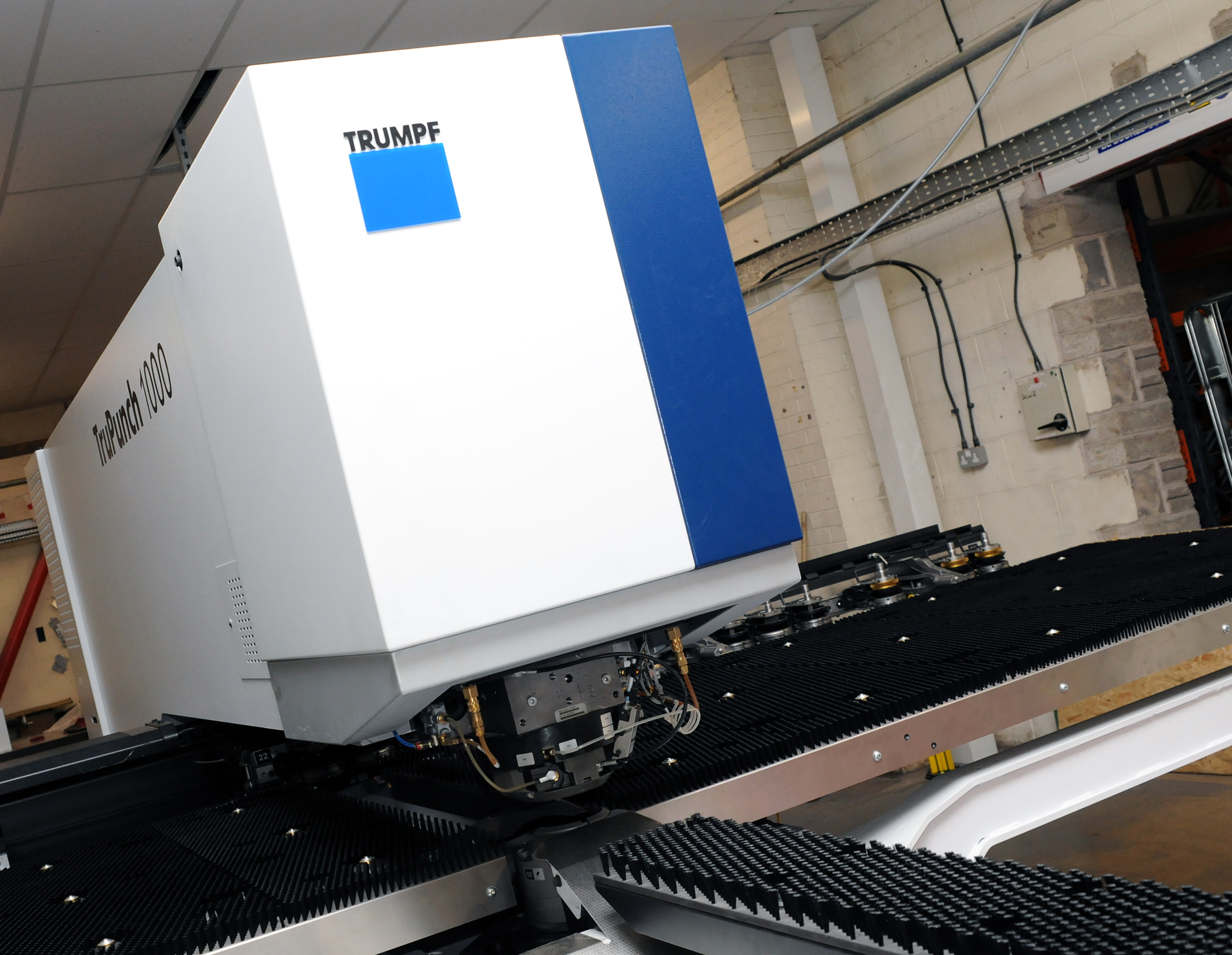
We have invested in a new £1/4m TRUMPF CNC metal punch as part of an asset renewal strategy for our UK manufacturing capability. The new machine will be used in the production of a wide variety of our power distribution systems and workstation power products at our Rotherham factory. Suitable for handling sheet metal between 0.9mm and 3.0mm thick, the new machine will replace one...

Read more
CMD CATALOGUE PROVIDES TECHNICAL POWER DISTRIBUTION GUIDE

CMD Ltd has released a new catalogue, providing an easy to follow technical guide to our power distribution systems and plug and play desk modules. Detailing CMD’s full range of UK-manufactured power distribution systems and plug and play desk modules, the catalogue will be a helpful source of information to M&E engineers and contractors alike to understand how our power distribution systems connect together and...

Read more

Power Distribution Catalogue
CMD Ltd PLAYS ESSENTIAL ROLE IN ELECTRICAL FIT OUT AT LONDON’S PRESTIGIOUS OFFICE DEVELOPMENT

CMD Ltd, specialist in workplace connectivity and ergonomic solutions, has provided a flexible and high-quality power distribution network for The Ray, a prestigious office development in London’s Farringdon. Well-known for being the former site of The Guardian newspaper, The Ray now stands as an 83,000ft² office development characterised by a modernised warehouse aesthetic, with level two now occupied by a global social media company. The...

Read more

The Ray
CMD plugs in to european opportunity with Schuko Capsule unit launch

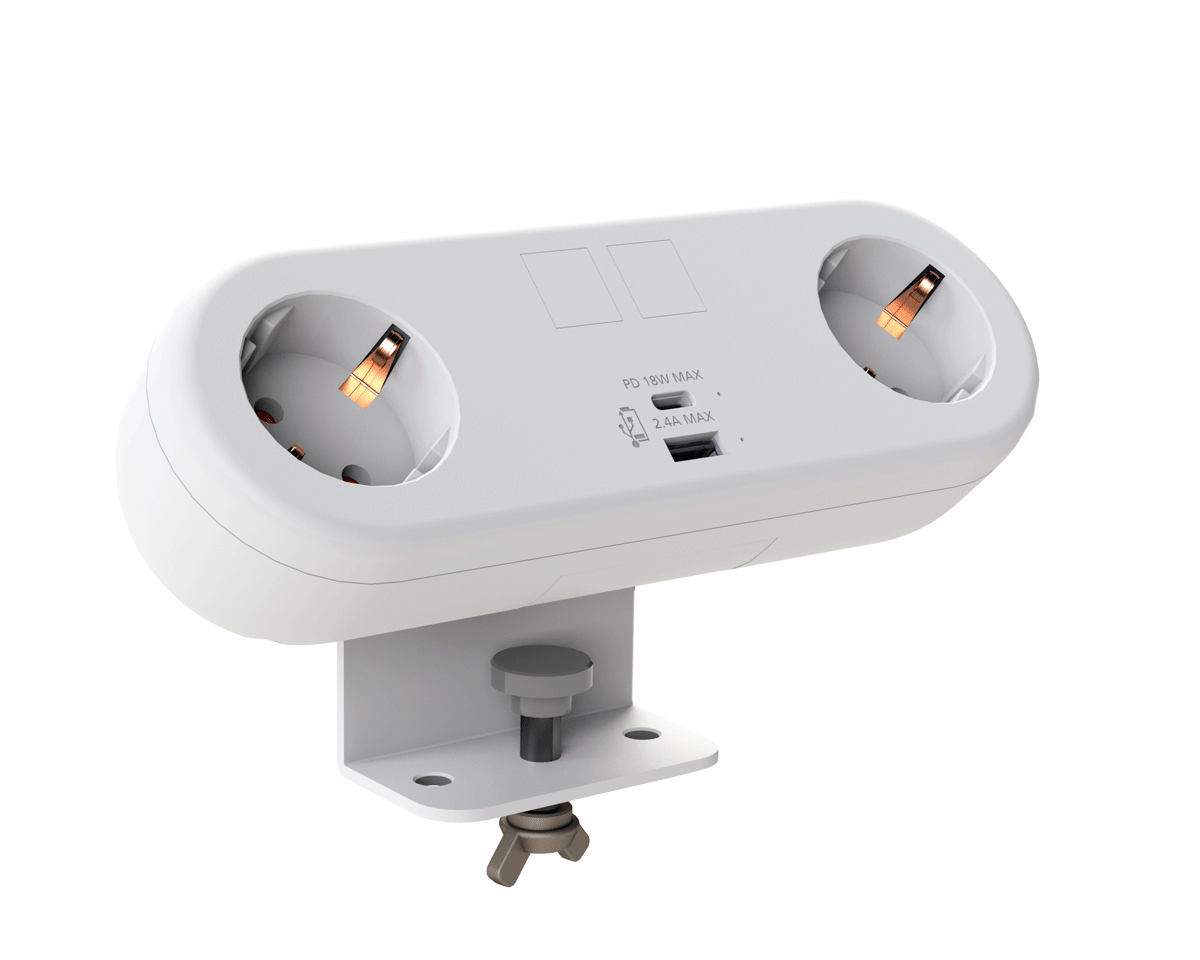
CMD Ltd, the specialist in power and connectivity solutions for commercial environments, has launched a Schuko version of its popular fixed format Capsule workstation power module for export to mainland Europe and beyond. A popular on desk power module comprising two sockets and dual USB (type A and C) chargers, CMD’s Capsule unit is already widely specified in the UK as an off-the-shelf workstation power...

Read more
CMD White Schuko Capsule Desk Power Module
CMD LTD EXTENDS MONITOR ARM RANGE WITH THE LAUNCH OF REACH PLUS

CMD Ltd, the specialist in ergonomic and connectivity solutions for commercial interiors, has completed its Reach monitor arm range with the launch of the Reach Plus. Available in single or dual screen options, the Reach Plus has been designed to provide an ideal solution for both single and dual screen workstation configurations, or can be used with next generation of large format curved screens. Suitable...

Read more

CMD Ltd DEMONSTRATES THE ART OF POWER DISTRIBUTION AT THE UNIVERSITY OF WARWICK

CMD Ltd, the specialist in workplace connectivity and ergonomic solutions, has provided Betatrak busbar power distribution and a range of electrical accessories for two major capital investment projects at the University of Warwick. Designed by Fielden Clegg Bradley Studios, the £33 million Faculty of Arts building is a showpiece development comprising four interconnected structures set around a central atrium, which will enable inter-disciplinary collaboration across...

Read more

University of Warwick
CMD BRINGS HARMONY TO COVENTRY UNIVERSITY RESEARCH FACILITIES

CMD Ltd, the specialist in power distribution solutions and workstation power and ergonomics, has provided under desk and on desk power modules for the refurbishment of three Coventry University research buildings. Located on Coventry University Technology Park, a business park designed to encourage collaboration between the university and knowledge-based businesses, the three buildings are being repurposed as office accommodation for university research teams. The refurbishment...

Read more


Coventry University

2026 Best Industrial EMC Solution for Global Buyers

Industrial facilities are becoming denser, faster, and more electrically complex. Variable-frequency drives, robotic arms, wireless sensors, and high-power converters now operate beside sensitive control systems. This creates practical electromagnetic compatibility risks, including false alarms, unstable measurements, and unexpected production stops. A dependable Industrial EMC Solution must address emissions and immunity together, not treat them as separate purchasing concerns.

The International Electrotechnical Commission identifies the IEC 61000 series as a core framework for EMC testing and performance. CISPR 11 remains highly relevant for industrial, scientific, and medical equipment. The IEC also emphasizes installation conditions, cable arrangements, grounding, and the surrounding electromagnetic environment. These details matter. A cabinet that passes laboratory testing may still fail beside a 400 kW motor.

Industry research supports continued investment. MarketsandMarkets’ EMC testing market analysis points to demand from automotive, telecommunications, consumer electronics, and industrial automation. Grand View Research also reports expanding electronics production and testing requirements across global supply chains. However, market forecasts differ by methodology, region, and product scope. Buyers should question impressive numbers.

For 2026 procurement, evidence should guide every decision. Look for ISO/IEC 17025-accredited laboratory data, traceable test methods, and documented performance across temperature, vibration, and load changes. A strong supplier should provide filter insertion-loss curves, enclosure shielding results, cable-entry guidance, and field-service records. Real experience matters. So does honest uncertainty. No solution fits every factory, and shortcuts can become expensive after commissioning. The best approach combines compliance, engineering judgment, maintainability, and verified site performance.

2026 Best Industrial EMC Solution for Global Buyers

Industrial EMC Fundamentals and Their Role in Reliable Equipment Performance

Industrial EMC is not a final inspection task. It is a design discipline that protects equipment from unwanted electrical energy. In factory environments, variable-speed drives, motors, relays, and long cables can create strong electromagnetic disturbances. Sensitive controllers may then reset, misread sensors, or stop unexpectedly.

During equipment commissioning, engineers often begin with emission and immunity measurements. Emission testing checks what the machine releases into its surroundings. Immunity testing examines whether it can withstand external interference. The IEC 61000-4 series provides practical test methods for disturbances such as electrostatic discharge, electrical fast transients, and surge events.

Small details matter. A poorly bonded cabinet door can weaken shielding. A cable routed beside a motor lead can collect noise within seconds.

Grounding and bonding need careful attention. A short, wide connection usually performs better than a thin, coiled wire at high frequencies. Filters should match the noise path, voltage, current, and installation environment. Over-filtering can also create problems, including leakage current or unexpected resonance.

That part is easy to overlook. Experience shows that laboratory results may change after installation, because real factories contain longer cables, imperfect bonding, and changing loads.

Engineers should record test conditions, inspect physical layouts, and repeat critical checks after maintenance changes. No design is flawless. A careful review of assumptions often reveals the most useful improvement.

Key EMC Challenges Across Industrial Environments and Applications

2026 Best Industrial EMC Solution for Global Buyers

Key EMC Challenges Across Industrial Environments and Applications

Industrial EMC problems rarely appear in laboratory conditions. They emerge beside variable-speed drives, welding equipment, servo motors, and long unshielded cables. A brief voltage disturbance can freeze a controller, corrupt sensor readings, or stop a production line.

The 2024 MarketsandMarkets EMC testing report estimates the global market at more than USD 2 billion. It also projects steady growth through the decade. This trend reflects denser electronics and stricter compliance demands. IEC 61000-4 testing remains central for immunity, electrostatic discharge, surges, and radiated fields. However, passing a bench test does not guarantee plant reliability.

Field assessments often reveal grounding differences between machines, cabinets, and building structures. In one typical installation, a cable shield looked properly terminated but carried high-frequency noise through a painted panel. Small details matter. Thermal stress can also change filter performance over time. Research from the International Energy Agency shows rapid growth in industrial electrification, increasing the number of power converters in operating environments. More converters mean more switching noise and possible harmonic interactions.

Global buyers should evaluate the complete installation, not only the enclosure. They need conducted and radiated measurements under realistic loads. Cable routing, bonding, filter placement, and maintenance access deserve equal attention. Our early assumptions can still be wrong. A quieter test room may hide the noisiest production condition.

Core Technologies for Controlling Electromagnetic Interference

2026 Best Industrial EMC Solution for Global Buyers

Industrial electromagnetic interference control begins with a complete system view. Filters alone rarely solve persistent noise. Engineers must examine the enclosure, cables, grounding paths, power supplies, and switching devices together. A conductive enclosure can reduce radiated emissions, but poor panel joints may create leakage points. Short bonding straps usually perform better than long grounding wires. Cable shields also need proper termination at entry points.

Tips: Keep noisy and sensitive cables separated. Use 360-degree shield connections where appropriate. Select filters according to current, voltage, and frequency data. Test the complete machine, not isolated parts. Small gaps matter.

Practical EMC work depends on measurement. Near-field probes can locate noise around motor drives, relays, and converter modules. Spectrum measurements reveal whether interference is continuous or switching-related. Common-mode chokes can reduce unwanted currents on cable bundles, while differential filters address noise between conductors. Ferrite materials must match the target frequency; one type cannot solve every problem. This detail is often underestimated.

A missed bonding point can defeat an otherwise careful design. That is an uncomfortable but useful lesson. Compliance testing should include realistic loads, cable lengths, operating speeds, and enclosure conditions. International buyers should request test records, installation guidance, and component derating data. Reliable suppliers explain limitations instead of promising universal protection. Engineers should also review grounding assumptions, because a design that works in a laboratory may behave differently on a factory floor.

How to Evaluate Industrial EMC Solutions for Global Procurement

Evaluating industrial EMC solutions for global procurement requires more than comparing prices and catalog claims. In factory audits, I have seen a compliant-looking filter fail after cable routing changed. The evaluation should begin with the machine’s real environment: motor drives, welding equipment, long sensor lines, outdoor cabinets, and unstable power.

Short answer? Demand evidence.

Check whether testing covers the final assembly, not only a single module. Relevant IEC 61000 test methods, risk assessments, and an ISO/IEC 17025 accredited laboratory can strengthen technical confidence.

Yet certificates alone are not enough. Review test setups, cable lengths, grounding methods, load conditions, and failure criteria.

A quiet laboratory result may not represent a dusty plant with twenty inverters switching nearby. Request samples and run pre-compliance tests before volume purchasing. Record connector torque, shield termination, enclosure bonding, and temperature during each test.

Global buyers should also examine supply continuity, documentation quality, change-control procedures, and technical support across time zones. Can the supplier explain a failure without blaming installation? That matters.

Compare lifecycle costs, including downtime, replacement access, re-testing, and spare inventory. I would not rely on one impressive graph.

EMC performance can drift when components, firmware, or cable suppliers change. Build acceptance criteria into the purchase contract, then verify them on production units. Leave room for doubt: field conditions often expose assumptions that engineers missed.

International Standards, Certification, Installation, and Lifecycle Support

2026 Best Industrial EMC Solution for Global Buyers

International buyers need more than a low-noise enclosure. They need documented compliance, repeatable testing, and support after installation. The IEC 61000-4-2 standard specifies 4 kV contact and 8 kV air-discharge immunity tests. These figures turn abstract EMC claims into measurable engineering requirements. Product evaluation should also reference CISPR 16-1-1, which defines requirements for measuring equipment and measurement uncertainty. Certification must match the target market, product category, and operating environment. A laboratory accredited to ISO/IEC 17025 can provide stronger confidence in test competence and traceability.

Installation often determines whether certified performance survives in the field. Engineers should separate power and signal cables, bond metal panels across clean contact surfaces, and verify grounding at the actual cabinet. A three-millimeter paint layer can interrupt bonding. Small details matter. Lifecycle support should include commissioning records, test reports, spare filter guidance, and periodic inspection procedures. The 2024 MarketsandMarkets EMC testing market analysis identifies rising compliance complexity as a major demand driver, especially across connected industrial equipment. Yet a certificate is not immunity. We have seen compliant systems fail after cable routing changed. That lesson deserves more attention. Global buyers should request site-specific validation, not only factory paperwork.

2026 Best Industrial EMC Solution for Global Buyers

International standards, certification planning, installation control, and lifecycle support begin with coverage across the relevant electromagnetic compatibility test ranges.

The chart shows representative frequency ranges specified in selected IEC 61000-4 immunity tests: power-frequency magnetic fields at 50/60 Hz under IEC 61000-4-8, conducted RF immunity from 150 kHz to 80 MHz under IEC 61000-4-6, and radiated RF immunity from 80 MHz to 6 GHz under IEC 61000-4-3. Actual test levels, equipment configuration, installation requirements, and certification evidence depend on the applicable product and market standards.